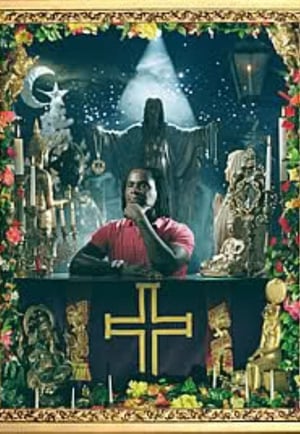
Documentary about three men from Kentucky who claim to have discovered an Old Testament relic for 69-cents at a Madison, Tennessee Goodwill superstore. The men believe that they have found the mysterious Urim and Thummim in the form of a stone cup that allows its users to communicate with God and see visions.
In a darkened classroom, the white cracked walls serve as a movie screen. We are in a remote mountain village in Georgia. The light from the projector breaks the darkness: the children's first cinematic experience is about to begin. Among the kids are Iman and Eva, two Muslim girls, for whom the experience becomes a turning point and inspires them to pick up a camera and start filming their daily lives. The girls are growing up in a valley infested by radicalism, where most people live in constant fear that their relatives will sacrifice their lives in the name of God.
King of the Jews is a film about anti-Semitism and transcendence. Utilizing Hollywood movies, 1950's educational films, personal home movies and religious films, the filmmaker depicts his childhood fear of Jesus Christ. These childhood recollections are a point of departure for larger issues such as the roots of Christian anti-Semitism.
This scenic documentary attempts to reconstruct the last days of Jesus Christ - from his arrival in Jerusalem to his death on the cross. But what is faith and what is historical? The narrative begins with the arrival of Jesus in Jerusalem with a small group of followers, continues with the scandal in the temple, the provocation of the Jewish rulers, the trial before the Roman prefect and the execution of the sentence.
On 25th December 2011 the Georgian Patriarch Ilia II described his 34 year-long leadership as head of the Georgian Orthodox Church as a ‘sunny night’. Beginning in 1989, and going up to the present, the film essay Sunny Night tells of political and social events since Georgian Independence. A variety of formats and sources, disparate images and voices report on protests, recommencements, uproars and wars, and religious identity that centres around the dominant religion of the nation. In the midst of the ongoing shifts and the various state of affairs, the patriarch stands out as the only constant figure. Meanwhile the sermonised religion begins to take on radical forms, going as far as priests forming front row human-chains, leading protests of several thousand orthodox believers chasing a handful of LGBT activist throughout the streets of Tbilisi in May 2013.
A documentary about the confluence of Christianity and mixed martial arts, including ministries which train fighters. The film follows several pastors and popular fighters in their quest to reconcile their faith with a sport that many consider violent and barbaric. Faith is tried and questions are raised. Can you really love your neighbor as yourself and then punch him in the face?
Commentator-comic Bill Maher plays devil's advocate with religion as he talks to believers about their faith. Traveling around the world, Maher examines the tenets of Christianity, Judaism and Islam and raises questions about homosexuality, proof of Christ's existence, Jewish Sabbath laws, violent Muslim extremists.
Did Jesus exist? This film starts with that question, then goes on to examine Christianity as a whole.
The documentary explore the intersection between humor, satire, and religion, analyzing how they mutually influence each other. Through interviews with comedians, artists, and scholars, we will discover irreverent jokes, clever parodies, and bold caricatures that challenge religious dogmas, exploring the power of comedy within the context of religions and opening new perspectives on cultural dynamics.
On Valentine's Day, 1993, Caveh Zahedi decided to ingest 5 grams (a very large dose) of hallucinogenic mushrooms. For the first time in his mushroom-taking history, he had an experience of "divine possession," in which he felt that a divine being took possession of his body and spoke through him, in a voice that was not his, and with knowledge that he himself did not possess. He later tried several times to repeat the experience. I WAS POSSESSED BY GOD is the documentary record of one such attempt.
The destiny of women is irrevocably linked to blood. Between tradition and modernity, the female body has been marketed, honored, and mutilated.
This historical documentary tells the story of Calvary Chapel and the Jesus Movement and traces its impact on Christianity including the birth of contemporary Christian music and worship as well as a more informal church atmosphere. Includes interviews with Chuck Smith, Franklin Graham, Tim LaHaye, and many others.
The plot of the film unfolds in the ancient monastery of Dokhiar on the west coast of Mount Athos, on the Aegean peninsula. This peninsula is given to the exclusive use of the monks of Eastern Christianity. Images of nature are woven into a virtually uninterrupted series of work and prayer, lining up in the rhythmic interrelation of man and nature. The central figure of the film was the monastery’s elder, Hegumen Gregory, whose long-term experience of spiritual nourishment rewarded him with a deep understanding of the human soul and her desire to return to the state characteristic of Adam’s human nature before the fall.
In this two-part Channel 4 series, Professor Richard Dawkins challenges what he describes as 'a process of non-thinking called faith'. He describes his astonishment that, at the start of the 21st century, religious faith is gaining ground in the face of rational, scientific truth. Science, based on scepticism, investigation and evidence, must continuously test its own concepts and claims. Faith, by definition, defies evidence: it is untested and unshakeable, and is therefore in direct contradiction with science. In addition, though religions preach morality, peace and hope, in fact, says Dawkins, they bring intolerance, violence and destruction. The growth of extreme fundamentalism in so many religions across the world not only endangers humanity but, he argues, is in conflict with the trend over thousands of years of history for humanity to progress to become more enlightened and more tolerant.
In the week when Hindus celebrate the holy festival of Diwali, this documentary tells the story of one of their faith's most sacred symbols - the swastika. For many, the swastika has become a symbol synonymous with the Nazis and fascism. But this film reveals the fascinating and complex history of an emblem that is, in fact, a religious symbol, with a sacred past. For the almost one billion Hindus around the world, the swastika lies at the heart of religious practices and beliefs, as an emblem of benevolence, luck and good fortune.
A fascinating new look at the biblical, historical, and scientific evidence for Creation and the Flood. Learn from more than a dozen scientists and scholars as they explore the world around us in light of Genesis. Dr. Del Tackett, creator of The Truth Project, hikes through canyons, climbs up mountains, and dives below the sea in an exploration of two competing views... one compelling truth.
A documentary about the legendary 1972 Toronto production of the musical about the life of Jesus, which launched many illustrious careers and ignited a comedy revolution.
Venerdì Santo - Bronte
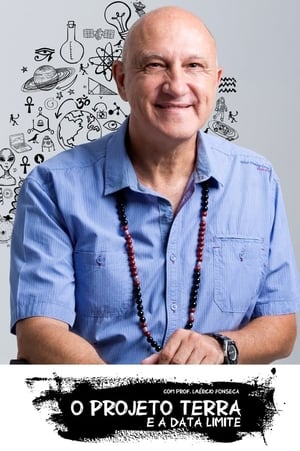
In this documentary, Prof. Laércio Fonseca presents facts and connections between cosmology, the universe, The Earth Project and The Planet Deadline according to Chico Xavier. Where did I come from? Where I go? Is the end of the world near? Was Chico Xavier right? Do we have a deadline? Find out the answers to these and other questions in this movie.
A portrait of Pope Pius XII (1876-1958), head of the Catholic Church from 1939 until his death, who, during World War II, and while European Jews were being exterminated by the Nazis, was accused of keeping a disconcerting and shameful silence.