As a Palestinian refugee, Ahmad escaped from Lebanon to Germany 40 years ago. In a conservative and strict way, he raises his six children in Berlin Neukölln. His oldest son, the filmmaker, talks to his father, interviews his siblings and tries to understand how war, escape and exile affect a human being.
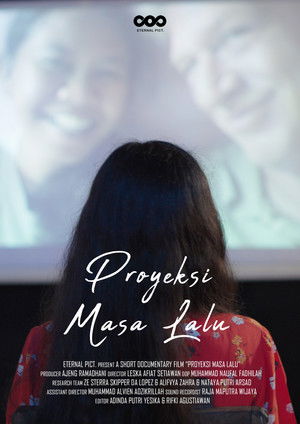
Kurnia, a 37-year-old woman, returns to face her past memories through projected images that bring both emotion and sorrow. On this journey, she recounts the stories of love, acceptance, separation, and regret that shaped who she is today. Remininsing her memories, Kurnia slowly finds the strength to let go of her attachment to the past and attain a sense of acceptance.
Hammer and compass in Mozambique. We see a GDR flag waved at a rally in Maputo, carried by "Madgermanes", contract workers who once toiled in eastern Germany. Some of them founded families there, like Eulidio. His daughter Sarah grows up with her mother in Berlin. The relationship with her "second home" is slow in growing, partly thanks to Luana, Sarah's baby, whose father, Eduardo is also from Mozambique.
From the “integration model” to the “Islamist fanatic”, France fantasizes about these children of immigrants who grew up with it. Like every month “What I’m Meddling With!” presents portraits, the result of an in-depth investigation, to give a face to today's questions. The program, broadcast in the thematic evening of the Franco-German channel Arte, is made up of 2 ambivalent documentaries: "Les Lumières De La Zone" and "Les Soldats De Dieu" followed by debates.
In the United States, there is an active shooter incident every 12 days. In Memoriam shows the wrenching perspective of wounded survivors, grieving relatives, and heroes of the horrific attacks at the Las Vegas Route 91 Harvest Music Festival, the Sutherland Springs Baptist Church in Texas, and the Marjory Stoneman Douglas High School in Parkland, Florida.
As the detention of migrant children has climbed to record-breaking levels under President Trump, FRONTLINE and The Associated Press investigate what’s going on inside federally-funded shelters — and the lasting impact on children held in U.S. custody. Also in this two-part hour, a report on the sexual exploitation of women and girls in Iraq.
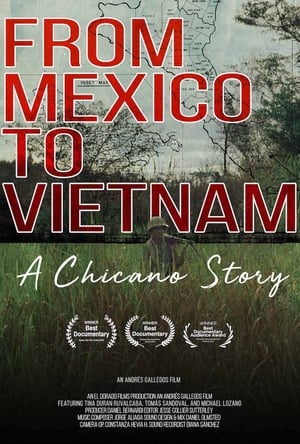
"From Mexico to Vietnam: A Chicano Story" is an inspiring documentary that chronicles the life of Jesus S. Duran, a Mexican immigrant who became a decorated U.S. Army soldier during the Vietnam War. Born in Juarez, Mexico, Duran moved to the United States as a child and enlisted in the Army in 1968. On April 10, 1969, while serving as an M-60 machine gunner with Company E, 2nd Battalion, 5th Cavalry, 1st Cavalry Division (Airmobile), he displayed extraordinary bravery by rescuing several wounded comrades during an intense enemy ambush in Tay Ninh, Vietnam. His valorous actions led to a posthumous Medal of Honor by President Barack Obama. Directed by Andrés Gallegos, the film delves into Duran's personal journey, his family's migration from Mexico, and the broader impact of the Vietnam War on the Chicano and Latino communities.
Documentary about the production of Bunk #7.
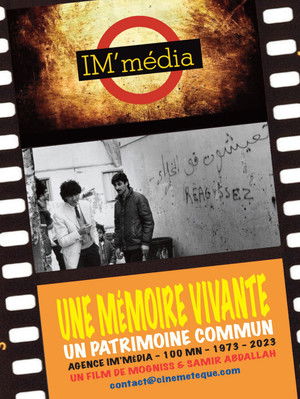
Une mémoire vivante : Un patrimoine commun 1973-2023
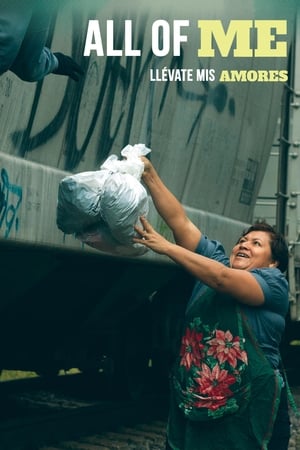
"Take my love" is a documentary film about "Las Patronas", a group of women who daily cook, pack and throw food to the migrants riding the "Beast" train.
This is the face of someone the world assumes was stripped of her potential at the age of 18. But tragedy is not Mallory Weggemann's reality. Suddenly paralyzed from the waist down, she was turned loose to become a Paralympic Champion and activist. As Mallory's story unfolds, we come to understand that it was because of, not in spite of, that moment that she discovered who she really is.
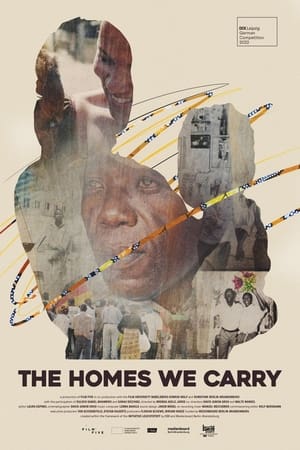
A Liberian refugee SAM REAYAH and his family have been separated for five years and live in uncertainty waiting for family reunion. While Sam and his younger daughter Ruth continue their lives in Buduburam Refugee camp in Ghana, his wife Decontee and his older daughter Joyce have already started a life in Rochester, USA. The film explores the idea of home. Sam's family had a home in Liberia, but they had to give it up. They were forced to build homes elsewhere. They built a home in Ghana. They build a home in The United States. They built homes together, they build homes separate of each other. But which home does the heart want?
As a “spiritual follow-up” to 'Fin', 'Death Boom' “pulls back the curtain on the catastrophic mental and environmental impacts of the contemporary death care industry. The film, shown through the lens of the workers at the heart of it as they prepare for the passing of 77 million baby boomers, exposes the toll that embalming, cremation, and traditional burial have on those who’ve passed, their families, and deathcare workers, and the corruption – political, religious, and corporate – that stands in opposition to greener methods being nationally legalized and accessible.”
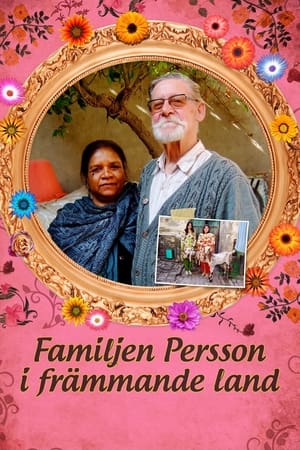
Per Persson left Sweden 40 years ago. In Pakistan he fell in love and became the father of two daughters. Trouble starts when the girls grow up and the family decides to emigrate to Sweden. When they end up living in a caravan outside Hässleholm, all their expectations are dashed.
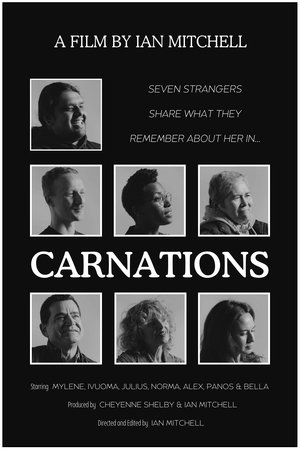
Seven strangers are interviewed to talk about the relationship they have with their mother.
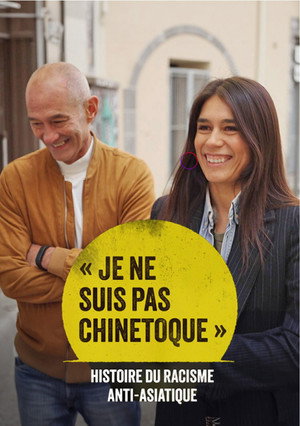
Journalist Émilie Tran Nguyen invites the viewer to follow her in her quest and discover, at the same time as her, the historical origins of this anti-Asian racism. Told in the first person, alternating archive images, interviews with historians, sociologists and field sequences, this film traces the making of prejudices in the French imagination and pop culture, to twist the neck of stereotypes, deconstruct and act.
"Ellis Island Tales" - From 1892 to 1924, nearly 16 million emigrants from Europe passed through Ellis Island, a small block of land where a transit center was built, near the New York Statue of Liberty. "Ellis Island Tales, Stories of Wandering and Hope" - the book is composed of three major parts. Georges Perec and Robert Bober visited Ellis Island and with the help of texts and documents, restored what everyday life was about what some called "the island of tears".
A Song For My Father is a six-minute poetic documentary that examines grief and the complicated relationship we develop with the things that once connected us to the people we’ve lost. After the sudden death of their musician father, filmmaker Shona Buschlen and her younger brother Eddie, a jazz trumpet player, return to a performance space where their father once played. In the early stages of grief, music becomes difficult to hear, no longer comforting but a reminder of absence. Over time, these feelings begin to shift. Through archival recordings of their father’s bass and live trumpet improvisations by Eddie, the film creates a call and answer across time, tracing how sound becomes a way to sit with grief rather than escape it. Blending voiceover, childhood footage, and sound-driven editing, A Song For My Father explores grief not as something to be resolved, but as something lived with, where healing comes from allowing yourself to feel.
José Corbacho and Catalina Solivellas met thirty years ago sharing stages, dressing rooms, laughter and also some sadness. They they began to be aware of how therapeutic theater can be in difficult times. Years later, and inspired by Don Quixote, they decided to put together a free version of the chivalric novel, together with Mallorcan amateur actors and actresses with a mental health diagnosis. The documentary proposes a journey in which José, Catalina and the wonderful company created for the occasion, share stages, dressing rooms, laughter and also some tears.
A young immigrant arrives in Canada from France, and brings his Citroën 2CV with him. The iconic post-war car stands out on the streets of Vancouver, and before long he meets up with a group of like-minded car buffs.