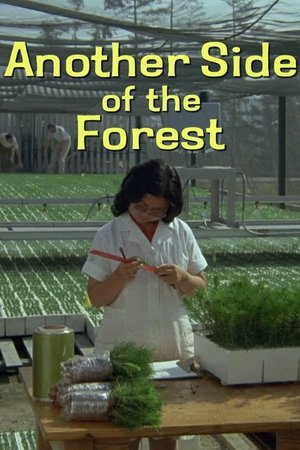
Developments in the Canadian forestry industry during the 1970s are shown being carried out both as lab experiments and in the field to protect and conserve the country's vast forests. These include turning a Newfoundland bog into woodland, fostering British Columbia seedlings that withstand mechanical planting, inoculating Ontario elms against the bark beetle, devising ways of controlling fire, and more.
Cement
Vápno
Vodní energie
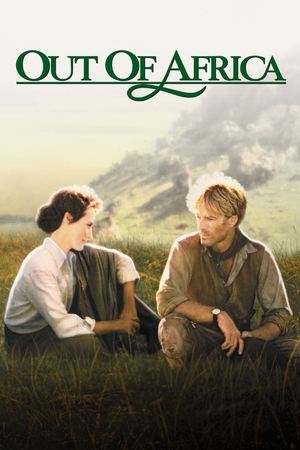
Tells the life story of Danish author Karen Blixen, who at the beginning of the 20th century moved to Africa to build a new life for herself. The film is based on her 1937 autobiographical novel.
Diagnosis of gonorrhea should be done by clinical and laboratory investigation. The physician and patients are shown in the physician's office and examining room. The patients remove their clothing, and the physician takes samples from the end of the penis and makes thin smear slides from them. The techniques for stripping gonococci from male and female patients with chronic gonorrhea are shown in drawings and live footage. The physician is shown getting and preparing a urine sample for laboratory testing for the presence of gonococci, including using a hand-cranked centrifuge. The material is packaged to be sent away for laboratory diagnosis by gram stain and culture.
Educational film about sexually transmitted diseases.
This public-school educational film warns of the dangers of cheating. John Taylor is struggling with his algebra course, and convinces his friend Mary to show him her answers during the tests. But when he is caught, his reputation among his fellow students, along with his student-council seat, is put in jeopardy.
This 1971 color anti-drug use and abuse film was produced by Concept Films and directed by Brian Kellman for Encyclopedia Britannica. “Weed: The Story of Marijuana” combines time-lapse, montage, illustrations, animation (by Paul Fierlinger and emigre Pavel Vošický) and dramatized, documentary-style interviews to survey the evolving role of cannabis in U.S. society, with emphasis on the legal risks faced by young people. A unique score of experimental synthesizer music is provided by Tony Luisi on an EMS VCS 3 “Putney”
The Institute of National Remembrance, Fish Ladder and Juice present “The Unconquered” – an animated film that shows the fight of Poles for freedom, from the first day of World War II to the fall of communism in 1989.
Saying No is an early 1980s educational film produced by Crommie & Crommie that, true to the title, presents a process for young women to successfully decline advances from the opposite sex.
The kitchen is an alchemist’s workshop, and the chef is a master of secret teachings. He commands molecules to bubble, boil, rise, change their state, shape, and colour. This educational film shows that cooking an egg or letting dough rise can be a fascinating chemical and physical process, and that our body is a small laboratory, with its own test tubes, gauges, and instruments.
An educational film that instructs people on how to survive atomic bombs and the radiation they emit while following a family facing nuclear attack who calmly prepare for the aftermath. Shows the various modes of Civil Defense that were being developed to protect the American population in the event of a nuclear war.
Adaptation of Henrik Ibsen's Ghosts.
Daleko od stromu
Darujte odpovědně
Polish educational cartoon about dinosaurs
DFW Punk, covering the Dallas/Ft. Worth punk/new wave scene. If you thought Texas in the late ’70s was all about urban cowboys, country tunes and bible-thumping, get ready to be proved dead wrong. 2007, MiniDV.
Konfrontace
The Westward movement — and a woman's perspective of that movement — emerges in the dramatic story of Delilah Fowler's first year on the Kansas frontier in 1869. Based on diaries of the period, the program reveals the cruel violence, and even crueler loneliness, which early settlers encountered — but above all, it shows the quiet courage of those who lived it.