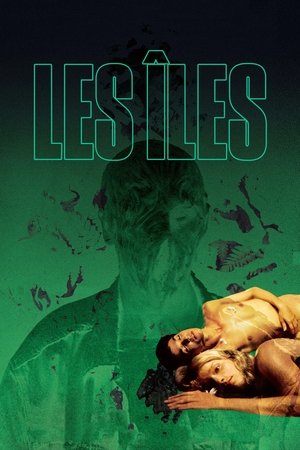
A taxi driver, a young girl and a backpacker simultaneously experience a wonderful journey in Tokyo, where they find connections to their own homes in Africa, Europe and Southeast Asia.Throughout their journey, they run into the same Japanese woman named Akiko. Meanwhile, a writer in Paris recalls her encounter with Akiko in Tokyo.
This is the only feature directed by the famed French painter and sculptor Martial Raysse. In keeping with the revolutionary spirit of the time, the movie has no plot to speak of and appears to have been largely made up on the spot. We follow the cat man into a bizarre fantasy universe presented in negative exposure that reverses color values (black is white and vice versa) and written words. The cat man steals a car and then picks up a young girl he promises to take to “Heaven.” Heaven turns out to be a country chateau inhabited by several more animal mask wearing weirdoes...
Prometheus, on an Odyssean journey, crosses the Brooklyn Bridge in search of the characters of his imagination. After meeting the Muse, he proceeds to the "forest." There, under an apple tree, he communes with his selves, represented by celebrated personages from the New York "underground scene" who appear as modern correlatives to the figures of Greek mythology. The filmmaker, who narrates the situations with a translation of Aeschylus' Prometheus Bound, finds the personalities of his characters to have a timeless universality.
Somewhere between dream, life, and death, a girl sees HERself confronted with HER images of two important people in HER life and HERself.
A Japanese salaryman finds his body transforming into a weapon through sheer rage after his son is kidnapped by a gang of violent thugs.
An attempt to bring the work of surrealist artists to a wider public. The plot is that of an average Joe who can conjure up dreams that will improve his customer's lives. This frame story serves as a link between several avant-garde sequences created by leading visual artists of their day, most of whom were emigres to the US during WWII.
A first feature based on sexual events. An actress undertakes her desire of directing her first movie, without a budget or any production company funding her project. She gathers a group of professional actors and actresses, and proposes a project based on a very particular experience: stepping on their fears through a metaphorical 'leap of faith'. As the project advances, individual conflicts will arise affecting the shoot, making the movie crew wonder whether or not they should go on. Will they take the leap of faith with all its consequences?
A filmmaker recalls his youth in the town of Onomichi. In the present, he shoots a film in Onomichi alongside his cast, crew and family.
A young office worker is afflicted with a strange mutation that causes her blood to come to life when she bleeds.
A bereaved epileptic ditches her pills and follows a mysterious woman to the outskirts of her town, where she slips back into the fearsome yet ecstatic throes of the seizure.
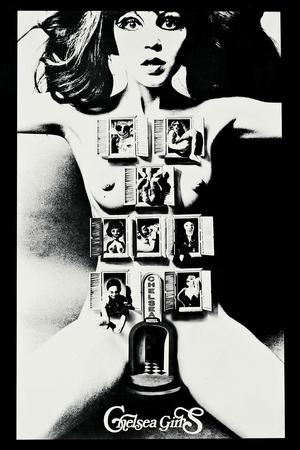
A gang of women wreak havoc in the city, killing various men who have treated women poorly. And sometimes they do it just for fun.
A take it or leave it auteur-experimental fiction exercise: two women are monitoring their dreams, dreams that may of course also be stark naked reality, at least to the dreamers, as they come and they go like bubbles, rising, floating, bursting. A man appears out of nowhere. Poet Peter Laugesen co-wrote the script with Tom Elling, who was Lars von Trier's director of photography on "The Element of Crime".
A surreal, moody short about the fetishisation of automobiles and auto accidents.
A sexual reverie unfolds over the course of one ethereal night. Characters wander through an erotic maze of love and lust, blurring the lines between wet dream and lucid nightmare as a macabre, erotic stage performance sends a ripple of lustful desires through its audience and performers.
Gaining ideology from their last album Disco Volodar, the short film uses the core theme of space. The short film is filmed at Unit 3 Regents Trading Estate, the usual area for Sounds From The Other City. Using the philosophy of avante garde pioneer Maya Deren ‘one must at least begin with the body feeling’, the films opening is of the four piece standing atop of the hill in the Pendle countryside. This quickly melts into a warped reality and lands you into the POV of a camera and trapped in a liminal space where you see a band in session.
A man and woman embark on a sexual journey to detach mind from body. The relationship slowly grows into one of emotional domination, physical disease, abandonment and the creation of personal pornography.
The main protagonist is a young fellow who tries to live his life within 30 frames. He's a person suitable for any atmosphere, which makes him different from the rest. He's like a plant that differs from others, an informer who wants to escape out from his skin. This man loves, hates, eats, drinks, lies ill, laughs, cries, kisses, plays... These are agonies of a contemporary man.
A production company begins casting for its next feature, and an up-and-coming actress named Rose tries to manipulate her filmmaker boyfriend, Alex, into giving her a screen test. Alex's wife, Emma, knows about the affair and is considering divorce, while Rose's girlfriend secretly spies on her and attempts to sabotage the relationship. The four storylines in the film were each shot in one take and are shown simultaneously, each taking up a quarter of the screen.
This independent film follows the actions and inner thoughts of four unusual individuals as they go about their lives in Tokyo, occasionally meeting up with one another. Their thoughts tend to focus on questions of death, existence, and the conflict of society against the individual. All of the action is performed silently, with narration dubbed over.
A quirky woman who spends her free time as a pilot has her purse stolen; a mysterious man finds her wallet, and they embark on a peculiar romance.