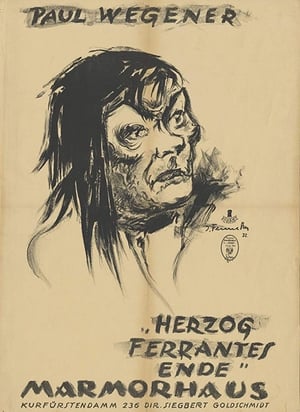
This mostly lost film is often confused with director Paul Wegener third and readily available interpretation of the legend; Der Golem, wie er in die Welt kam (1920). In this version of the golem legend, the golem, a clay statue brought to life by Rabbi Loew in 16th century Prague to save the Jews from the ongoing brutal persecution by the city's rulers, is found in the rubble of an old synagogue in the 20th century. Brought to life by an antique dealer, the golem is used as a menial servant. Eventually falling in love with the dealer's wife, it goes on a murderous rampage when its love for her goes unanswered.
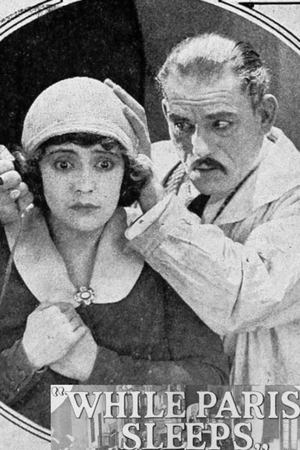
Just as the bead clerk and his assistants are closing up the jewelry store for the day, a package containing a very costly necklace arrives by special messenger. The large safe deposit vault has been closed for the night and the time clock set. The head clerk is fearful to leave the necklace in the store and so decides to take it home. His actions have been closely watched by one of the junior clerks, with sinister and stealthy glances.
A sailor, known as the Adventurer, searching for a lost American explorer discovers him being held hostage on a remote island in the South Sea. The man is held captive by the island's natives, who have placed him under a voodoo spell known as "obeah.
This is the story of the heartless mother whose burdens are such that she would be rid of her two children. The henpecked father is compelled to take them to the woods and there lose them. Gretel drops bread-crumbs to find her way home, but wild-fowl eat the crumbs and they are truly lost. The babes wander to the home of a witch, who would fatten them up to make ginger-bread of them. As they are about to be thrown into the blazing furnace Peggy outwits the witch, and, in turn, the witch is thrust into the roaring flames, as the mother, repentant, heads the neighbors in the work of rescue.
A Filipino re-edit of the original Godzilla. Appears to have been edited in a similar fashion to the American King of the Monsters!, with the use of Filipino actors. No footage of this version has ever surfaced.
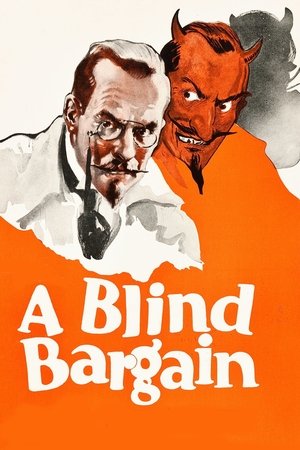
The man is a mystery in the little town. He lives alone in his cabin and will not meet the advanced of his neighbors. One night he talks and tells the story of his life. He had been a prosperous lawyer in an eastern town and was engaged to be married to the sweetest of girls. The night before the wedding day she died and in his anguish he called in the devil. The devil said that he would bring back the departed life, but that if the man laughed he would lose his love again. And in the man's joy at his sweetheart's recovery he forgot and laughed and straight the girl died. "Here is Satan now," said the man, as he fell over dead.
When a sculptor falls in love with his model but finds his love unrequited, he plans to kill his love rival with the help of the owner of a Horror Wax museum. The film is considered lost.
A banker, after a prophetic meeting with a Gypsy fortune teller, becomes delusional as he searches for a trunk which the seer has told him holds the key to either his happiness or his death. This film is considered lost.
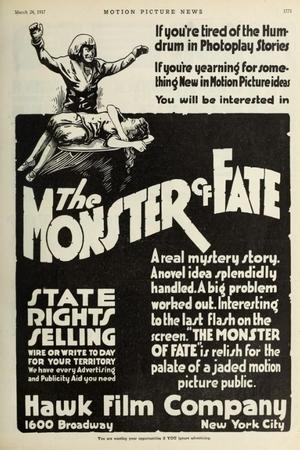
Chaney plays two roles: mad scientist Arthur Lamb and Lamb's "experiment", known only as the Ape Man. This hideous creature was the result of Lamb's attempts to transplant animal glands into human beings. A lost film.
The first talkie from the Philippines.
In medieval Italy, a group of men plot to kill a cruel and despotic duke.
Oiwa Inari
Earliest japanese horror film.
Yotsuya Kaidan
Much-married and once successful writer Henry T. Aythecliff, now heavily in debt, summons his three ex-wives to his mansion, planning to extort a sizable amount of money from each. When he is discovered dead, clues indicate that each of his four wives had motive and opportunity to murder him, and a young detective must sift through some ingeniously devised evidence.
A murdering skyjacker parachutes to safety and poses as a novice monk in an isolated New Mexico monastery.
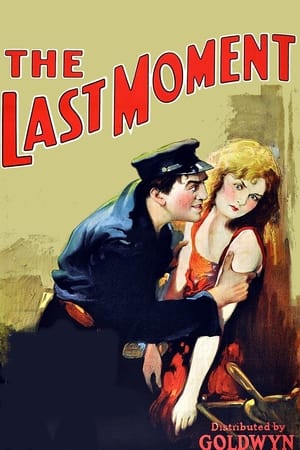
Hercules Napoleon Cameron, who finds his adventure in books, is searching the waterfront with Alice Winthrop for a friend's father when they are shanghaied and taken aboard "The Finn's" ship, bound for the South Seas. "The Finn" is a brutal captain who reinforces his authority with a caged, ape-like monster. "The Thing" escapes during a storm, destroys the captain and crew, then turns on Alice and Nap. Fearing that their last moment has arrived, they declare their love for each other, and Nap suddenly develops a heroic impulse. He holds off the monster for a time, Alice and Nap swim for shore closely followed by "The Thing," and Nap finally drowns the beast with the aid of a large abalone. A lost film.
One of the two earliest horror films ever made. This film is presumed lost.
One of the two earliest horror films ever made. This film is presumed lost. In this black comedy scene, the bottom falls out of a coffin, the corpse tumble out, and is jolted back to life. Short sequences like this, as well as street scenes and dancing geisha girls were the main subjects of early Nippon cinema, pioneered by Shiro Asano and Shibata Tsunekichi from 1897 onwards. In creating dramatic, scenes, film-makers naturally chose the most striking or bizarre. Another undocumented film, recalled by cameraman Shiro Asano.
Shin Yotsuya Kaidan