Interview with Carl G. Yorke and Ruggero Deodato
A woman who is struggling with an overwhelming desire to consume human flesh brought on by a fascination with 70s Cannibal Movies struggles with her desires as she tries to continue her everyday life and control her inner hunger.
For how long have we been laughing? Are human beings the only ones to laugh? In the past, scientists tended to neglect such questions of laughter, leaving them to the philosophers. Jacques Mitsch's A NATURAL HISTORY OF LAUGHTER explores recent scientific attempts to explicate this most elusive of human faculties, undertaken by scientists who see it as a means of approaching some of the larger mysteries of neurology and human behavior.
A Suitable Girl follows three young women in India struggling to maintain their identities and follow their dreams amid intense pressure to get married. The film examines the women's complex relationship with marriage, family, and society.
The true story of We Copwatch, an organization whose mission is to film police activity as a non-violent form of protest and deterrent to police brutality. Around the country, a network of regular people take up cameras to bear witness to police actions and hold law enforcement to accountability.
The history of the Soviet space program and the flight of the world's first manned spacecraft "Vostok" piloted by Yuri Gagarin.
In 1972, officer Frank Serpico exposes the corruption which poisons the roots of the NYPD and becomes famous in 1973 when director Sidney Lumet tells his story in the classic film “Serpico,” starring Al Pacino.
Japan blossomed into its Renaissance at approximately the same time as Europe. Unlike the West, it flourished not through conquest and exploration, but by fierce and defiant isolation. And the man at the heart of this empire was Tokugawa Ieyasu, a warlord who ruled with absolute control. This period is explored through myriad voices-- the Shogun, the Samurai, the Geisha, the poet, the peasant and the Westerner who glimpsed into this secret world.
Uprize! looks at the political, social, and cultural conditions that shaped the June 1976 student uprising in South Africa, how those ideas we transformed into liberatory action, and how those actions helped shape the democratic society we live in today.
Une identité dans la diversité
The first ascent of the Matterhorn was made on July 14, 1865 by Edward Whymper, Francis Douglas, Charles Hudson, Douglas Hadow, Michel Croz and two guides from Zermatt, Peter Taugwalder father and son. Douglas, Hudson, Hadow and Croz are killed on the descent after Hadow slips and drags the other three men down the north face. Whymper and the two Taugwalders, who survive, are later accused of having cut the rope that connected them to the rest of the group so as not to be dragged into the fall, but the ensuing investigation finds no evidence of their guilt and they are acquitted. The Matterhorn is the last great peak in the Alps to be conquered and its ascent marks the end of the golden age of mountaineering. One hundred and fifty years later, a team undertakes the same expedition in order to unravel the mystery.
A story of hope through laughter and action. "El gallo de oro” is a film which chronicles the journeys of a middle-aged gay man paying tribute to his mother, who is battling cancer.
The Show Must Go On is a personal journey behind the scenes that confronts the epidemic of mental health issues in the Australian entertainment industry.
Slow death of Istrian towns, far from the sea and abandoned by its residents. The houses can't be sold even for peanuts.
Pseudo-documentary which "examines the British public's most intimate sexual relations and the modern-day permissive society".
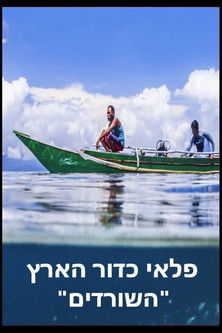
The Oystermen of Pointe a la Hache, Louisiana. This town of nearly 300 is struggling to survive following the BP Oil Spill that left their crop dead, finances in ruin and culture facing extinction. This community has a history of being overlooked by the State, and therefore, are taking matters into their own hands, to assure their voice is heard so that they may not otherwise vanish
Camel racing is a popular sport in the Middle East. In past years, thousands of young boys have been trafficked from Bangladesh, Pakistan, Mauritania and other countries to work as jockeys in the UAE under excruciating conditions. Over the last 10 years, some governments have tried to put an end to the use of child jockeys. Desert Riders will examine the situation before and since these government policies were enacted, as well as the difficult journey to retrieve and recuperate these children
Documents the view and action outside director Charlie Ahearn's 43rd Street apartment window from 1981 to 1983.
The film shows the life of prostitutes in Tehran's city brothels, an area known as Shahre Now. The film closely follows a number of women and communicates how the burden of social constraints led them to surrender in the face of their common fate. The film does explore the possibility of re-education and development for these women, but in no way does it paint over the hard and brutal reality. The film was produced on behalf of the Organization of Iranian Women and was immediately banned while shooting was still going on. After the revolution, a portion of the material was found, and Shirdel decided to finish the film using photos by the late Kaveh Golestan that were taken more than ten years after the film itself was shot.
The film recounts the life of the prisoners and the problems their families encounter in their struggle to survive. Here again filmmaker Kamran Shirdel employs the cinema verité style. The interviews with the prisoners, social workers and teachers serve as commentaries for "constructed" documentary images.