This is the planet we still know so little. We call it Earth but less than 1/3 is land, over 2/3 is water and we use that water as a dumping site for our waste and as if it's an inexhaustible "horn of plenty" for humans. Our most important ecosystem is on the verge of collapse unless we act now. At this very moment the main problem with the oceans is that they're getting emptier and emptier. If we don't do anything then we face one of the biggest disasters in history of mankind.
Fledgling comedian Eric Rushton has never been on a date - until this documentary.
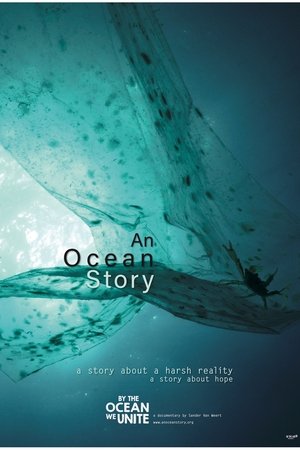
Increasing pollution, over fishing and climate change are major threats our oceans are currently facing worldwide. This documentary follows us on our journey as we film devastating consequences of these harsh realities.
The quietly insistent and critical DEPOSITIONS attempts to restore some dignity to images of the communities of the Scottish highlands taken from patronizing BBC documentaries and news features from the 70’s and 80’s. DEPOSITIONS repurposes footage from the archives of the BBC and sound from the School of Scottish Studies, it is a film about differences and dichotomies: science and superstition, near and far, community and the individual.
I have returned to the island were I grew up. My dad has spent thirty years alone at sea fishing lobster. He was taught the trade by his dad, who learnt from his dad. A heritage pasted down from father to son. My father never got a son, only daughters and since I was a girl no one assumed I was interested. After I turned eighteen I left Sweden and moved to Australia. After a decade abroad I started to long for home. I return to the island to see if I have it in me, can I learn the things I was never taught as a child? Will the legacy fade with me or can I become the family's next lobster fisherman? /Karolin Axelsson
In the late 1960s, with the triumph of bilingualism and biculturalism, New Brunswick's Université de Moncton became the setting for the awakening of Acadian nationalism after centuries of defeatism and resignation. Although 40% of the province's population spoke French, they had been unable to make their voices heard. The movement started with students-sit-ins, demonstrations against Parliament, run-ins with the police - and soon spread to a majority of Acadians. The film captures the behind-the-scenes action and the students' determination to bring about change. An invaluable document of the rebirth of a people.
From a personal vlog to a 3-year life documentary... with an ending yet to be written.
This documentary shows the fishing grounds of the far north. It provides an insight into the hard and dangerous work on a fishing trawler ; laying out and hauling in the fishing nets, processing the fish on board and storing it in the cold store.
Tuna are among the top predators in the oceans. But the hunter is also the hunted: many species are overfished. Can we use the riches of the oceans without destroying them?
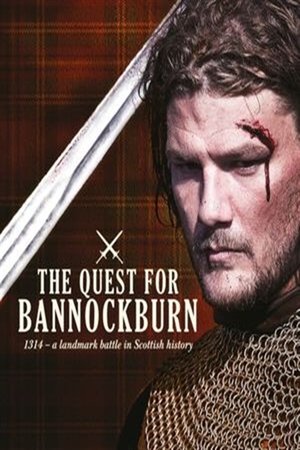
Neil Oliver and Tony Pollard set out to solve one of the biggest puzzles in battlefield archaeology. 700 years ago, Robert the Bruce's overwhelming victory over the English at the Battle of Bannockburn helped seal Scotland's future as an independent kingdom, although the actual location remains a mystery. With the help of leading battlefield archaeologists, stuntmen, computer-generated graphics and some digging, Neil and Tony go in search of both the real and imagined Battle of Bannockburn.
Report on a trout and pike fishing excursion on Lake Waconichi.
In 2020 the Hungarian government announced the change of ownership at nine state universities in order to make them maintained by foundations. The so-called “restructuring” comprised the imposition of a board of trustees over the universities, the members of which being loyal supporters of the government holding stable positions in its economic halo. Only one of the nine institutions protested against the forced political takeover of the University of Theatre and Film Arts (SZFE). Our film presents one of the stories of the university blockade.
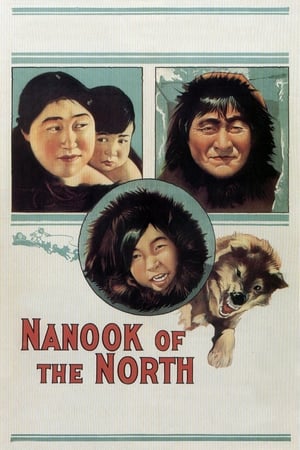
This pioneering documentary film depicts the lives of the indigenous Inuit people of Canada's northern Quebec region. Although the production contains some fictional elements, it vividly shows how its resourceful subjects survive in such a harsh climate, revealing how they construct their igloo homes and find food by hunting and fishing. The film also captures the beautiful, if unforgiving, frozen landscape of the Great White North, far removed from conventional civilization.
In Paul Brandt’s filming debut, he joins friend Paul Norris and legendary fly-fishing guide, Naoto Aoki, on a journey that is both a look into his consuming passion for fly fishing and an ode to his hometown of Calgary, which he dubs as the World’s Largest Fly Fishing Lodge.
A group of authentic voicemail messages to Alex over the past 5 years from various friends and family members. It is a poetic lattice weaved with mesmeric audiovisuals, presenting the isolating effects of an ever growing digital world.
Kristallklar tells the tale of a hidden river holding wild brown trout near the border of Luxembourg and Germany. Find out about this magical river from the perspective of Kirill, who recently acquired the lease to the fishing rights of the river and a small tributary thereof. It captures the essence of a fly fishing adventure on the river embarked on by the incredibly passionate Kirill and two companions: Nic, a fly fishing scientist and Simon, the filmmaker. The film tries to capture the feeling of the magnificent surroundings and being at peace on the river. It also delves into topics of conservation of nature and the plans to re-stock the river with native crayfish which vanished from the river. A lot of love went into this film the hope is that it inspires those around the world to find a love for the outdoors and to preserve it for many years to come and just to get out there and fly fish.
Free Fish is a short documentary filmed over the course of a year in Gaza, following two brothers — Abu Nagham and Ahmad — separated by war yet connected by the sea. Displaced from their home, Abu Nagham now lives in a tent in the south, fishing with his young nephew Rami, who lost his twin brother. Ahmad remains in the north, fishing amid ruins and occupation. Once a source of livelihood and freedom, the sea has become a battleground — heavily restricted, constantly watched, and always dangerous.
A Cor do Cinema
During the ewing-period the shepherd has to take especially care of the flocks. He has to assist the ewes in ewing, to control the feeding of the lambs, and to switch orphaned and abandoned lambs to ewes that have lost their lamb. This is still done by the traditional method of skinning: The dead lamb's skin is slipped on the abandoned lamb to deceive the mother ewe. At this time the shepherd must also warm newly-born, supercooled lambs inside the house and feed them artificially.
Film-maker Conor Reilly is given rare access to the Scottish flat earth community, setting into motion a chain of events that will introduce him to people that are making it their mission to spread the word of flat earth and why they believe in this so passionately. His journey takes him across Scotland, where he meets believers using social media to spread the message of 'waking up to the lies' and those who are taking to the streets with banners and flyers speaking to the public face to face. Finding a small but growing community of Scots leads him to Colorado, USA, and to the second International Flat Earth Conference, where he gets an insight into the movement on an entirely new level. Is this where Scotland is heading?