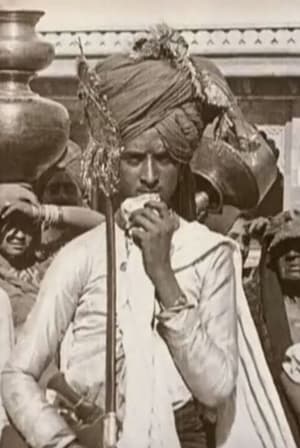
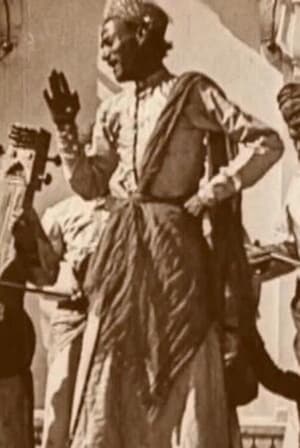
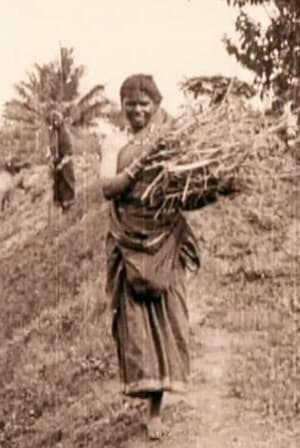
Originally created as an installation for the third Shenzhen Independent Animation Biennale this film is a gripping diary and travelogue of a trip the filmmaker made through India. She tries to grasp India’s love and thoughts, the sentiments and everyday conditions and the experience of disease and death.
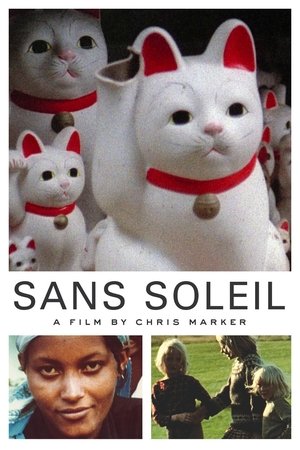
A woman narrates the thoughts of a world traveler, meditations on time and memory expressed in words and images from places as far-flung as Japan, Guinea-Bissau, Iceland, and San Francisco.
Tourist promo film extolling the delights of Birmingham and the Midlands, with a sprinkling of arch one-liners.
Bruce Brown's The Endless Summer is one of the first and most influential surf movies of all time. The film documents American surfers Mike Hynson and Robert August as they travel the world during California’s winter (which, back in 1965 was off-season for surfing) in search of the perfect wave and ultimately, an endless summer.
When Tomoko finds some messages for a 'Mr Smith' on a lost mobile phone, she finds herself on an 'Alice in Wonderland' journey through Tokyo's boulevards and back alleys. From the tyranny of symmetry in soaring office blocks - to buildings that look like space-ships, this creative documentary shows us the city's soul.
York, Harrogate, and Whitby are the essential stops-offs in this picturesque travel companion
The English language is spoken by 450 million people around the globe, with a further one billion using it as a second language. It is arguably Britain’s most famous export. The man often given credit for the global triumph of English, and the invention of many of our modern words, is William Shakespeare. Shakespeare’s plays first hit the stage four centuries ago, as the explorers of Elizabethan England were laying the foundations for the British empire. It was this empire that would carry English around the world. Language historian and BBC New Generation Thinker Dr John Gallagher asks whether the real story of how English became a global linguistic superpower is more complex.
To popularize the idea of automobile travel, Ford Motor Company produced Ford Educational Weekly, a film magazine distributed free to theaters. One 1916 series featured "Visits to American Cities." In this episode, Los Angeles is featured at the very beginning of the boom created by oil, movies and aircraft. On the occasion of its centennial in 1953, Ford donated its film to the National Archives and Records Service; this copy derives from a fine grain master printed from the Archive's preservation negative. Music by Frederick Hodges.
In this comedic travelogue movie, filmmaker Alex Suszko ventures to the country of Mauritius where he attempts to understand the cultural differences as a lower-middle class American abroad.
Inspired by The Seven Valleys, the film follows a solitary wayfarer who steps onto a spiritual journey of self-knowledge, guided not by destination but by transformation. Shot across the historic landscapes of Oxford, the journey unfolds as both an inner pilgrimage and a physical passage that reflects the wayfarer’s movement toward surrender, silence, and submission.
A light and somewhat satirical look at the problems and pleasures of Continental holiday travel. A passenger on the Hook Continental Express from Liverpool St. imagines the possible destinations of his fellow passengers.
Coach passengers give their reasons for preferring that type of transport. A group of ramblers visit the Welsh mountains; an angler and his family spend a peaceful day by a country river; a family goes to the seaside; some students visit Oxford during a music festival.
An American couple tour Britain with a teenage girl, visiting London, Canterbury, Cambridge, the West Country, Caernarvon, etc.
The film is a cinematic interpretation of the travel book “Armenia” by Russian poet Andrei Bely.
Bruce Lee expert John Little tracks down the actual locations of some of Bruce Lee's most iconic action scenes. Many of these sites remain largely unchanged nearly half a century later. At monasteries, ice factories, and on urban streets, Little explores the real life settings of Lee's legendary career. This film builds on Little's earlier film, Pursuit of the Dragon, to present a comprehensive view of Lee's work that will change the way you see the films.
Travel films have an established format with their own conventions, history and baggage. It is a medium that has all too often sought to control, define and dictate perceptions of ”other” places. Comprised of footage shot while travelling on group excursions across Russia in 2019, An Uncountable Number of Threads is an attempt to draw out the ethical restrictions of a travelogue, while questioning how (and why) to make one. At times there is an awkward tourist-gaze, aware of its outsider position. But as a self-reflexive work that considers its own creation, it ultimately unravels, as the artist rationalises themselves out of a particular way of working, inviting the viewer into their uncertainty.
Sports enthusiast Ernest is to cover 6,000 kilometers on his motorcycle in 15 days, crossing Austria, Italy, Switzerland, the Balkans and Czechoslovakia.
Documentary examination of the role of Hamlet, in which ten prominent actors who have played the part discuss Hamlet's personality, Shakespeare's play, and the enduring popular fascination it has inspired. The actors interviewed are Laurence Olivier, John Gielgud, Richard Burton, Nicol Williamson, Ben Kingsley, Jean Louis Barrault, Vittorio Gassman, Maximilian Schell, Innocenti Smoktunovsky, and Mandy Patinkin. Includes excerpts from various film and television versions of Hamlet, featuring these actors and others.
One of the greatest Hamlets of the 20th century Sir John Gielgud reflects on the play and its title character with which he used to be intimately associated for ever since 1929.
Inspired by Chris Marker's Sans Soleil, a girl decides to make her own rendition of Marker's mesmerising voyage through Japan, only for it to turn awry when she encounters another girl - a recurring stranger - haunting her path.