Documentary about Queen Elizabeth Square, Sir Basil Spence's block of Brutalist style flats built to replace the Gorbal's tenements in Glasgow during the 1960s. His vision was based on architect Le Corbusier's ideas and inspired him to transform the Gorbals into a Modernist Utopia. The film is about the life and times of one building told by some of the people involved in its history. The block was dynamited in 1993 amidst controversy and the death of a spectator. It is mentioned in Pevsner's Notable Buildings of Britain. This film was shown on BBC Scotland's Ex-S strand in 1993. Produced by May Miller and directed by Conrad Blakemore. This film is posted for educational and research purposes only and is copyright of BBC Scotland. Archive material courtesy of the Scottish Film Archive and the film's contributors.
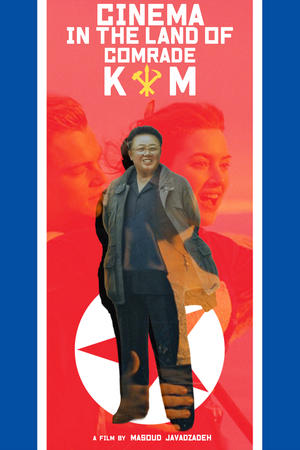
The love of Kim Jong Il, the former dictator of North Korea, for cinema and his adventures, including the kidnapping of a director.
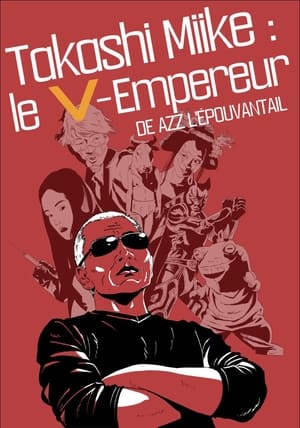
Takashi Miike is a cinema monster. Let's return to his filmography, his main themes, the framework of his monumental universe.
Gathering for a Christmas lunch, the film critics and writers of Discovering Film discuss the merits of 20 films from Bill Murray's star turn in Scrooged, the James Stewart classic It's a Wonderful Life, Ingmar Bergman's Fanny & Alexander, to Bruce Willis' memorable Die Hard.
Um Olhar Inquieto: o Cinema de Jorge Bodanzky
The rivalry between football clubs Rangers and Celtic goes past typical name calling and dives into violence, racial slurs and pure hatred. The rivalry between Glasgow's "Old Firm" sides is the most famous in world football. It's the game's flagship loathing, proof of the power of the sport to inspire profound levels of tribal loyalty and a near-Pavlovian revulsion at anything to do with a rival. We examine the situation and try to get a handle on the political, religious, and national identity clashes that have shaped the rivalry, speak to fanzine editors on both sides of the divide and travel with the Bhoys' away support to a match at Tannadice.
Isamu Noguchi was a sculptor, designer, architect, and craftsman. Throughout his life he struggled to see, alter, and recreate his natural surroundings. His gardens and fountains were transformations meant to bring out the beauty their locations had always possessed.
The film follows the preparations for Glasgow's 1938 May Day March and the march itself, with the participation of students, workers and politicians.
The earliest surviving motion-picture film, and believed to be one of the very first moving images ever created, was shot by Louis Aimé Augustin Le Prince using the LPCCP Type-1 MkII single-lens camera. It was taken on paper-based photographic film in the garden of Oakwood Grange, the Whitley family house in Roundhay, Leeds, West Riding of Yorkshire (UK), on 14 October 1888. The film shows Adolphe Le Prince (Le Prince’s son), Mrs. Sarah Whitley (Le Prince’s mother-in-law), Joseph Whitley, and Miss Harriet Hartley walking around in circles, laughing to themselves, and staying within the area framed by the camera. Roundhay Garden Scene is often associated with a recording speed of around 12 frames per second and runs for about 2 to 3 seconds.
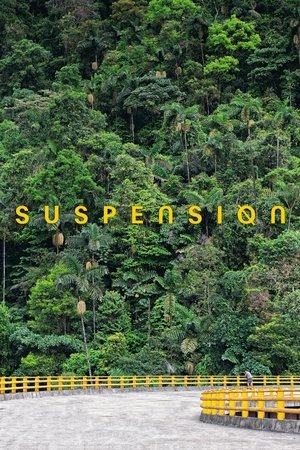
In the depths of the Colombian jungle, the skeleton of an immense abandoned cement bridge is tucked away. It has turned into a delusional tourist attraction.
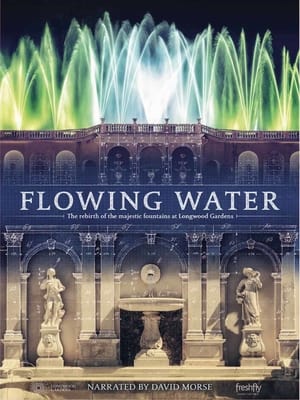
This documentary tells the story of the revitalization of the Longwood Garden's (Kennett Square, Pennsylvania) Main Fountain Garden, a lavish jewel in the crown of one of the greatest collections of fountains in the United States.
The early retired Gert spends the last summer in his garden, a place that has become a real home for him. The garden will be demolished to create a shopping center on its grounds. The only thing Gert can do is remember memories of happy times he spent with his family in the garden.
Ergui as Mãos aos Céus e Não Havia Mais Luz
Experience the 1950’s in the second installment of the “Tour de Cinema” series.
A film crew crisscrosses England trying to unravel the mystery surrounding a record released 30 years earlier, 'Spirit of Eden', that defined the passage from light to shadow of its makers, the band Talk Talk and its lead singer Mark Hollis. From overwhelming obstacles to unpredictable encounters, their journey soon turns into an organic quest. With silence as a horizon line. And punk as a philosophy, thinking that music is accessible to all and that the human spirit is above the technique.
The programme shows Primal Scream's Bobby Gillespie's fascination with music from an early age, listening to the sounds of Elvis and Aretha Franklin before graduating to punk. He talks about his passion for music and how to keep creativity on the right track. In the early 90s the UK music scene was changing - with Oasis and Blur emerging, this alternative rock band was recording in Memphis but suddenly sounded out of step with the music scene.
Le Modernissimo de Bologne
Dive into the game-changing 1960’s in the third installment of the “Tour de Cinema” series.
Dive headfirst into what many believe to be the most influential decade in filmmaking, the 1970’s.
Experience the 1990’s and the end of a millennium in the sixth installment of the “Tour de Cinema” series.