A teenager finds himself transported to an island where he must help protect a group of orphans with special powers from creatures intent on destroying them.
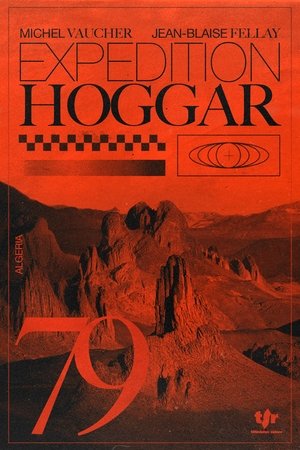
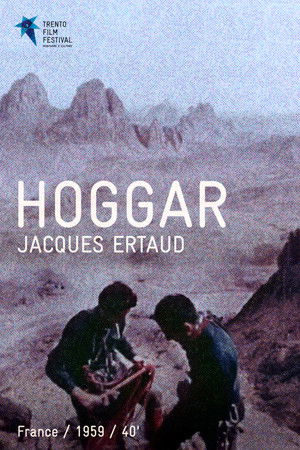
Documentary on the French Alpine expedition to Hoggar in Algeria, starring Roger Frison-Roche, Raymond Coche, Pierre Lewden, and François de Chasseloup-Laubat. The 1935 French Alpine Expedition to Hoggar was conceived and prepared by Lieutenant Raymond Coche, the ideal leader for an expedition that would combine alpine and Saharan terrain in Algeria. Among his goals, he set himself the task of leading a French rope team to the still-untouched summits of Atakor and Tefedest and planting the French flag there. His old friend, Pierre Lewden, an athlete and journalist, was soon on the team, and to complete their project and complete the trio, they called on Roger Frison-Roche, a guide from Chamonix and one of the best climbers of this generation. A few days before their departure from Paris, filmmaker Pierre Ichac joined them.
Stuart, an adorable white mouse, still lives happily with his adoptive family, the Littles, on the east side of Manhattan's Central Park. More crazy mouse adventures are in store as Stuart, his human brother, George, and their mischievous cat, Snowbell, set out to rescue a friend.
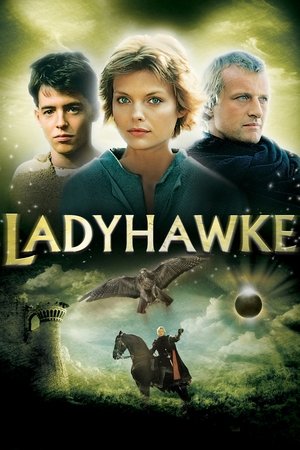
Captain Etienne Navarre is a man on whose shoulders lies a cruel curse. Punished for loving each other, Navarre must become a wolf by night whilst his lover, Lady Isabeau, takes the form of a hawk by day. Together, with the thief Philippe Gaston, they must try to overthrow the corrupt Bishop and in doing so break the spell.
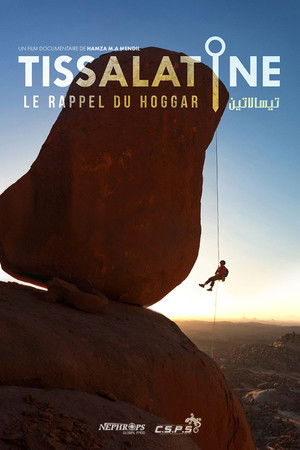
Thierry Damilano and his team of Tuareg guides will take you on a trek in the Algerian Sahara, to discover the local culture with a mandatory visit to the hermitage of Father de Foucauld facing Assekrem, then climbing the legendary peaks of the Hoggar massif.
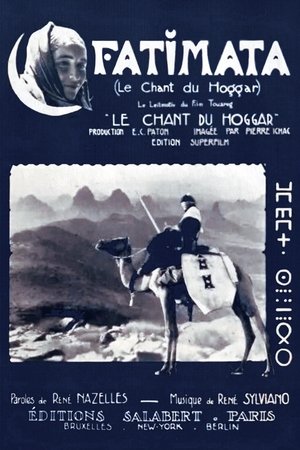
Le Chant du Hoggar, a fictionalized documentary directed by Pierre Ichac, which takes as its theme the adventurous life of the Tuaregs of yesteryear, the setting being the lesser-known mountains and valleys of the Hoggar, and the actors being the Tuaregs themselves. This production, of considerable interest, was filmed last year by Pierre Ichac, a project manager for the General Government of Algeria. For six months, the young director, who traveled more than 7,000 kilometers by car and about 1,000 kilometers by Méhari through the Hoggar mountains, recorded 8,000 meters of film. The beautiful Fatimata reigns over all hearts in the wandering Tuareg tribe, with her herds, in the high valleys of the Hoggar. But she loves The Lion, the bravest of the young warriors of an enemy tribe. And it is Fatimata's name that The Lion lovingly carves on the rocks of the mountain.
A Seminole Indian captures a falcon on its yearly migration, but it yearns to be free.
Government agents find evidence of extraterrestrial life at the South Pole.
After killing her treacherous step-father, a girl tries to escape the country with a young vagabond. She dresses as a boy, they hop freight trains, quarrel with a group of hobos, and steal a car in their attempt to escape the police, and reach Canada.
In northwest Africa, a tribal leader tries to stir up a rebellion against the ruling powers.
In one of the tribes of the Algerian Sahara, everyone awaits the arrival of the hero who will defend the rights of the poor. A man decides one day to put the mark of the "hero" on his newborn son and the whole tribe celebrates the arrival of this eagerly awaited messiah who came to save them. This false hero then grows up by assuming his role of savior. Filled with cynicism, he crosses the countryside and has a number of adventures.
1516, Legend has it that the king of Algiers had a wife named Zaphira. When the pirate Aroudj Barbarossa arrives to liberate the city from the Spaniards, he is determined to conquer Zaphira as well as the kingdom itself. But is Zaphira willing to let him, or is she plotting for herself?
While he tries by all means to stay out of the bloody upheavals caused by the battle of Algiers, Hassan, an honest and naive father, unknowingly offers hospitality to a mujahid actively sought by the army. French. A series of events and misunderstandings quickly catapult him to the forefront, presenting him under the pseudonym “Hassan Terro”, a great fictitious terrorist who would have sworn the doom of the French army...
In the 1970s, groups of young Europeans ventured into the Sahara Desert with the intention of crossing it and experiencing “an adventure”. Unprepared, reckless and ignorant of the terrain they were crossing, they faced extreme situations with unexpected consequences. From the passion of these young people for adventure, the most famous rally in the world was born. “End of the Journey, Sahara” tells the story of one of these adventures.
The true story of explorer, journalist and writer Isabelle Eberhardt, originally from Switzerland. She moved to Annaba in Algeria in 1897 with her mother, who preferred to live in the Algerian neighborhoods rather than the European neighborhoods that she hated, and converted to Islam. Her lifestyle shocked the French colonialists: she dressed like a man, frequented cafes and smoke shops. Fascinated by the desert, she traveled the Sahara under the identity of Si Mahmoud, she published articles and books on the world she discovered in southern Algeria, strongly criticizing the colonial authorities. Arriving in El Oued, the soldiers prevent him from continuing his journey. She disobeys and overhears officers shooting Arab prisoners. Arrested, she was accused of espionage and was expelled from Algeria. She married Slimane, a Muslim non-commissioned officer in 1901. Having become French through this marriage, she could now reside in Algeria.
In a post-apocalyptic future, a wheat farmer embarks upon a journey and encounters a variety of unusual characters, while traveling across the land.
Two travelers, Boualem and Sekfali, cross the hostile and endless desert. Boualem pulls a cart on which old books, pictures, relics and memories of Sekfali are piled up. Two men, two attitudes towards life, two visions of the world. Where do they come from, where are they going? The journey would be completely calm and happy if each of them were not inhabited by their pasts, determining their different visions of the future. Boualem's childhood was marked by the Algerian war of liberation. His dream is to achieve a socialist society, which is for him the only path to salvation. Sekfali, who tries to dissuade Boualem from continuing the journey, has the attitude of an aristocrat. For him, socialism is a heresy and people do not like responsibility, they only act if a leader gives them the injunction.
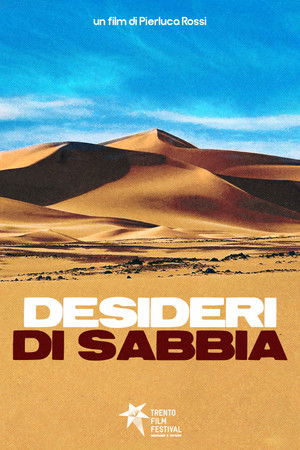
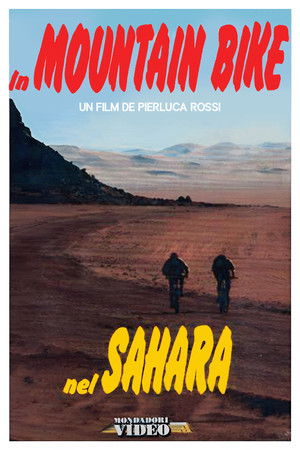
Pierluca Rossi's Lungo La Pista Dei Contrabbandieri (1990) is an adventure documentary about a mountain bike crossing of the 700 km between the towns of Tamarasset and Djanet in the southern Algerian Sahara, from the Hoggar mountain range to the Tassili n'Ajjer. This crossing, supported by a 4x4 truck and a motorcycle, and never before undertaken by bicycle, emphasizes the rediscovered dimension of slowness, similar to the caravans of the Tuareg, in contrast to the unnatural speed of mechanized desert travel in the 1990s, which was considered the norm at the time due to the distorted image provided by the Paris-Dakar Rally and other similar events.
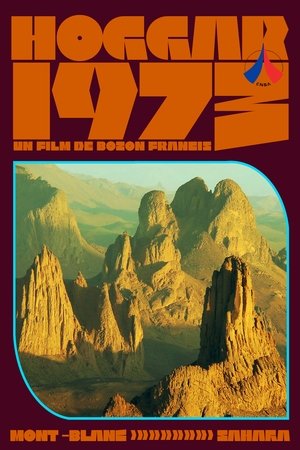
Oversand is one of the first films about free climbing, the third film in a series of three with "Overdon" and "Over-Ice". Directed by Jean-Paul Janssen, the film was shot in 35mm in Algeria, in the Sahara Desert, in the Tamanrasset region, on the walls of the majestic peaks of the Atakor massif, central sub-region of Hoggar, mountainous heart of Hoggar, a volcanic plateau of almost circular shape, whose average altitude is 2000 meters, and which culminates at Mount Tahat (2918m), the highest point in Algeria. The Atakor is distinguished by its spectacular volcanic peaks, its needles, and its rugged landscapes, resulting from the erosion of ancient volcanic chimneys, which make it the most emblematic summits of the Hoggar, such as the Assekrem, the Ilamane, or the Tizouyag, where climbers Patrick Edlinger, Patrick Bérhault, Bernard Gorgeon, Hugues Jaillet, Jacques Perrier, Stéphane Troussier and Odette Schoënleb evolve under the watchful eye of the Tuareg caravans.
As a boy, Raoul is reared by an Arab tribe in Algerian Sahara. Years later, as a refined Europeanized gentleman, he falls in love with Barbara, an officer's daughter, who rejects him when she discovers his background. Affecting a raid, he captures her and then secretly buys her at a slave auction. When she is rescued by French troops, however, his ancestry is established and they find happiness together.