Ludruk Tobong artists are trying to maintain the arts that support their livelihood and are also trying to eliminate the negative stigma of trans women through cultural media.
Focuses on one of the most talked about and important issues of our time – how to find yourself and your truth. It follows model and transgender activist Munroe Bergdorf’s journey and provides hope for those facing similar challenges.
Doug is becoming a woman and his best friend is having trouble coming to terms with it.
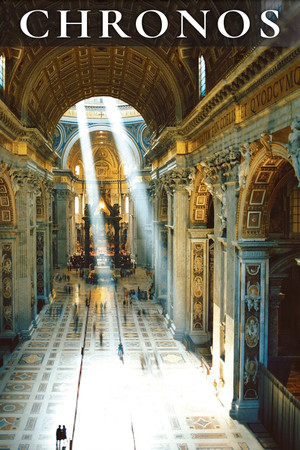
A woman narrates the thoughts of a world traveler, meditations on time and memory expressed in words and images from places as far-flung as Japan, Guinea-Bissau, Iceland, and San Francisco.
Lugar de Nadie
Filmed during lockdown 2020, ‘de Luz/Of Light’ explores fleeting perceptions and cyclic rituals of Portuguese coastal landscapes, specifically surrounding the Cabo Sardão Lighthouse in Beja, and constructs a complex audio-visual narrative through collaging together various natural rhythms (such as the sun and motion of the sea). This film is intended for screening with a 16:27 aspect ratio. The soundtrack was composed by sound artist Michelle Lewis-King.
Several characters realize their personal way to build their own identity from the choice of genre. Transsexual, transgender, crossdressing – the defining of terminologies different ways of looking at yourself are constantly rising, portraying a universe of possibilities, expanding the boundaries of the possible and permitted.
Trans man Stafford candidly tells the story of a memorable encounter he had at a sex club.
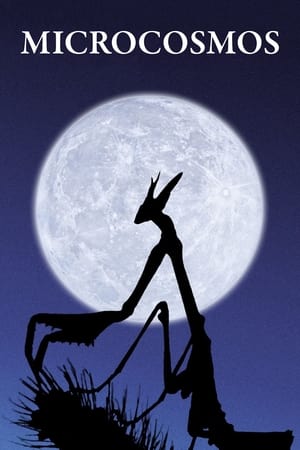
A documentary of insect life in meadows and ponds, using incredible close-ups, slow motion, and time-lapse photography. It includes bees collecting nectar, ladybugs eating mites, snails mating, spiders wrapping their catch, a scarab beetle relentlessly pushing its ball of dung uphill, endless lines of caterpillars, an underwater spider creating an air bubble to live in, and a mosquito hatching.
A day in the city of Berlin, which experienced an industrial boom in the 1920s, and still provides an insight into the living and working conditions at that time. Germany had just recovered a little from the worst consequences of the First World War, the great economic crisis was still a few years away and Hitler was not yet an issue at the time.
Starting with a long and lyrical overture, evoking the origins of the Olympic Games in ancient Greece, Riefenstahl covers twenty-one athletic events in the first half of this two-part love letter to the human body and spirit, culminating with the marathon, where Jesse Owens became the first track and field athlete to win four gold medals in a single Olympics.
Part two of Leni Riefenstahl's monumental examination of the 1938 Olympic Games, the cameras leave the main stadium and venture into the many halls and fields deployed for such sports as fencing, polo, cycling, and the modern pentathlon, which was won by American Glenn Morris.
A short documentary which, starting from the experience of its five protagonists, takes us inside the team which presents itself not only as a tool for access to sport, but also as a political means for the entire transgender community to claim its identity and all rights denied.
Performative and expository documentary, which highlights the contrast of experience among transgender men in Brazil. The short film brings five characters - Kenai, Caetano, Augusto, Pietro and Daniel -, each one reflecting a different reality.
Bosom buddies BeV StroganoV, Ovo Maltine, Ichgola Androgyn and Tima die Göttliche are four Berlin drag queens who met in the mid 1980s. These four queens became Germany’s most popular drag performers and have been busy fertilizing the German cultural scene. Besides being performers, they are also political activists – in AIDS awareness, anti-gay violence, the sex workers movement and the struggle against the extreme right and racism. The film tells their story.
A young filmmaker maintains an epistolary conversation with his deceased grandmother while he rediscovers the space they both inhabited for more than a decade.
This film is based on the true story of Jean Bella, who served as an officer in the Belgian Marine while being convinced, from an early age, that he was in fact a woman. Director Jean-Pol Ferbus follows Jean Bella and makes him talk about his life, psychological and spiritual experiences and reveals the true poet who remained undisclosed for most of this person's life. The film ultimately isn't about transexuality but about loneliness one can experience when he/she feels very deeply that she/he belongs to the two sexes and this in a deep, almost religious, fashion, to such an extent that sexuality itself is being erased from one's life. Jean-Gina Bella is a woman in the body of a man who bravely lived a life on the sea, eventually fighting the elements, talking to God when lost on the immense solitary ocean. This testimony is a very touching and poetic one.
A documentary film depicting five intimate portraits of migrants who fled their country of origin to seek refuge in France and find a space of freedom where they can fully experience their sexuality and their sexual identity: Giovanna, woman transgender of Colombian origin, Roman, Russian transgender man, Cate, Ugandan lesbian mother, Yi Chen, young Chinese gay man…
Documentary by the music label Defected and its brand Glitterbox about electronic music, its beginning in New York and its importance for minorities all around the world.
Ary Zara lives in limbo trying to understand who he really is. Refusing the gender binary categories that society imposes, at the age of 28 he decides to explore his identity by facing a physical and emotional transformation. A three-year journey revealing what is on the other side of the mirror through the courage, doubt and freedom of a deeply intimate process of self-discovery.