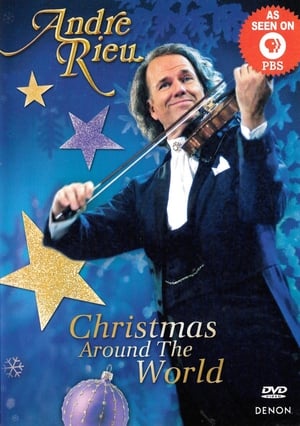
André Rieu - Magic of The Violin
Anton Bruckner’s 6th Symphony was written between 1879 and 1881: a very happy time in his life. Unlike most of Bruckner’s symphonies, the 6th was not revised. Of all his works, this one seems to come from a single source of inspiration. Bruckner himself called it his “boldest” symphony – probably due to its extreme degree of motivic, rhythmic and harmonic originality. This live recording of the seldom-performed 6th Symphony is the next instalment of the acclaimed Bruckner cycle by the Staatskapelle Berlin and Daniel Barenboim. Anton Bruckner Symphony No. 6 in A major (original version) Daniel Barenboim, Conductor Staatskapelle Berlin Recorded live at the Philharmonie Berlin, 22 June 2010
“Clarity was one thing that made this performance a marvel. Another was the flexibility of Barenboim’s speeds…. The flexibility of Barenboim’s tempi meant that Bruckner’s charm – an often overlooked aspect of his genius – shone through, especially in the genial Trio.” (The Telegraph) Bruckner’s 8th is the last symphony completed by the Austrian composer. Many of his contemporaries regarded the symphony as “the pinnacle of 19th century music”. Even today, this monumental work fascinates listeners with its virtuoso orchestral technique, its immensity of sound, and its inexhaustible richness of detail. Symphony No. 8 in C minor (second version 1887-90, Robert Haas Edition) Daniel Barenboim, Conductor Staatskapelle Berlin Recorded live at the Philharmonie Berlin, 26 June 2010
In Anton Bruckner’s 7th Symphony, the listener encounters a music characterized by great spaciousness and profound solemnity, a music which speaks of grief and lamentation, but also of their transcendence. With its monumental architecture and intensity of sound, the symphony has moved listeners ever since its triumphal premiere in 1884. The Guardian calls Daniel Barenboim’s London interpretation “Tremendous … Barenboim and the Staatskapelle seem to have this work in their systems, and the overall impression was of music unfolding organically at its own pace rather than of a work being self-consciously interpreted or led.” Anton Bruckner Symphony No. 7 in E major (original version) Daniel Barenboim, conductor Staatskapelle Berlin Recorded live at the Philharmonie Berlin, 25 June 2010
André Rieu - Magic Of The Waltz
Rosa, a contemporary music composer, agrees to give her first television interview at her colleague Tere’s apartment to keep it secret from her husband. What begins as a simple professional conversation turns into an absurd and comic portrait of rivalries and affections among three women—Rosa, Tere, and Tere’s daughter Luisa—interrupted by power outages, a constantly barking dog, and the visit of a famous composer. As the interview unravels, family and artistic tensions surface, revealing, with humor, both the fragility of prestige and the strength of complicity.
Surely Bach’s French Suites, which he composed during his years at Cöthen (1717–1723), are among the finest inducements to practise that any teacher has ever made to a pupil. In this case Bach wrote them for his young wife, Anna Magdalena. The over-riding impression left by these suites is one of endearing tunefulness. Clavier-Übung II is a later collection of didactic keyboard pieces. It comprises two greatly contrasted works: the Italian Concerto and the Overture in the French Style. These performances admirably demonstrate the thoughtful and persuasive approach that András Schiff adopts when performing Bach. Recorded live at the Bachfest 2010, Protestant Reformed Church of Leipzig, 11 June 2010 Repertoire J.S. Bach: French Suites Nos. 1–6, Overture in the French Style in B minor, Italian Concerto in F major, BWV 971
The King of the Waltz stages a spectacular anniversary concert in the Netherlands' most romantic city square. Hugely popular Dutch violinist and composer Andre Rieu regularly features alongside top rock and pop bands
In Search of Beethoven offers a comprehensive documentary about the life and works of the great composer. Over 65 performances by the world's finest musicians were recorded and 100 interviews conducted in the making of this beautifully crafted film. Eleven interviews are included in the Extras and Six complete movements.
Chiaki is an aspiring conductor who faces the challenge of leading an orchestra which is made up of substitutes. Nodame gives her support to her beloved as she works hard towards achieving her dream to pass a promotion exam at their music conservatory. Will Chiaki be able to revive a broken down orchestra and launch his musical career? What will become of Nodame and Chiaki's relationship?
Karajan - Bruckner - Symphonies No. 8 & 9
Live performance of Verdi's Missa da Requiem at the Edinburgh Festival in 1982. An all-star quartet of soloists under the baton of Claudio Abbado, recorded in high definition audio.
Tom Cat is a concert pianist who plays beautifully until he is interrupted by Jerry Mouse.
Janine Jansen spielt Tschaikowskys Violinkonzert
Made to celebrate the 250th anniversary of Mozart's birth, IN SEARCH OF MOZART is the first feature-length documentary on Mozart's life. Produced with the world's leading orchestras and musicians, told through a 25,000 mile journey along every route Mozart followed, this detective story takes us to the heart of genius. Throughout, it is the music that takes center stage, with the jigsaw of Mozart's life fitting around it.
Layar, a popular film star who feels bored with his career wants to make a musical theater set in a family history that is always linked to Indonesian film history.
Utopia, the new orchestra of conductor Teodor Currentzis, can be experienced for the first time in Vienna on its inaugural tour with the 1945 version of Igor Stravinsky’s ‘The Firebird’ and Maurice Ravel’s Suite No. 2 of ‘Daphnis et Chloé’, ‘La Valse’ and ‘Boléro’.
Recording of the Berlin Philharmonic Orchestra conducted by Herbert von Karajan playing Beethoven's 7th Symphony.
For Mahler, symphonies always were a means of interpreting the most convoluted philosophical problems that couldn’t be resolved verbally. The ambitious structure of the five-part Fifth Symphony spans from the Funeral March to the roaring finale. It is a forthright attempt to resolve the tragic conflict with the surrounding world. The brilliant fourth part of the symphony, Adagietto, resembles a beautifully mysterious flower that every conductor reimagines in their own style. As one of the twentieth century’s most influential maestros, Mahler redefined the conductor’s role. For him, the conductor is just as integral to his own musical works as they are to the composer. When a maestro steps onto the podium and opens the score, he recreates musical universes from scratch. Teodor Currentzis and the musicAeterna orchestra have performed Mahler’s symphonies around the world for many years. The Fifth Symphony has earned its place as one of the highlights of the cycle.
The Dutch violinist and the Johann Strauss Orchestra perform a number of musical hits. André Rieu is one of the bestselling modern classical artists, with over 20 million sales worldwide and a string of successful tours behind him. Rieu set up the Johann Strauss Orchestra in 1987 with the dual aim of promoting the waltz music he loves while introducing a wider audience to the pleasures of classical music. Here Rieu and his orchestra turn their attention to memorable songs from stage musicals, providing their own take on a number of popular tunes.