A critical analysis by Jacob Geller analyzing the depiction of head- (or consciouness-) transplants in video games such as Wolfenstein 2 or Soma in parallel with the history of the almost-father of head transplants (his experiences having been limited to monkeys), Robert Joseph White. How did we end up moving the center of human consciouness from the heart to the brain ? Where does the soul come in to play here? When is the body / Theseus' ship no longer the body / Theseus' ship for having had its limbs / its wood transplanted too much ?
Tudo é Irrelevante. Hélio Jaguaribe
Le besoin de croyance et le besoin de vérité
E. M. Cioran. Sa vie. Son oeuvre
By attempting to travel 2,960 km from southern Quebec to its northernmost point, by bike and skis, in the middle of winter, adventurers Samuel Lalande-Markon and Simon-Pierre Goneau want to reinvest the territory and reflect on the identity and collective relationship that Quebecers have with it. Their journey begins at kilometer marker 720, an obelisk-shaped monument located on the border with the United States, and ends at Cape Anaulirvik, north of Ivujivik, the northernmost point of the Ungava Peninsula. Over the course of a 91-day expedition, they set out to meet the country in all its immensity, splendor and impetuosity, a country that suddenly reveals itself to be less abstract, less distant, more real.
A discussion between Jean Hyppolite, Georges Canguilhem, Paul Ricoeur, Michel Foucault and Alain Badiou on the subject of philosophy and truth. Curated by Dina Dreyfus.
Explorer Bruce Parry visits nomadic tribes in Borneo and the Amazon in hope to better understand humanity's changing relationship with the world around us.
Herbert Fingarette once argued that there was no reason to fear death. At 97, his own mortality began to haunt him, and he had to rethink everything.
A film essay on origin, life, religion, decay and more.
This remastered, rare, local production from the 80s is an unfiltered look into the mind and heart of the world-renowned folk artist Howard Finster. Walking and talking in his Paradise Garden, Finster gives insight into his visions, Faith, and artwork. He even sings and plays the banjo. Dr. George Pullen interviews Finster. And in this case, the word "interview" means that Dr. Pullen just lets Finster talk. And it's pure gold.
In 1973 Yorkshire public television made a short film of the Nobel laureate while he was there. The resulting film, Take the World from Another Point of View, was broadcast in America as part of the PBS Nova series. The documentary features a fascinating interview, but what sets it apart from other films on Feynman is the inclusion of a lively conversation he had with the eminent British astrophysicist Fred Hoyle.
Documentary on the legendary martial artist Bruce Lee, with a focus on the production of his unfinished film Game of Death. Using interviews and behind-the-scenes footage, Lee aficionado John Little paints a portrait of the world's most famous action hero, concluding with a new cut of Game of Death's action finale, reconstructed from Lee's notes and recently-recovered footage.
A colorful and provocative survey of anarchism in America, the film attempts to dispel popular misconceptions and trace the historical development of the movement. The film explores the movement both as a native American philosophy stemming from 19th century American traditions of individualism, and as a foreign ideology brought to America by immigrants. The film features rare archival footage and interviews with significant personalities in anarchist history including Murray Boochkin and Karl Hess, and also live performance footage of the Dead Kennedys.
The impact of Marx on the 20th century has been all-pervasive and world-wide. This program looks at the man, at the roots of his philosophy, at the causes and explanations of his philosophical development, and at its most direct outcome: the failed Soviet Union.
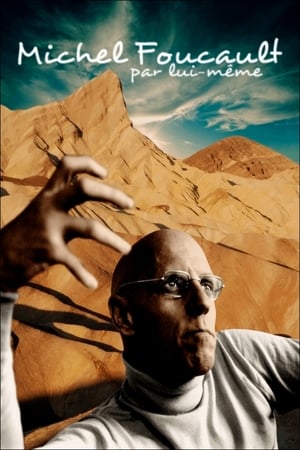
A voyage to the center of the thought of Michel Foucault (1926-1984), a tireless explorer of the margins, a brilliant and atypical thinker, through excerpts from his books and lectures, and the use of images that resonate with them.
102 Years in the Heart of Europe: A Portrait of Ernst Jünger (Swedish: 102 år i hjärtat av Europa) is a Swedish documentary film from 1998 directed by Jesper Wachtmeister. It consists of an interview by the journalist Björn Cederberg with the German writer, philosopher and war veteran Ernst Jünger (1895-1998). Jünger talks about his life, his authorship, his interests and ideas. The actor Mikael Persbrandt reads passages from some of Jünger's works, such as Storm of Steel, The Worker, On the Marble Cliffs and The Glass Bees.
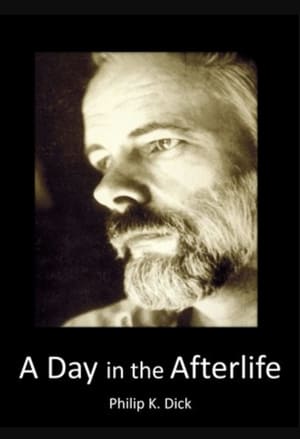
A poetic look at the life and legacy of legendary author Philip K. Dick (1928-1982), who wrote over a hundred short stories and 44 novels of mind-bending sci-fi, exploring themes of authority, drugs, theology, mental illness and much more.
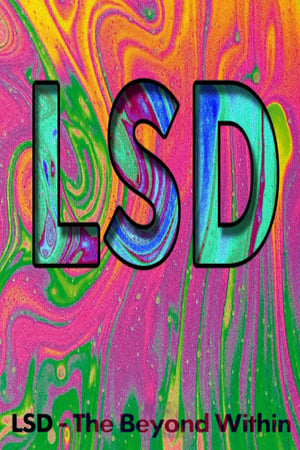
This refreshingly frank and impartial study of the discovery and development of the notorious hallucinogenic drug is notably free of moral judgmental, and features contributions from such legendary heroes of psychedelia as Albert Hoffman - the Swiss scientist who discovered the drug - Aldous Huxley - author of 'The Doors of Perception' - Ken Kesey - author of 'One Flew Over the Cuckoo's Nest.
The author Carl-Göran Ekerwald has written more than 50 books. At the age of 87, a new chapter in his life begins when he meets the journalist and author Sigrid Kahle. Ekerwald is a man of eductation and lust.
Amid Guanajuato's vibrant streets, an aging filmmaker becomes a modern Don Quixote, joined by a spirited young animator as his loyal Sanchia. Together, they navigate themes of mortality, unfulfilled dreams, and the fragile line between madness and clarity, uncovering the transformative power of light, art, and the landscapes that shape our souls.