New York City's beloved Ukrainian restaurant Veselka is best known for its borscht and varenyky, but it has become a beacon of hope for Ukraine. As the second-generation owner Tom Birchard reluctantly retires after 54 years, his son Jason faces the pressures of stepping into his father’s shoes as the war in Ukraine impacts his family and staff.
"Free Spaces" sketches a new and transformative image of four major cities in Eastern Europe. In te post-communist urban settings of Tbilisi (Georgia), Yerevan (Armenia), Chișinău (Moldova) and Kiev (Ukraine), Ina Ivanceanu follows artists and activists as they reclaim public spaces and assert their freedom of expression. Occupying a cinema, reviving an old Soviet circus, converting a grim metro passage into a glamorous arena, and repurposing a defunct factory building into a cultural agora. By seizing and creatively transforming public spaces characterized by an abondoned past, today's new generation explores democratic means and freedom while also confronting pervasive neoliberal structures in their respective societies.
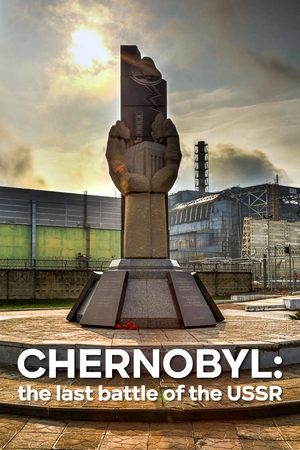
Poliske was contaminated with radioactive material after the 1986 Chornobyl disaster. Soviet authorities did everything they could to erase the ancient history of this town, and after Chornobyl, they destroyed its future.
The War Diary is a contemporary road movie that confronts history with the current reality of Russia, Ukraine, Armenia and Georgia. An extraordinary document leads Hakob Melkonyan to undertake the journey of a lifetime:
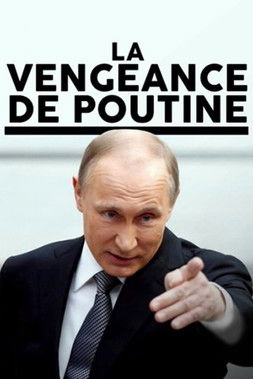
Switzerland has long been a special partner for Russia: A non-member of the EU and NATO, a welcome investor in Russia and the world’s most important trading centre for Russian raw materials. Now things are different in both countries.
A man hikes through late-winter woods. Russia invades Ukraine. It’s difficult to reconcile the scales of action described by those sentences, but this difficulty is what John Gianvito dwells on in his new video. It may simply be that this is a diary, movingly plain and provisional in construction, which recounts what its author did for a few months last year: he watched a war on the internet and went outside. Even if that’s true, such a description makes Gianvito’s images seem less strange than they are
A Polish vehicle traverses the roads of Ukraine. On board, people are evacuated following the Russian invasion. This van becomes a fragile and transitory refuge, a zone of confidences and confessions of exiles who have only one objective, to escape the war.
Between 1930 and 1945, Eastern Europe experienced mass violence on an unprecedented scale. Hitler and Stalin exploited the vast region for their respective expansionist plans. It is estimated that around 14 million civilians were murdered—primarily Jews, Poles, Balts, Belarusians, and Ukrainians.
Due to the full-scale Russian invasion of Ukraine, tens of thousands of Ukrainians, fleeing the war, found refuge in Uzhhorod in western Ukraine. The local director decides to attract non-professional actors -displaced people - in bringing his dream into life - to stage the King Lear play. The theatrical performance helps them find themselves and their purpose in a new world where there is war, and the director finds an answer to the eternal question of what love is and why this world should not perish.
Ukrainian musicians of all genres, from metal to opera, transform their passion for music into devotion to their country in this moving documentary. Beginning on the very first day of the Russian invasion, Soldiers of Song documents how the lives of its cast of Ukrainian musicians have irrevocably changed and how they use their musical talents to support themselves and their communities. Using shocking footage from the frontlines, this film reminds us not only of the ongoing tragedies that continue to happen during this war, but also of the resilience of Ukraine and its cultural forces. Here music functions not only to lift the spirits of the soldiers, but also as a cultural export to raise awareness of the war, a tool for raising humanitarian and military funds, and a valuable cultural artifact for everyday Ukrainians to rally around and protect. The musician’s commitment to their craft reminds us of the real power art has and the impact of beauty under catastrophic circumstances.
From late 1940s to late 1980s, doves were an obsession for boys in Kyiv. This is a film about how a hobby from childhood becomes a meaning of life.
Bomb Hunters is an engrossing examination of the micro-economy that has emerged in Cambodia from untrained civilians harvesting unexploded bombs as scrap metal. The film explores the long-term consequences of war and genocide in an attempt to understand the social, cultural, and historical context and experiences of rural villagers who seek out and dismantle UXO (unexploded ordnance) for profit. Part of a global economy, these individuals clear UXO from their land in order to protect their families from harm and to earn enough money to survive. Bomb Hunters is an eye-opening account investigating the on-going residual, persistent effects of war experienced by post-conflict nations around the globe, and the complex realities of achieving "peace".
Sous nos yeux
Afrique-France : le divorce ?
The documentary tells about the birth, history of formation and development of the National Football Team of Ukraine in the period from 1992 to 2022.
This short film employs an anonymous hotline to elevate the voices beneath Vermont's F-35 flight path, the first urban residents to live with one of the military's most controversial weapons systems overhead. Tranquil scenes of unassuming neighborhoods near Burlington International Airport are juxtaposed with voicemails of the unheard, those drowned out by the ear-shattering “sound of freedom.” Exploring the relationship between picturesque residential areas and the deafening fighter jets overhead, Jet Line is a poetic portrait of a community plagued by war machines, documenting untenable conditions in a small city once voted one of the best places to live in America.
Alone explores the existential pain of Ukraine through the eyes of an unlikely protagonist, one of the country’s most commercially successful pop stars. Andriy Khluvniuk, lead singer of hip-hop rock band Boombox, has millions of devoted young fans who adore him as a singer songwriter and sex symbol but know nothing of his personal turmoil caused by the political instability and military aggression in his homeland. Andriy is on a mission to raise awareness and motivate his fans to join him in taking a stand against the war in the east of Ukraine, and call for the release of Oleg Sentsov, a Ukrainian filmmaker and political prisoner in Russia. As tensions between Ukraine and Russia become a footnote on the world’s media agenda, Andriy use his fame to refocus the global spotlight on the fragile independence Ukraine is fighting for. The film culminates in an incredible sequence of events that result in Oleg Sentsov's release in a prisoner swap. Andriy and Oleg can meet each other at last.
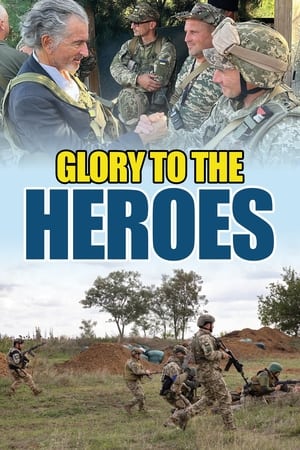
Sean Penn and Aaron Kaufman’s documentary, shot just before and after Russian invasion of Ukraine on 24th February 2022, and featuring several interviews with Ukraine President Volodymyr Zelensky.
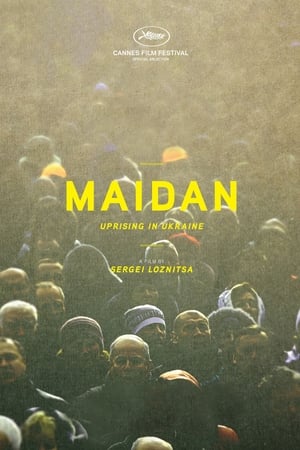
Over 93 days in Ukraine, what started as peaceful student demonstrations became a violent revolution and full-fledged civil rights movement.
"LIDA" takes place on the day of Lida's 70th birthday. This already special day is made more unusual by the recent arrival of her grandson, Lev, who had immigrated to the United States with his family in 2001. Returning to Ukraine for the first time as an adult, Lev documents his grandmother as she tends to the small homestead and prepares for the birthday celebration in the rural village in Ukraine. By capturing moments of arduous labor, as well as through personal conversation, Lev inquires into his grandmothers relationship to her home, land - and their family.