This is an installation documentary created in 2015. The quiet process of making boxes indoors reflects the author's patience and caution, the narration when the screen is black reflects the author's familiarity and confidence in what he wants to express, and the dodging perspective and trembling picture when facing the crowd outdoors reflect the photographer's cramped and alienated. A lot of things happened after 2015, and the film was re-edited. The current version has almost used the best materials of that year.
Most people were first exposed to Michael C. Ruppert through the 2009 documentary, Collapse, directed by Chris Smith. Apocalypse, Man is an intimate portrait of a man convinced of the imminent collapse of the world, but with answers to how the human spirit can survive the impending apocalypse.
A dialogue and home video about belonging, from young people living in modern colonial society.
Developments in the Canadian forestry industry during the 1970s are shown being carried out both as lab experiments and in the field to protect and conserve the country's vast forests. These include turning a Newfoundland bog into woodland, fostering British Columbia seedlings that withstand mechanical planting, inoculating Ontario elms against the bark beetle, devising ways of controlling fire, and more.
Living on the prairies during the summer, the Swainson Hawk flies 11,000 km to Argentina for the winter. But toxic pesticides pose a serious threat to these majestic birds. Dr. Stuart Houston and his team use satellite technology along with traditional bird-banding to greatly increase our knowledge of the lives of migratory birds.
A visual experiment on the different types of movement in a city.
Two friends await in the airport for a third friend to arrive. As the passangers come by, pictures not taken accompany a conversation between the two friends.
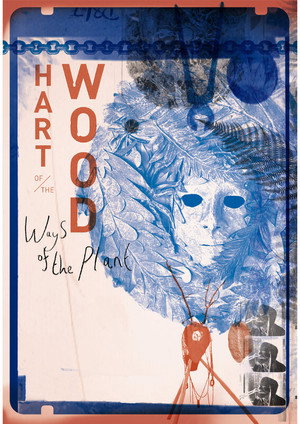
A long-form 'artist moving image' documentary film that sits in a fictitious conceit that begins in a distant future, inspired by Russell Hoban’s cult novel ‘Riddley Walker’. A medley of documentary, fantasy, song and dance: shot on a tapestry of celluloid film stocks and developed by hand.
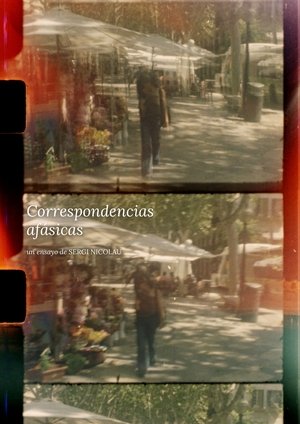
An audiovisual essay constructed from Super 8 footage filmed during camera tests for the short film ‘La Trampa’. Through gestures, light, and silences, it reflects on what the image reveals and what it leaves unsaid.
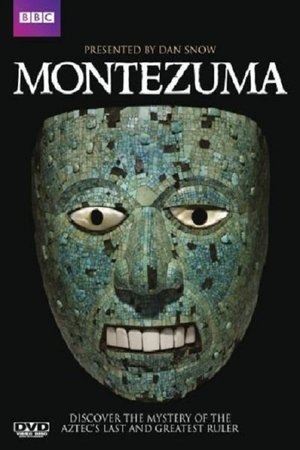
Montezuma is a 2009 BBC Television documentary film in which Dan Snow examines the reign of the Aztec Emperor Moctezuma II.
Sunny. Semantic sequences guide the gaze, a gaze that is sometimes raised, propelled downwards, then too high or motionless in front of an unrecognizable and yet so familiar vision. The images, linked by echoes of chromatic palettes and linear layers, scroll to the rhythm of a voice, reminiscent of an incantation. Sacred.
Guillermo Gómez Álvarez explores the identity politics of Puerto Rico via archival footage from various sources that clash with nine original songs from local independent musicians and a thematic analysis from a psychoanalyst and a historian. From the juxtaposition the absurd becomes coherent and the coherent becomes absurd as Puerto Rican identity is defined and rejected almost simultaneously.
A feature documentary about the journey of mankind to discover our true force and who we truly are. It is a quest through science and consciousness, individual and planetary, exploring our relationships with ourselves, the world around us and the universe as a whole.
Through phone call conversations, an aspiring Ilocano filmmaker relates to his mother working in Italy about his dreams and struggles while documenting the invisible betweenness of their language and distance.
A day in the life of a group of stray cats, who live in a wealthy neighborhood
The Tiger God project originated during the artist’s residency at Cien Art Village in Hualien in 2021, inspired by a Sikawasay (Amis priest) who said a concrete tiger carried a soul. The work explores encounters between Han folk beliefs and Amis spiritual traditions, reflecting on suppressed indigenous histories in eastern Taiwan under colonial and religious forces. Nighttime fireworks symbolize external impacts on the land, linking concrete animals, mining, and colonial imagination. The ritual opera returns the footage to the land and gods, weaving ritual, research, and reflection into a narrative about silent objects and memory.
As more and more of us use and replace electronic devices, manufacturers have failed to offer solutions for how to deal with the resulting waste. Much of it is exported to a toxic dump in Ghana, where scavengers do their best to salvage what they can.
Jonas Mekas recites poems of his, both in English and Lithuanian. Exclusive Mekas interview by the poet Sparrow. The legendary poet-film critic and film diarist waxes philosophical in rare extended setting exhibiting his transcendental poetic humor. Jonas attacks the crass world of TV advertising and sell-out commercial filmmakers. Contributes zen anecdotes and filmmaking advice. Choice clips include Mekas' Film Diaries with deceivingly formalist amateur "home movie" style, but in small bursts of expression in a quick collage. Footage from Jonas' homeland as well as clips of famed pop figures John Lennon, Yoko Ono and Tiny Tim.
Filmed in Berlin, July 1990. Images of workers taking down the wall and street peddlers selling pieces of it to make a living.
A quick view of three remarkable organic gardens: Le Tomple, Le jardin du Mas d’Abri in the department of Gard and Le jardin des Sambucs in the department of Hérault. The film goes over their general layout along pathways amongst the vegetation, ponds and people or animals that happen to be there at the time.