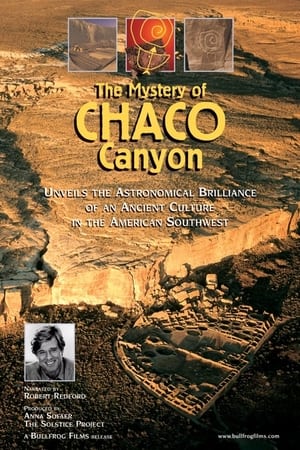
Chaco Canyon, located in northwest New Mexico, is perhaps the only site in the world constructed in an elaborate pattern that mirrors the yearly cycle of the sun and the 19-year cycle of the moon. How did an ancient civilization, with no known written language, arrange its buildings into a virtual celestial calendar, spanning an area roughly the size of Ireland?
In the first decades of the 20th century, when life was being transformed by scientific innovations, researchers made a thrilling new claim: they could tell whether someone was lying by using a machine. Popularly known as the “lie detector,” the device transformed police work, seized headlines and was extolled in movies, TV and comics as an infallible crime-fighting tool. Husbands and wives tested each other’s fidelity. Corporations routinely tested employees’ honesty and government workers were tested for loyalty and “morals.” But the promise of the polygraph turned dark, and the lie detector too often became an apparatus of fear and intimidation. Written and directed by Rob Rapley and executive produced by Cameo George, The Lie Detector is a tale of good intentions, twisted morals and unintended consequences.
The first feature from Alison McAlpine is a dialogue with the heavens—in this case, the heavens above the Andes and the Atacama Desert in northern Chile, where she alights on the desert- and mountain-dwelling astronomers, fishermen, miners, and cowboys who live their lives with reverence and awe for the skies.
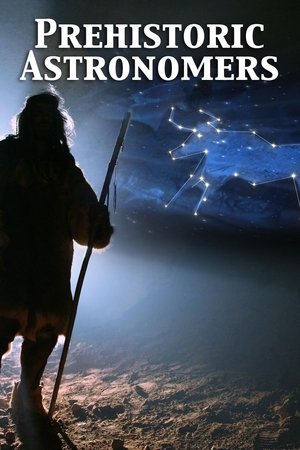
Cave paintings and lunar calendars exist in the caves and remains of prehistoric hunters studied recently. What if Prehistoric Man were clever enough to develop in depth scientific knowledge? As unlikely as it may seem, new data tend to prove that Prehistoric Man actually invented Astronomy!
This feature-length documentary is a portrait of eclipse chasers, people for whom solar eclipses - among nature's more spectacular phenomena – are a veritable obsession. The film follows 4 of them as they travel incredible distances to witness the last total eclipse of the millennium as it sweeps eastward across Europe to India. At various points along the way enthusiasts Alain Cirou in France, Paul Houde in Austria, Olivier Staiger in Germany and Debasis Sarkar in India offer their impressions of the historic event.
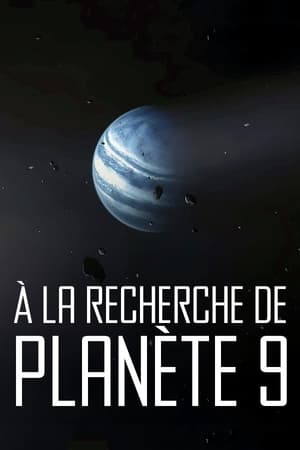
At the edge of our solar system supposedly lies an immense planet. Five to ten times the size of the Earth. Several international teams of scientists have been competing in a frantic race to detect it, in uncharted territories, far beyond Neptune. The recent discovery of several dwarf planets, with intriguing trajectories, have put astronomers on the trail of this mysterious planet. Why is this enigmatic planet so difficult to detect? What would a ninth planet teach us about our corner of the universe? Could it help us unlock some of the mysteries of our solar system?
"What's on your mind?" It's the friendly Facebook question which lets you share how you're feeling. It's also the question that unlocks the details of your life and helps turn your thoughts into profits.
Documentary which uses the latest, most detailed imagery to reveal the monthly life cycle of the moon. From Wales to Wyoming, Hong Kong to Croydon, the programme finds out how the moon shapes life on Earth, as well as exploring its mysterious dark side and discovering how the moon's journey around Earth delivers one of nature's most awe-inspiring events - a total solar eclipse. And at the end of a remarkable year of lunar activity, we find out why so many supermoons have been lighting up the night sky.
Photo sequence of the rare transit of Venus over the face of the Sun, one of the first chronophotographic sequences. In 1873, P.J.C. Janssen, or Pierre Jules César Janssen, invented the Photographic Revolver, which captured a series of images in a row. The device, automatic, produced images in a row without human intervention, being used to serve as photographic evidence of the passage of Venus before the Sun, in 1874.
Pioneers in Skirts is an Emmy-nominated 60-min documentary following filmmaker Ashley Maria’s quest to peel back the layers of obstacles that can limit a woman or girl's pioneering ambition.
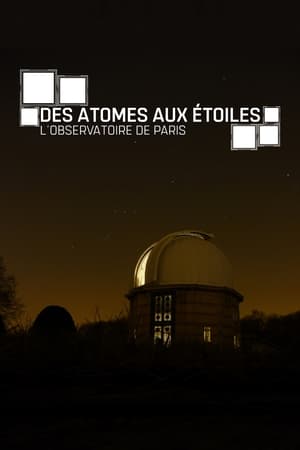
An incredible travel through space and time between the walls of the Paris Observatory, which is celebrating its 350th birthday. Place of discoveries such as speed of light or Neptune’s existence, it is still today one of the oldest operating observatories and the greatest hub in the world for astronomy and astrophysics researches, second only to Harvard.
Documentary telling the story of silicon chip inventor Robert Noyce, godfather of today's digital world. Re-living the heady days of Silicon Valley's seminal start-ups, the film tells how Noyce also founded Intel, the company responsible for more than 80 per cent of the microprocessors in personal computers.
The ancients hid the secrets of their incredible knowledge of astronomy in their temples and palaces, built to align with the sun, on the same day, all over the world. Revealing our species' obsession with the sun, across thousands of years and every continent, this is architectural magic on a cosmic scale.
Margherita. La voce delle stelle
Pioneering Australian bio-artists SymbioticA showcase their “Sunlight, Soil & Shit (De)Cycle” project, the latest in a long line of potential technological solutions to the looming global food crisis. Will it save humanity from its doom? Where are the investors?
Météores
It is the birth of neutrino astronomy. For the first time, astrophysicists can detect extra-terrestrial neutrinos in ice on the South Pole. The fundamental questions of science remain unanswered., how did the universe come to be? What keeps our world together? The newly discovered extra-galactic neutrinos may hold the keys to answering these questions.
In an age when misinformation, alternative facts, and conspiracy theories have become mainstream, UFOs have risen to become one of the most-talked about pop culture phenomena. With all of this noise, how can we expect anyone to know how much of this is true? What is in our skies? What do we know, and how do we know it? And most importantly: Are we being visited?
Four exceptional astronomers celebrate 50 years of work and friendship on a return road trip in the southwestern United States, recapturing youthful adventures and recounting each other's influences on the most exciting period in astronomy’s history. Roger the instrument-maker, Donald the theoretician, Nick the visionary, and Wal the observer. Together they represent the most productive period astronomy has ever had. They helped build the world’s biggest observatories and made revolutionary discoveries about the evolving universe, discoveries that have the power to change the way humanity sees itself. Alison Rose’s film is a funny, insightful, humbling and intimate portrait of friendship, as the men reflect on how their profound work on the universe has reflected back on the individual, affecting their sense of religious faith, how life may have purpose, and what is knowable and unknowable.
The Mediterranean. Because people have been travelling there for thousands of years, it is believed to be without secrets. And yet, far below its surface, lie vast unexplored territories, luxurious gardens worthy of the finest tropical coral reefs. These natural wonders are inaccessible to the traditional diver, in a twilight zone, between 60 and 120 m, where there’s less than 1% of sunlight. If diving at such depths is always a challenge, staying there is a fantasy, a utopia that becomes reality in Planet Mediterranean. In the tradition of Commander Cousteau and his "houses under the sea," the team of diver-photographer Laurent Ballesta is undertaking a new world-record setting mission in complete freedom and without time limit.