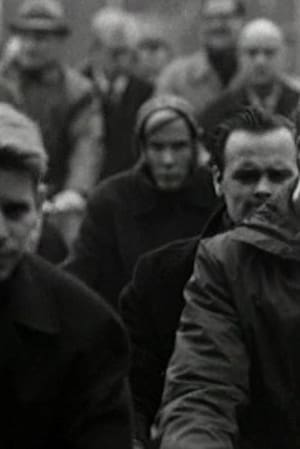
A flickering dance of intriguing imagery brings to light the possibilities of ordinary movements from the everyday which appear, evolve and freeze before your eyes. Made entirely from archive photographs and footage from the earliest days of moving image, All This Can Happen (2012) follows the footsteps of the protagonist from the short story 'The Walk' by Robert Walser. Juxtapositions, different speeds and split frame techniques convey the walker's state of mind as he encounters a world of hilarity, despair and ceaseless variety.
Film historians, and survivors from the nearly 30-year struggle to bring sound to motion pictures take the audience from the early failed attempts by scientists and inventors, to the triumph of the talkies.
IN THE LAND OF GIANT PYGMIES, a diary of Aurelio Rossi's 1925 trek into the immense Belgian Congo, preserves a long-gone-Colonial-era wonder at natural resources, "primitive" tribes, customs and costumes in Europe's cast African possessions, and implies that the "dark continent" could benefit from the "civilizing" influences of home.
Three young queer people share their experiences on what it’s like to deviate from the straight cis-norm. Throughout the film, painful experiences make room for a more positive perspective, such as the overwhelming sense of connection with millions of other queer individuals worldwide or the freedom that arises as one can relinquish certain expectations. This so-called ‘queer-joy’ is being discovered, providing inspiring and moving insights.
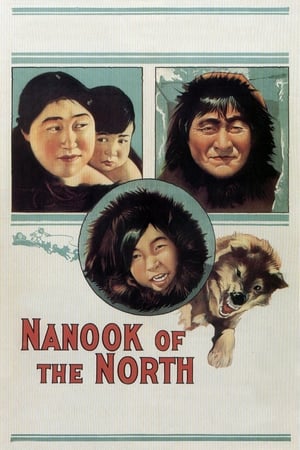
This pioneering documentary film depicts the lives of the indigenous Inuit people of Canada's northern Quebec region. Although the production contains some fictional elements, it vividly shows how its resourceful subjects survive in such a harsh climate, revealing how they construct their igloo homes and find food by hunting and fishing. The film also captures the beautiful, if unforgiving, frozen landscape of the Great White North, far removed from conventional civilization.
An account of the journey that King Alfonso XIII of Spain made to the impoverished shire of Las Hurdes, in the province of Cáceres, in the region of Extremadura, in 1922.
A documentary from Erkki Karu, one of the earliest pioneers of Finnish cinema: This government-produced propaganda film introduces the nature, sports, military, agriculture and capital of Finland.
This black-and-white archival film outlines the importance of Canada's forests in the national war effort during the Second World War.
White’s camera offers several 360-degree pans of views of the fairground, then amazes by tilting up and down the Eiffel Tower, and concludes with a stunning tracking shot to the highest point above Paris. Exhibitors freely grouped films into nascent narratives such as those displayed here. - Bruce Posner
A day in the city of Berlin, which experienced an industrial boom in the 1920s, and still provides an insight into the living and working conditions at that time. Germany had just recovered a little from the worst consequences of the First World War, the great economic crisis was still a few years away and Hitler was not yet an issue at the time.
Florence is a contemplative study of light and shadows, textures and planes, that makes beautiful use of the tonal qualities of black and white film. (mubi.com)
Filmmakers Alan and Susan Raymond spent three months in 1976 riding along with patrol officers in the 44th Precinct of the South Bronx, which had the highest crime rate in New York City at that time.
Omama, a rural grandmother in Hungary, has one main wish: to not wake up tomorrow. Martin, her cinema-expatriate grandson, comes for a visit, hoping to connect with her before Omama's wish comes true.
A short black-and-white silent documentary film featuring one dog jumping through hoops and another dancing in a costume, which was considered lost until footage from an 1896 Fairground Programme was identified as being from this film.
"All sounds travel in waves much the same as ripples in water." Educational film produced by Bray Studios New York, which was the dominant animation studio based in the United States in the years surrounding World War I.
An appreciative, uncritical look at silent film comedies and thrillers from early in the century through the 1920s.
On 18th of December 2017, the Filarmonica Teatro Regio Torino, directed by Timothy Brock, presented "The Gold Rush" by Charles Chaplin, with live performance of the soundtrack. But let's go back a few days: this short film takes us in the backstage of the concert!
A staged actuality attributed to the Biograph Company, produced during the Spanish–American War. The film depicts a Jack Tar climbing a mast in Puerto Rico, tearing down the Spanish flag, and replacing it with the American Stars and Stripes. Contemporary accounts note that such scenes brought U.S. audiences to their feet in patriotic fervor, serving as powerful wartime propaganda. The film is generally considered lost, with its existence recorded in writings by Erik Barnouw and other historians of early cinema.
Documentary that captures Tom Petty and the band in 1982-1983 as they finish, promote, and tour around the “Long After Dark” album (their final with legendary producer Jimmy Iovine). It aired only once on MTV in 1983. After the long lost 16mm reels were finally found, a restored version with 19 minutes of extra footage was released in 2024.
A 1956 Belgian film, Low Light and Blue Smoke, showcases the music of American blues guitarist Big Bill Broonzy, capturing his performance at the Chapel of Les Brigittines in Brussels during his 1956 European tour.