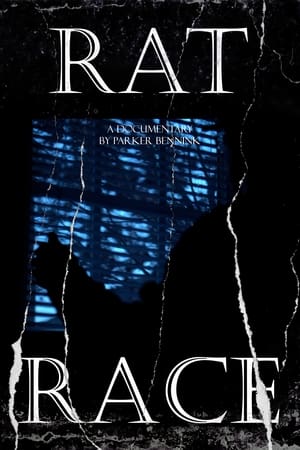
Join College Student Parker Bennink and he interviews four of Rowan University's most prolific filmmakers, to uncover what life as a student filmmaker is really like in today's day and age.
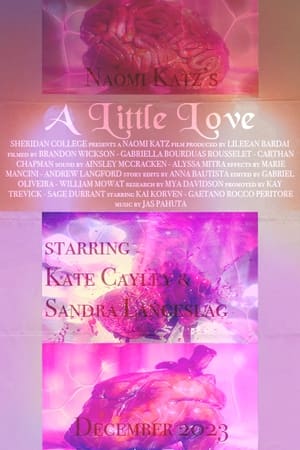
Through interspersed conversation and prose, this experimental documentary follows a poet and a neuroscientist as they explore the definition of love, what it means, and why it matters.
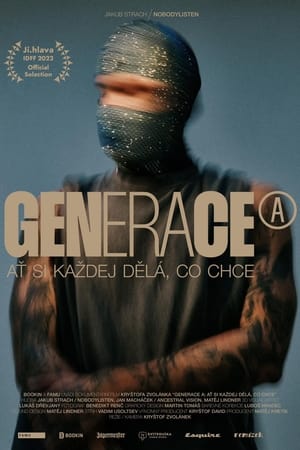
Jakub Strach aka NobodyListen is a successful Czech DJ and music producer. A portrait of his life and work can be seen as a manifesto of the millennial club-going generation. After hundreds of shows and preparations for the upcoming, renowned Addict party, the DJ must deal with the consequences of inflicting a wound scarring his image. Footage from the club backstage mingles with scenes of everyday life in which NobodyListen ponders the dark sides of the club scene, like drugs and misogyny. During the shooting, the Covid pandemic strikes, revealing the insecurities of work in culture.
Film in hand. Carnival in the global village.
Nonstop
The word trauma has many shades. The documentary Confession opens up the topic of sexual harassment in the church, which the director has experienced first-hand. She looks back at the world before the trauma, and searches for answers herself to the questions of whether she will be able to come out of it after some time, and whether she will find the courage to tell her parents about it.
Arturo Urbiola, independent singer/songwriter, talks about the influence music has had on his life, it's impact, and what's in store for his artistic career after becoming a father.
Elen Řádová and Tomáš Mašín’s student work draws on the genre of action films, which are characterized by emotionally intense and violent scenes. Excerpts from period blockbusters are supplemented with visual effects and edited in a way that drives the particularities of the action film genre to the point of absurdity. The resulting visual whirlwind thus deliberately escalates—and thereby diminishes—the dramatic impact of the original footage.
Janka Vidová made this video while studying in the New Media Studio of Michael Bielický. The artist borrowed an analogue video camera from the studio and filmed her visit to the region of her hometown in Slovakia. Using visual effects and instrumental music, she edited the resulting footage into a poetic film that captures the dreamy atmosphere of the snowy countryside.
The Faces of Parkinson shows the people who suffer from Parkinson's disease and the impact it made on their life and people around and close to them. As it also asks the question how one continues to stay positive with such a destructive disease.
Ženy v uniformě
A report from a Svazarm summer training camp where trained instructors dedicate themselves to providing children and young people with defence education.
Amidst the ivy-draped remnants of once-notorious public housing projects, FOR THOSE THAT LIVED THERE weaves a visual tapestry, navigating the poignant impacts of gentrification, the displacement of Black legacies, and the emergent migrant narratives. Against Chicago's ever-evolving skyline, this evocative exploration immerses audiences into the soul of a neighborhood transformed.
26 April 1986: Chernobyl’s reactor number 4 explodes and provokes the biggest nuclear disaster in history. Pripyat, where the plant is located, becomes a ghost city. Guided by former inhabitants, Eliška Cílková takes us in her quest of the town’s memory. Gracefully shot, the film reminds us the power of music where less expected.
Director Tereza Tara fell ill at the age of twenty-five. She captured her ten-year-long journey to recovery, which took her deep into the past and to the edge of the abyss, in the form of a personal and poetic video diary. With her weakened kidneys, she visited doctors, psychosomatic experts, and an alternative healer who urged her to surrender herself into the hands of God. Gradually, she began to see the condition of her dual organs as a reflection of her unbalanced relationship with her mother, her partner, and her own body. She finally understood that if she wanted to find a cure for her diseased kidneys and start living a better life, she needed to understand herself better first.
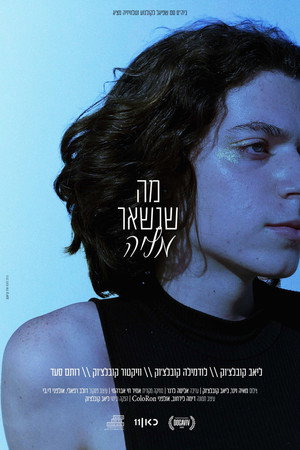
Liav (24) decides to look back at the girl he once was. Seeking to understand the painful decision to stop his gender transition process while it was in full swing and return to being a man, he embarks on an intimate journey to reconnect with his previous, younger self. He pieces together the figure of Lia - a vibrant young woman who experienced a spiritual metamorphosis, but also a severe trauma that led her to abandon her identity. Between past and present, between Lia and Liav, questions of identity, masculinity and femininity surface, attempting to understand what remains when turning back the clock - and what cannot be reclaimed.
This film is an imprint on the film strip, an imprint in the mind just like a memory of my father’s garden where a child is playing; an imprint of the father on the garden as a reflection of his character; an imprint of the garden on the father; an imprint of him on a person. As if the seeds were falling from his beard, skin, or hair and become the garden, roots, sprouting and growing, just like a child.
The film poem about pesticides reflects on the return to the natural food chain, in which insect pest serve as food for the higher order. The harmonic cycle of life and death, the temple that is the wildflower field resounding with the inebriating sound of crickets chirping and wheat spikes rustling in the wind, is invaded by the human, the ultimate consumer with no natural predator.
Polio is a viral infectious disease that can cause paralysis. The disease is almost eradicated today, but there are still people among us who suffer lifelong consequences after a polio epidemic.
The film portrait of a face made of shit thematizes the individual's ideas about his own freedom. Antonín dolák, philosopher and YouTuber, feels free when he gets rid of all social conventions. He loses his face, takes off his mask and talks openly about the socially taboo topics that line his life. However, a conflict arises between him and the staff, when Dolak loses control over the depiction of himself.