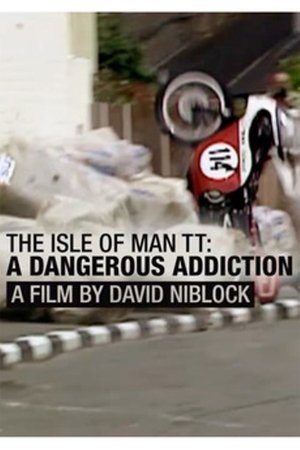
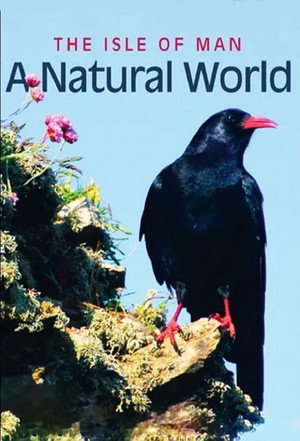
The Isle of Man TT is described as the world's most dangerous race, a complicated and unforgiving course. Yet every year more and more motorcycle enthusiasts come to this tiny British island to race in the event. Is it some kind of fatal attraction? It is a three-hour ferry ride from Liverpool to Douglas, the capital of the Isle of Man, which is a self-governing British Crown Dependency. Year after year in late May more than 25,000 people make this journey to the small island about 70 kilometers off the English coast in the middle of the Irish Sea. The TT race has claimed almost 150 lives in its 105-year history and the course itself has claimed more than 250 lives. Most of the riders are amateurs with full-time jobs a world away from the megabucks of Grand Prix racing, and for them this is a very expensive business.
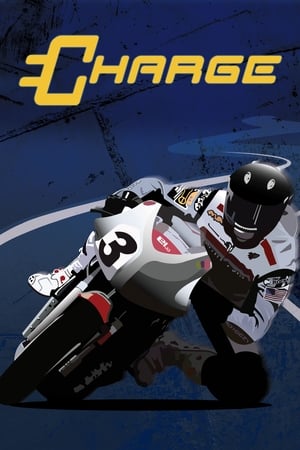
CHARGE is proof that maniacs on motorcycles can be a force for global good. The movie follows several teams to the world's first zero-emissions grand prix on the Isle of Man – the most demanding and deadly circuit on the planet – in 2009 and on their return in 2010, 2011, and 2012. For the visionaries, it's history. For the petrol-heads it's blasphemy. What's racing without the sound and fury of internal combustion engines? CHARGE is about the future. It's about change. It's about the dream of a clean, green world. It's about the dream of winning.
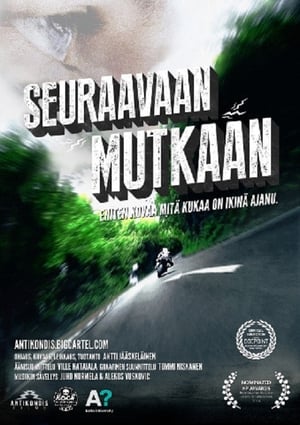
Road racing driver Juha Kallio sits on a leather couch with a beer in his hand, watching a DVD of one of the fiercest motorcycle races in the world. ‘Could you do that?’ asks his friend sitting beside him. ‘Yeah, I could,’ answers Juha calmly, even though the Isle of Man TT Race circuit is challenging for any driver. The dangerous route has over 200 turns that need to be memorized beforehand. Participation doesn’t hang on ability alone. It takes not only skills but also luck to get a spot on a team, not to mention cash to cover the expenses. The few tenners worth of gas vouchers won on Finnish circuits barely cover the ride back home to Imatra. Maybe the local chicken farmer would sponsor a familiar face? The road to the legendary race is bumpy. The Fast of the Forest is a film about the daredevil world of road racing. It is also a story about perseverance. Quitting is not an option, even if the dream starts crumbling only moments before it is to become a reality.
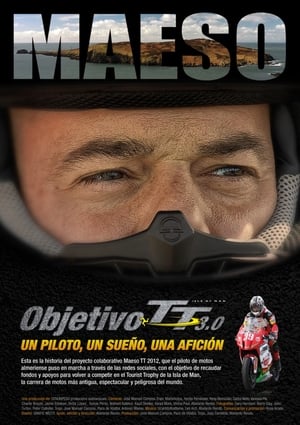
Objetivo TT 3.0, un piloto, un sueño una afición
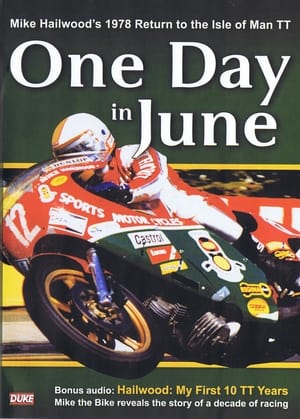
Documentary film of the late great Mike Hailwood's return to the 1987 Isle Of Man TT motorcycle championship race.
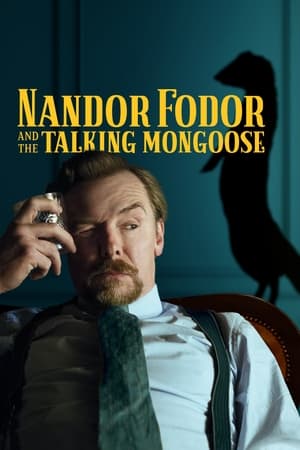
In 1935, Hungarian-American para-psychologist Nandor Fodor began his investigation of a strange occurrence on the Isle of Man. An average British family, the Irvings, claimed to have been contacted by a mysterious entity at their farm. A talking mongoose. Named Gef (Pronounced "Jeff".)
A fisherman and a rising lawyer who grew up together as brothers fall in love with the same woman.
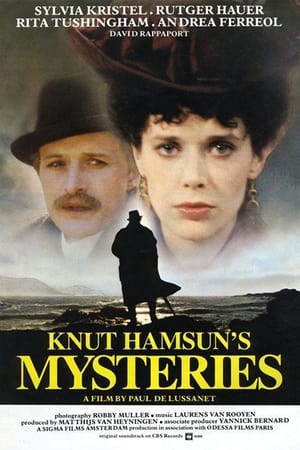
In the winter of 1891 a stranger arrives in a small coastal town on the Isle of Man. His presence soon disturbs the lives of the local inhabitants, especially the beautiful daughter of the parson.
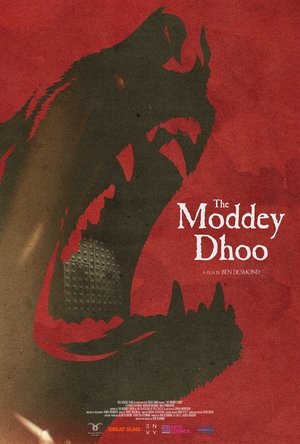
Past and present collide when a mythical beast is reawakened by a couple exploring a historic castle on the Isle of Man.
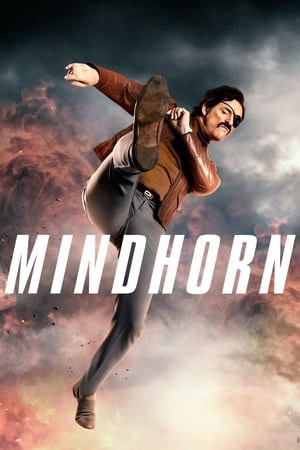
A washed up actor best known for playing the title character in the 1980s detective show "Mindhorn" must work with the police when a serial killer says that he will only speak with Detective Mindhorn, whom he believes to be real.
This official film provides a definitive history of the only Victorian Railway system in the world which is still in full working order. The Isle of Man Steam and Electric Railways are featured here in graphic detail, utilising exclusive archive film showing the early workings of the long forgotten Prospect Hill Cable Cars and the Douglas Head Tram Cars, as well as the early days of the Steam and Snaefell Mountain Railways. In addition to the extensive archive footage the programme takes us onboard the restored electric railway from Douglas to Ramsey via Laxey and the dramatic ascent to Snaefell with its spectacular views over the Island. We also travel on the Steam Railway through the picturesque countryside to Port Erin visiting the Railway Museum with its extensive range of memorabilia and artefacts. Railways of the Isle of Man provides a fascinating insight and a lasting memento of one of the worlds truly unique transport systems.
“Forgetting is complicit in recidivism,” says the commentary of this film dedicated to the demonstration of October 17, 1961 in Paris and the savage repression that followed. 11,538 Algerians will be arrested, which is reminiscent of the great Vel d’hiv roundup of July 16 and 17, 1942 where 12,884 Jews were arrested. The film brings together eyewitnesses including a priest, a peacekeeper, a couple of workers sympathetic to the Algerian cause, a lawyer, Paris municipal councilors including Claude Bourdet (then one of the leaders of the PSU and journalist to France Observateur), Gérard Monatte, the future police union leader, and the editor and writer François Maspero.
The Poem of the River
“Carioca,” Chico Buarque’s first DVD of original songs since As Cidades (1998), features musical direction and arrangements by Luiz Cláudio Ramos and production by Vinícius França. The repertoire includes the choro-canção Subúrbio and Sempre, a track composed for the film O Maior Amor do Mundo, among others. In this work, the artist speaks about his city with the youthful spirit reminiscent of the age when he first earned his famous nickname. Voltei a Cantar / Mambembe / Dura na Queda / O Futebol / Morena na Angola / Renata Maria / Outros Sonhos / Imagina / Porque Era Ela, Porque Era Eu / Sempre / Mil Perdões / A História de Lily Braun / A Bela e a Fera / Ela É Dançarina / As Atrizes / Ela Faz Cinema / Eu Te Amo / Palavra de Mulher / Leve / Bolero Blues / As Vitrines / Subúrbio / Morro dos Irmãos / Futuros Amantes / Bye Bye Brasil / Cantando no Toró / Grande Hotel / Ode aos Ratos / Na Carreira / Deixe a Menina / Sem Compromisso / Quem Te Viu, Quem Te Vê / João e Maria
As a film about fertility, Water Children is an ode to womanhood and the body Filmmaker Aliona van der Horst followed the trail of the unconventional Dutch-Japanese pianist and artist Tomoko Mukaiyama who made a huge work of art on the theme of womanhood and fertility. She created a cathedral-like space out of twelve thousand white silk dresses in which visitors, as in a ritual, roamed around and fell silent. And where people confessed intimate details about children who were or were not born, about sexuality and life-choices. This resulted in a majestic epic about motherhood, miscarriages and menopause. In a visual and poetic way, the film penetrates into what is probably still one of the greatest of taboos, menstruation, and, as a consequence, touches upon universal themes around life and death.
Film on the refugee situation in Austria as a result of Hungarian Revolution of 1956.
From the Academy Award-winning director of When We Were Kings comes this enthralling tribute to the timeless power and magic of basketball.
This docuseries tells the story of female animation pioneers in both past and present days, looking into the challenges they have faced and the progress they have made while exploring the obstacles that still exist. Highlighting the determination and passion that moved women out of the ink & paint department and into the role of animator and beyond, the docuseries seeks to inspire the next generation of animation storytellers, while questioning the inequality between men and women within the creative workforce of animation.
The popularity of the Santiago de Compostela pilgrimage continues to grow. Four Czech pilgrimage stories also inspired a new pilgrim, who has just embarked on his long journey. He steps out of his comfort zone to not only discover the magic of the pilgrimage, but also to find himself. When a pilgrim meets a pilgrim on the way to Santiago de Compostela, their first question is clear: “Where are you coming from?” Because every step counts. This is evidenced by four pilgrims’ stories: Kvakin, who came from Boskovice; Olga, who managed her own pilgrimage at an older age; Mario, whose journey summoned him on its own accord; and Peter, who was paralyzed in half his body but got up from his wheelchair and hit the road. We also follow the pilgrimage of Kamil Bartošek, better known as the entertainer and mystifier Kazma Kazmitch.
Tarō Okamoto became world-famous by designing the “Tower of the Sun” at Expo ’70 in Osaka. The ideas and problems that came with its creation, however, are intertwined with the evolution of Japanese culture – from the Paleolithic up until modern times. In his documentary debut, director Kōsai Sekine takes us on a philosophical journey that transcends the visual limits of documentaries.