"My mother is spending all her time with her dying father. I’m spending all my time filming her. As the end is getting closer, my mother and I start doing the filming more and more together. It becomes our way of dealing with the time we have left." —Marius Dybwad Brandrud
Hosted by Keeley Hawes, star of the popular television series The Durrells, this documentary reveals the adventures of the eccentric Durrell family once they left Corfu, Greece.
Keenly aware that his niece is going through a particularly rough time at home, Uncle James teaches Ava Dee how to use the Blackmagic Pocket Cinema Camera. As an experiment, he tells her to shoot whatever she wants and he'll edit it into a film.
Maria Casarès, a theatre actress and Albert Camus, one of the most important modern french writer, keep a long correspondence (more than 900 letters) about their love and the emotions they feel for each other for 15 years.
Two old sisters, living in the same Warsaw apartment, sit on a bench and talk. The 87-year-old elder one seems to care for the other reluctantly and treat her badly. The younger, who is said to be clumsier, has walking problems.
The Freedom of the Sea is a short documentary highlighting the freedom of living in the UK - in contrast to a more restrictive life in Iran - through the joy of daily sea swimming in Brighton.
Documentary film about Tony Halme, masculinity and populism. The film follows how Tony Halme created a mythical, highly masculine freestyle wrestling character, The Viking, who gained fame both in the ring and in the public eye and eventually became captivated by it. With his brash speeches, Halme fired the starting shot for the rise of the Finns Party. The voice of a forgotten section of the population, a protest against the ruling elite, were the building blocks of Halme's popularity. Halme's great popularity has served as a good example of a populist figure, admired within the deep ranks of the nation, who comes from outside the political elite and changes the direction of politics. Also, despite - or perhaps because of - his openly racist statements, he was part of changing the political climate in Finland to a more acrimonious one.
Barred from racing for breaking stride, a trotting horse finds a new career as a police officer's mount in Boston.
Painter Zdzisław Beksiński, his wife Zofia and their son Tomasz, a well-known radio journalist and translator, were a typical and unconventional family, both at the same time. One of the father’s obsessions was filming himself and his family members. Using archival footage only, shot primarily by Zdzisław, as well many other materials, which have not been presented anywhere so far, the film tells a tragic story of the Beksińskis that has never ceased to fascinate Polish filmmakers.
On April 1st, 2022, my grandfather passed away and i felt lost. I think my path changed when, some days after he passed away, i was offered a small VHS camera. "Moving Memories" is a visual journey that makes the viewer reflect on our momentary presence on earth and questions the nature of memory. Throughout this journey, we get to the conclusion that memories are more than just static photographs in our minds, they're alive and in constant movement, changing while we evolve as individuals. These memories have influence and help us to move on.
Born in 1932, Keiko Kishi has been one of the first Japanese actresses known worldwide. Her decision to move to France and to marry director Yves Ciampi in 1957 – after he filmed her in Typhoon Over Nagasaki starring Jean Marais and Danielle Darrieux – caused a huge scandal in Japan. Despite this transgression, Keiko Kishi continued acting in her home country with Kon Ichikawa, Yasujiro Ozu, Masaki Kobayashi… building unique bridges between Japanese and European cultures. Free and rebellious, she emancipated herself from the many obstacles she encountered in the film industry, and created her own production company in her early twenties. Let’s look back at the story of a pioneer, an inspiration for many generations.
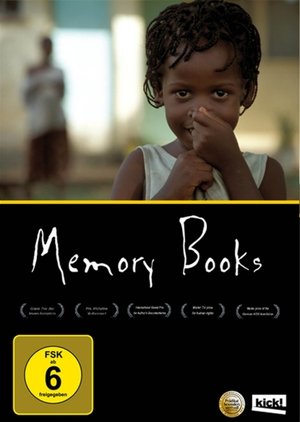
In Uganda, AIDS-infected mothers have begun writing what they call Memory Books for their children. Aware of the illness, it is a way for the family to come to terms with the inevitable death that it faces. Hopelessness and desperation are confronted through the collaborative effort of remembering and recording, a process that inspires unexpected strength and even solace in the face of death.
After four years away, Huiju returns home to South Korea. Exchanges with her loved ones are awkward and clumsy. Huiju turns once again to her familiar rituals: pruning the trees, preparing a sauce, tying a braid.
A film about longstanding relationships, family, and the deep consequences of falling in love. While exploring themes of love in music, poetry and art, the filmmaker reflects on his life and the journeys on which love has taken him. Now, a new journey will test him again, an intercontinental exodus to keep his family together. A real and intimate portrait about the complexity of love.
A nuanced portrait of a new generation, Dear Thirteen is a cinematic time capsule of coming of age in today’s world. Through the eyes of nine thirteen-year-olds, we see how pressing social, geographical and political challenges are shaping, and being shaped by, young people: rising anti-Semitism in Europe, guns in America, gender identity and racial divisions across Australia and Asia. With no adult commentary outside the filmmaker, Dear Thirteen offers an intimate view into the universal uncertainty inherent in growing up.
To produce speech, a set of mechanisms must be brought together. What is the normal articulation for speech? How to produce the sounds that make it up in the correct way? A physiological analysis of the aspects of speech shows us how: the jaw must move in a certain way; the air must be expelled from the lungs in another. Based on the concepts stated in the film "Normal Speech Articulation" (1965), produced by the University of Iowa (USA), we intend to reflect on the way women have been represented, and consequently educated, over the years, both in film and in the media. Largely composed of archival footage, this film intends to make evident, through a montage inspired by Structuralist movements, the violence of this education.
Mémé
A journey into the lives of the famed Vachon wrestling family through the eyes of Paul “The Butcher” Vachon, the last living member of the dynasty.
On June 11th, 1997, Philippe Kahn created the first camera phone solution to share pictures instantly on public networks. The impetus for this invention was the birth of Kahn's daughter, when he jerry-rigged a mobile phone with a digital camera and sent photos in real time. In 2016 Time Magazine included Kahn's first camera phone photo in their list of the 100 most influential photos of all time.
A collection of memories from a tumultuous time at University.