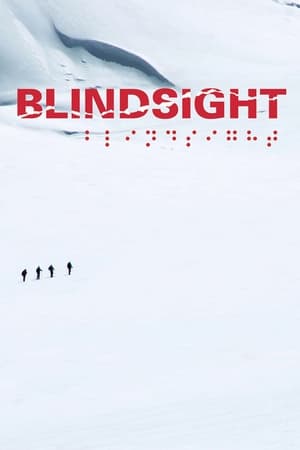
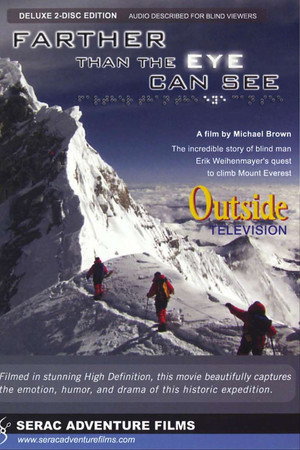
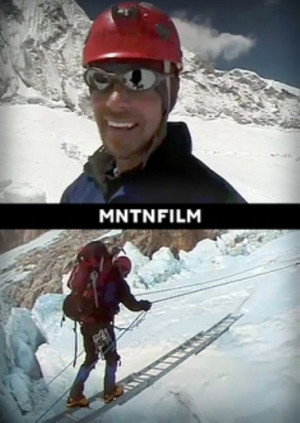
Six blind Tibetan teenagers climb the Lhakpa-Ri peak of Mount Everest, led by seven-summit blind mountain-climber Erik Weihenmayer.
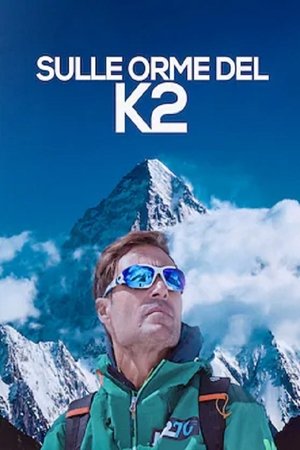
Eight women, 8,611 meters to climb. A feat that will go down in history. Seventy years after the first ascent of K2, an extraordinary all-female expedition—comprising Italian and Pakistani mountaineers—will aim to reach the coveted summit of K2 to celebrate a unique anniversary and make it truly memorable.
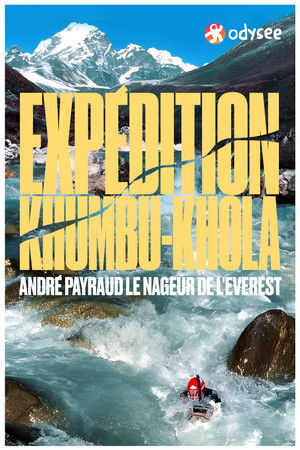
André Payraud, a pioneer and specialist in torrents and raging rivers, is nicknamed "the highest swimmer in the world." In October 1999, after the great monsoon, he swam down the Khumbu-Khola, a torrent that originates at 4,807 meters at the foot of Mount Everest, over five days. Furthermore, André Payraud wanted to connect with the people and culture of Nepal.
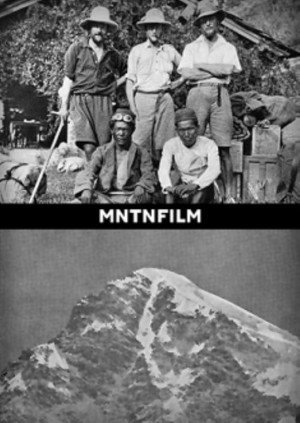
Record of the international expedition to climb Kangchenjunga in 1930. The German-Austrian-British expedition, led by Günter Oskar Dyhrenfurth, had come from the Nepalese side and tried to reach the North Ridge via its NW face after failing in the north face, where the sherpa Chettan was killed in an avalanche. The attempt failed but the team made the first ascents of Rathong (6678m) and Jongsong Peak (7483m), and also climbed the Southwest peak of Nepal Peak.
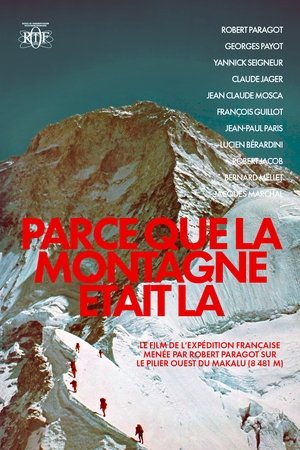
On May 23, 1971, a French expedition led by Robert Paragot successfully climbed Makalu via its west pillar. Makalu is one of the five highest peaks in the world, located in the Himalayas on the Nepalese-Tibetan border. Jean-Pierre Janssen and Lucien Bérardini filmed this expedition, where Robert Paragot spoke about the expedition conditions, life at altitude, and his state of mind as expedition leader. On the return to base camp, Jean-Pierre Janssen interviewed Lucien Berardini, Georges Payot, Jean-Claude Mosca, François Guillot, and Jean-Paul Paris, all of whom played a key role in bringing Bernard Mellet and Yannick Seigneur to the summit. Expedition members: Robert Paragot (expedition leader), Georges Payot, Yannick Seigneur, Claude Jager, Jean-Claude Mosca, François Guillot, Bernard Mellet, Lucien Bérardini, Jean-Paul Paris, Robert Jacob, Jacques Marchal (surgeon).
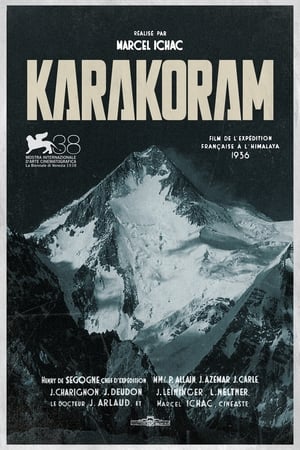
Account of the first French expedition to the Himalayas, which attempted to climb the hidden peak (Gasherbrum I) in 1936, from the preparations for the trip to the end of the ascent. After a long approach walk through quasi-desert regions, then on a huge glacier, the caravan of 700 porters arrives at the foot of Hidden Peak. The expedition was led by Henry de Ségogne, with Jean Charignon, Pierre Allain, Raymond Leininger, Jean Carle, Jean Deudon, Louis Neltner, Jacques Azémar, doctor Jeand Arlaud and director Marcel Ichac. Weather conditions, logistical problems and a strike among Sherpas forced the team to retire at 6900m on the south face. The film received the Silver Lion at the Venice Film Festival in 1938.
Esteban ‘Topo’ Mena is an Ecuadorian mountain guide and rising star in alpine climbing whose dream is to climb the first ascent of a new route on Mount Everest. He teams up with Cory Richards, a National Geographic photographer and the first American to climb an 8,000-meter peak in winter, and they attempt a never-before-tried climb on the north face of Everest. Though they fail on their first attempt, they vow to return the following season. However, due to the global pandemic, the North side of Everest remains closed, so the ambitious duo turns their attention to a futuristic new route on Dhaulagiri, the seventh highest mountain in the world. When the risk of death on Dhaulagiri stresses the team to a breaking point, the climbers are forced to confront the question of why they climb—and why it’s all worth it.
Blind climber Erik Weihenmayer and his team's highly successful ascent of Mount Everest along with four other remarkable milestones on the mountain. Time magazine called this the most successful Everest expedition of all time.
Bhoutan, la naissance d'une démocratie
A story about an attempt by Americans to climb Gasherbrum II. The story is told in the past tense, using a combination of expedition footage and talking-head interviews shot long after the trip.
"On the 30th April 2017 world-famous climber Ueli Steck died on Mount Nuptse whilst acclimatizing for one of his biggest climbs yet – climbing both Mount Everest and Mount Lhotse without the use of bottled oxygen. A year later, Ueli’s close friends Jonathan Griffith and Sherpa Tenji attempted to finish off his project. Tenji would try the climb without bottled oxygen whilst internationally award-winning cameraman Jonathan Griffith captures the entire story with a 8K 3D VR Ambisonic camera."
"Everest Dreams" is a documentary about alpinism that takes place on Everest. It was directed by Michael Brown in 2000 and produced by NBC. It features Robert Link, Kim Gattone, Michael Brown, Dave Hahn, Greg Wilson, Mike Dunnahoo and others.
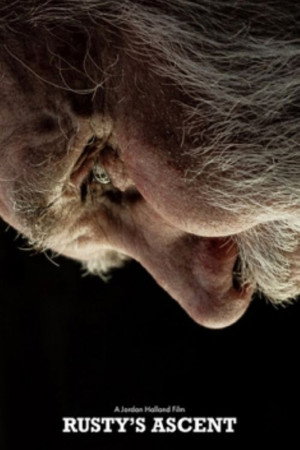
Everest-obsessed since childhood, Robert “Rusty” Baillie fulfilled his dream of joining an Everest expedition in 1982. He was buried in an avalanche that killed several Sherpas, but dug himself out. After a rest day, the summit attempt resumed, and Rusty cheated death a second time. This portrait of a professional climber asks the big question: Is it worth it?
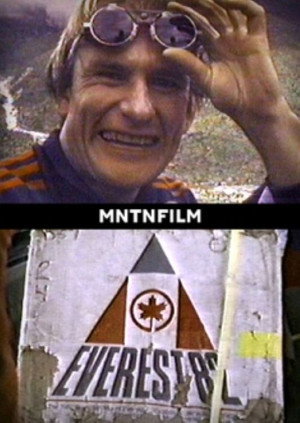
"Everest 82 - The Canadian Challenge" is a documentary about alpinism that takes place on Everest. It was produced in 1983 by CBC. It is a part of the series, "The Passionate Eye". It features Pat Morrow, Laurie Skreslet, Bill March, Lloyd Gallagher, John Amatt, Tim Auger and others.
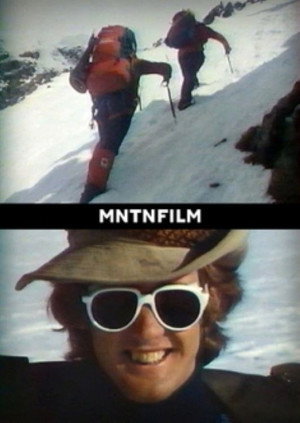
Doug Scott and Roger Baxter-Jones climb Broad Peak.
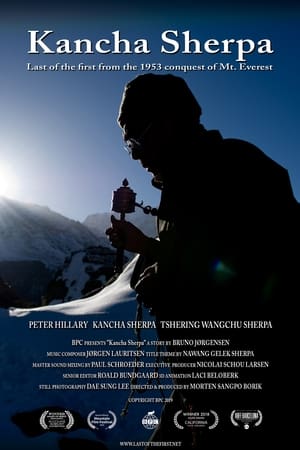
Kancha Sherpa was one of 103 Sherpas that brought Sir Edmund Hillary and Tenzing Norgay to the top of Mt. Everest in 1953, as the first to reach the top. This achievement would have been impossible without the strength, courage and knowledge of the Sherpas, who have a strong connection to the mountains of the Himalayas. At the age of 80, Kancha is the Last of the First from the 1953 expedition to Mt. Everest. Kancha is looking into the future, with a heartfelt hope that his tradition, will reach far into the 21st century and beyond. He is concerned to see modern traditions melting away old traditions, like the snow on top of Everest.
When you embark on an expedition to the other side of the world, things rarely go as planned. In the spring of 2024, mountaineers and friends Charles Dubouloz and Symon Welfringer flew to the Himalayas with the goal of climbing Gyachung Kang, a peak of over 8,000 meters on the Tibetan side. But faced with the conditions they encountered there, they revised their plans and headed towards Hungchi, on the Nepalese border. There, they opened a 1,700-meter route in pure alpine style, named The Headless Rider.
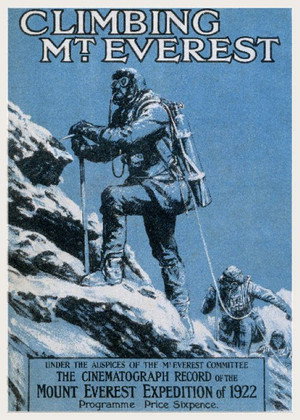
A record of the second British Everest expedition showing the journey from Darjeeling to Tibet, activities of the Tibetans, and the climb itself. The main aim of the 1922 expedition was to make the first ascent of Mount Everest. There are two attempts in May via the North Ridge. The first by Mallory, Morshead, Norton and Somervell is without oxygen and reaches 26,985ft. The second by Geoffrey Bruce and Finch reaches 27,300ft and sets a new altitude record. Captain Noel toured the world with this film, and wherever he went the picture was received enthusiastically. It was the first film of an Everest expedition, and the earliest documentary filmed in Tibet.
Following in the footsteps of Captain John Noel and his immensely popular documentaries taken on the Mount Everest expeditions of the 1920s ("Climbing Mount Everest"/"The Epic of Everest"), Frank Smythe hoped to help finance his 1931 attempt on Kamet, another Himalayan peak, by bringing back film footage of a successful ascent including summit shots which were at that time the highest ever taken in the world.
In a remote himalayan region, the villagers of Maikot are preparing for the harvest of a mysterious aphrodisiac caterpillar-mushroom worth more than gold.