Comes one hundred years from the two-day Tulsa Massacre in 1921 that led to the murder of as many as 300 Black people and left as many as 10,000 homeless and displaced.
In the original concept of the film as a computer game, the author presents a personal reportage from Budapest, where she spent a year as a student. The viewer, who takes on the role of a participant in the game, passes through several levels that introduce him to everyday moments touching on sensitive points of contemporary Hungarian society: he sees the capital through the eyes of a tourist, but mostly he is forced to reflect from the subjective perspective of Hungarian citizens on freedom of art, the right to education, the issue of medical care and the complex and controversial political situation in which the name of Hungarian Prime Minister Viktor Orbán is repeatedly invoked.
On June 1st, 2019, around 11:30pm, the shoot which represents a turning point in the federal republic falls. In the hessian small town Wolfhagen-Istha, the district president of Kassel, Walter Lübcke, is murdered during this night, while, just a few meters away, the annual carnival is putting the locals into a festive mood. It is DNA-evidence on the clothes of Walter Lübcke which leads the investigators on June 15th, 2019, to his presumptive murderer: Stephan Ernst. The previously convicted right-wing extremist Ernst gets arrested by a SEK unit in Kassel. A first background check reveals: Stephan Ernst was known to the security authorities, but they did not have him on their radar for six years. Now he is back. And a person is dead. The docu-drama “Schuss in der Nacht” („Shoot in the dark“) tells emotionally, and simultaneously factually, how the deadly attack on Lübcke came to be. It tells about the first far-right motivated murder of a politician since the era of national socialism.
Chris Marker and François Reichenbach document the massive anti–Vietnam War protest held in Washington, D.C., on October 21, 1967, where more than 100,000 demonstrators gathered at the Lincoln Memorial before marching on the Pentagon. Filmed amid the crowd, the short captures the tension, idealism, and growing radicalism of the American peace movement.
Inês Etienne Romeu was an opponent to the Brazilian's dictatorship. She was kidnapped, tortured and raped in jail, where she stayed for almost 100 days. She was later sentenced to life imprisonment. She stayed ten years in prison, from 1971 to 1979. Delphine Seyrig directed this film in 1974, when Inês was still in prison, protesting against this imprisonment and in support to Inês.
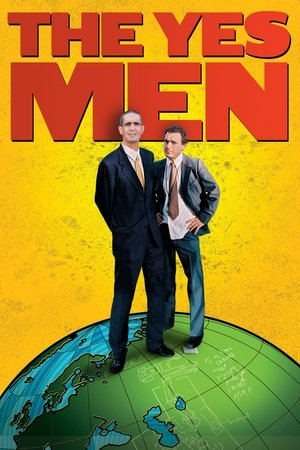
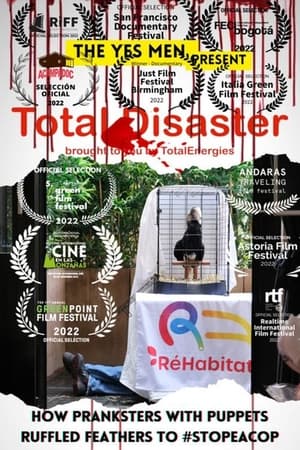
A comic, biting and revelatory documentary following a small group of prankster activists as they gain worldwide notoriety for impersonating the World Trade Organization (WTO) on television and at business conferences around the world.
Four years later, Hong Kong’s 2014 democratic Umbrella Movement has been nominated for a Nobel Peace Prize, yet political backlash against protesters has intensified. Repeatedly the target of censorship*, Raise the Umbrellas traces the lineage of the massive Hong Kong protest to the global Occupy movement, 1989 Tiananmen, and its democratic struggles since British colonial days. Highlights range from the Umbrella Movement’s eco-awareness and its burgeoning aspiration for independence, to its empowerment of women -- “umbrella mothers” -- and the rainbow-bridging activism of LGBTQ iconic artists. Incisive and intimate, driven by stirring on-site footage in a major Asian metropolis riven by protest, Umbrellas includes anti-Occupy views that lay bare the sheer political risk for post-colonial Hong Kong’s universal-suffragist striving to define its autonomy within China.
In a cluttered news landscape dominated by men, emerges India’s only newspaper run by Dalit women. Armed with smartphones, Chief Reporter Meera and her journalists break traditions on the frontlines of India’s biggest issues and within the confines of their own homes, redefining what it means to be powerful.
Michael Moore's view on how the Bush administration allegedly used the tragic events on 9/11 to push forward its agenda for unjust wars in Afghanistan and Iraq.
A documentary on Al Gore's campaign to make the issue of global warming a recognized problem worldwide.
Guy Debord's analysis of a consumer society.
The murder of Dutch filmmaker Theo van Gogh by an Islamic extremist in 2004, followed by the publishing of twelve satirical cartoons depicting the prophet Mohammed that was commissioned for the Danish newspaper Jyllands-Posten, provides the incendiary framework for Daniel Leconte's provocative documentary, It's Hard Being Loved by Jerks.
A documentary following the civil rights movement and how the media, in particular the burgeoning TV, was used to fight for equality in the 1960s. From Selma to Charlottesville, we also see how modern activists use today's technology to continue fighting injustice today.
Crump's mission to raise the value of Black life as the civil lawyer for the families of George Floyd, Breonna Taylor, Black farmers and banking while Black victims, Crump challenges America to come to terms with what it owes his clients.
Dare to Dream was directed by Marianne Jenkins, a film student from Goldsmiths' College, University of London, in 1990. It looks at the history of anarchism in the UK and beyond, as well as the state of the movement in the tumultuous year the poll tax uprising finally led to the resignation of Thatcher. Among the anarchist heavyweights interviewed are Albert Meltzer, Vernon Richards, Vi Subversa, Philip Sansom, Clifford Harper and Nicholas Walter, as well as a host of lesser known but equally committed dissidents. The film also features the miners strike and class struggle, squatting and social centres such as Bradford's 1in12 club, animal rights and feminism.
Profiled is a feature length documentary that knits the stories of mothers of Black and Latin unarmed youth murdered by the NYPD into a powerful indictment of racial profiling and police brutality, and places them within a historical context of the roots of racism in the U.S. Driven by anger when their demands for justice are ignored the women transition from grieving parents to activists participating in the grass roots movement now spreading across the country since the much-publicized deaths of Michael Brown and Eric Garner.
Lorraine Cœur d'Acier, une radio dans la ville
Des quetsches pour l'hiver
Heather Booth is the most influential person you have heard of. The newest film by critically acclaimed filmmaker Lilly Rivlin, HEATHER BOOTH: CHANGING THE WORLD is an urgent response to the recent election of Trump and all that has ensued. At a time when many are wondering how to make their voices heard, when civil and women’s rights are under attack, this empowering documentary is an inspiring look at how social change happens. Heather Booth, a renowned organizer and activist, began her remarkable career at the height of the Civil Rights movement. Through her life and work this inspiring film explores many of the most pivotal moments in progressive movements that altered our history over the last fifty years: from her involvement with Fannie Lou Hamer and the Mississippi Freedom Summer Project, to her founding of the JANE Underground in 1964, to her collaborations with respected leaders such as Julian Bond and Senator Elizabeth Warren.
A cheap, powerful drug emerges during a recession, igniting a moral panic fueled by racism. Explore the complex history of crack in the 1980s.