Released in 1968 and often referred to as Canada’s first music video, The Ballad of Crowfoot was directed by Willie Dunn, a Mi’kmaq/Scottish folk singer and activist who was part of the historic Indian Film Crew, the first all-Indigenous production unit at the NFB. The film is a powerful look at colonial betrayals, told through a striking montage of archival images and a ballad composed by Dunn himself about the legendary 19th-century Siksika (Blackfoot) chief who negotiated Treaty 7 on behalf of the Blackfoot Confederacy. The IFC’s inaugural release, Crowfoot was the first Indigenous-directed film to be made at the NFB.
Amá is a feature length documentary which tells an important and untold story: the abuses committed against Native American women by the United States Government during the 1960’s and 70’s: removed from their families and sent to boarding schools, forced relocation away from their traditional lands and involuntary sterilization. The result of nine years painstaking and sensitive work by filmmaker Lorna Tucker, the film features the testimony of many Native Americans, including three remarkable women who tell their stories - Jean Whitehorse, Yvonne Swan and Charon Aseytoyer - as well as a revealing and rare interview with Dr. Reimart Ravenholt whose population control ideas were the framework for some of the government policies directed at Native American women.
Acoustic Ocean is an artistic exploration of the sonic ecology of marine life in the North Atlantic. Located on the Lofoten Islands in Northern Norway, the video centers on the performance of a marine-biologist diver who is using a life-size model of a submersible equipped with all sorts of hydrophones and recording devices. In this science-fictional quest, her task is to sense the submarine space for acoustic and bioluminescent forms of expression.
A day in the life of 91.1, Nuxalk Radio, a radio station built to help keep the Nuxalk language alive while broadcasting the laws of the lands and waters.
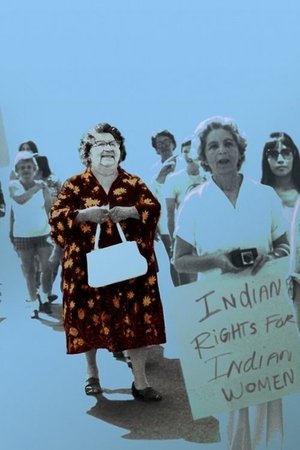
This documentary digs into the stories of Indigenous women and families to reclaim their Indian Status through their fight for the elimination of sex-discrimination in the Indian Act. It highlights the impacts of the law on individuals, families and communities. Since the passing of Bill S-3 and its amendments, thousands of Indigenous people are now eligible for Indian Status.
Yellowtail is the story of a young Native American cowboy searching for meaning as his chaotic lifestyle begins to wear on him both physically and mentally. To find his purpose the young man has to reflect on his upbringing as a native to become the spiritually connect man he was meant to be.
This hour-long documentary is a provocative look at a historical event of which few Americans are aware. In mid-January, 1893, armed troops from the U.S.S Boston landed at Honolulu in support of a treasonous coup d’état against the constitutional sovereign of the Hawaiian Kingdom, Queen Lili‘uokalani. The event was described by U.S. President Grover Cleveland as an "act of war."
This short film follows Tonisha, Toneil and their family as they reclaim their Navajo history and reconnect with ancestors within the canyon walls.
We begin at the train station near Montana's Glacier National Park, where Blackfeet Indians meet the arriving tourists. Glacier Park, an off-screen narrator tells us, has the remnants of 60 glaciers, from three ice ages. We visit the lodge, built in Swiss style, where college students dressed in Swiss garb do the serving at the restaurant. We watch Indian dancing and a ceremony. After views of lakes, mountains, and trails in the park, it's north to Canada's Waterton Lakes, a vacation spot for Canadian and U.S. families.
By retracing the mixed heritage of First Nations peoples and Quebecers, painting a modern portrait, and sketching a human geography, this film helps us (re)discover the beauty and strength of our common territory: the Americas.
What does blood have to do with identity? Kendra Mylnechuk, an adult Native adoptee, born in 1980 at the cusp of the enactment of the Indian Child Welfare Act, is on a journey to reconnect with her birth family and discover her Lummi heritage.
Concerned about the declining health of people all around them, Native American women are sparking physical and spiritual rejuvenation through reclaiming traditional foodways.
A moving portrait of actress Tantoo Cardinal, travelling through time and across the many roles she’s played, capturing her strength and her impact—and how she shattered the glass ceiling and survived.
Sixteen-year-old Jewel Wilson is the next generation in a long line of prolific Inupiat subsistence hunters in Unalakleet, Alaska. Her ability to hunt moose is hindered by two pressing issues – scarce wildlife and the pressures of high school life. Finding sufficient food competes with track practice and homework in Jewel’s multilayered world. Along with her father, Jewel turns to the land to feed their family and finds that their village’s way of life is endangered by the same environmental shifts that could affect us all. In hunting moose, we see that Jewel is also hunting for answers. How will her village survive if subsistence hunting is threatened? Can she honor the traditions of her Elders while navigating the pressures and anxieties of a modern, connected teenager? "Jewel’s Hunt" proves to be both physical and philosophical in this insightful exploration of what it means to come of age in complicated times in Unalakleet, Alaska.
More than an attachment to our territory, the Innu live a filial relationship with Nitassinan, our ancestral homeland. For so many generations, the land has nourished, cared for and raised us. It has inspired our language, our culture, our lifeway and our vision of the world. Throughout the seasons, our ancestors criss-crossed the territory on foot, by canoe or on snowshoes. They knew every river, lake, or stream; every mountain, hill or bog; every camp, trail and portage path. Nomadism forged our people, and the film will record this journey and our history – past, present and future. And while it will attest to our vitality and resilience it is also – and above all – a tribute and a message of respect for the Earth.
In this tense and immersive tour de force, audiences are taken directly into the line of fire between powerful, opposing Peruvian leaders who will stop at nothing to keep their respective goals intact. On the one side is President Alan Garcia, who, eager to enter the world stage, begins aggressively extracting oil, minerals, and gas from untouched indigenous Amazonian land. He is quickly met with fierce opposition from indigenous leader Alberto Pizango, whose impassioned speeches against Garcia’s destructive actions prove a powerful rallying cry to throngs of his supporters. When Garcia continues to ignore their pleas, a tense war of words erupts into deadly violence.
Although the mountain volcano Mauna Kea last erupted around 4,000 years ago, it is still hot today, the center of a burning controversy over whether its summit should be used for astronomical observatories or preserved as a cultural landscape sacred to the Hawaiian people. For five years the documentary production team Nā Maka o ka 'Āina ("the eyes of the land") captured on video the seasonal moods of Mauna Kea's unique 14,000-foot summit, the richly varied ecosystems that extend from sea level to alpine zone, the legends and stories that reveal the mountain's geologic and cultural history, and the political turbulence surrounding the efforts to protect the most significant temple in the islands: the mountain itself.
This Peabody Award-winning documentary from New Mexico PBS looks at the European arrival in the Americas from the perspective of the Pueblo Peoples.
As the name of this short film promises, a filmmaker (Merata Mita), a cook (Anne Thorp) and a singer (Moana Maniapoto) sit down for an interview at Pākiri beach. With a focus on their personal lives, these highly accomplished wahine Māori are generous in sharing what motivates and challenges them in their mahi — with friendship a recurring theme. Filmed a year after the disbanding of her group Moana and the Moahunters, Maniapoto is particularly vulnerable in her reflections. The film was made by Honours student Sam Cruickshank as part of a Film and Media Studies degree at Auckland University.
With "sealfies" and social media, a new tech-savvy generation of Inuit is wading into the world of activism, using humour and reason to confront aggressive animal rights vitriol and defend their traditional hunting practices. Director Alethea Arnaquq-Baril joins her fellow Inuit activists as they challenge outdated perceptions of Inuit and present themselves to the world as a modern people in dire need of a sustainable economy.