Gaza Fights for Freedom depicts the ongoing Great March of Return protests in the Gaza Strip, occupied Palestine, that began in 2018.
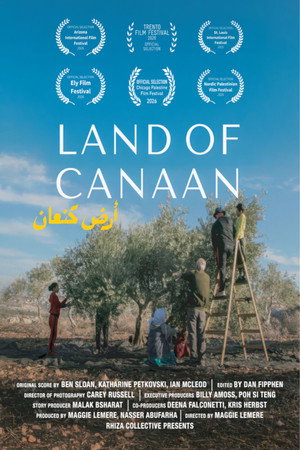
A documentary showcasing a family as they pack up their home of twelve years and begin looking towards the future.
Edward Said, Professor of English & Comparative Literature at Columbia University, was a prominent literary critic of the late 20th century and a leading spokesperson for the Palestinian cause in the US. Born to a Palestinian family in Al-Quds (Jerusalem) in 1935, he and his family were dispossessed in 1948 and settled in Cairo. Educated in the US, he lived in New York for many years. Said was a member of the Palestine National Council. After resigning from the PNC in 1991, Said wrote critically about the post-Oslo peace process, the political failures of Yasser Arafat and the PLO. Said was diagnosed with leukemia in 1991 and struggled with the disease while continuing to write and teach. He stopped giving interviews but made an exception less than a year before his death in 2003, speaking about his illness, work, Palestine, politics, life, and education. The last interview is the final testament of this passionately committed intellectual.
A series of indie filmmakers are documented over the course of a few months throughout the production of their passion projects, as they change professionally and personally; moving closer to the lives they wish to live.
Letter to My Tribe started with a question: Why don’t more Jews and Israelis speak out about Palestine? Over many years my mother, who represents a more messianic perspective, and I have had numerous arguments, some recorded, some not. These form the backbone of this video essay in which Israelis and Jews, journalists, activists and a rabbi are interviewed, and in which documentation of actions on the ground, in the West Bank, are woven with more personal family histories and journeys to Iraq and to Poland.
Pixar director Peter Sohn takes viewers on a humorous personal journey through the inspiration behind Disney and Pixar’s feature film “Elemental.” “Good Chemistry: The Story of Elemental” traces his parents’ voyage from Korea to New York, explores his dad’s former grocery shop in the heart of the Bronx, and delves into his choice of a career in animation, rather than the family business.
Equal parts documentary, essay, and narrative,"Captain Elliot's Circle" is mostly a poetic interaction with an obscure corner of Chinese and British history. Constructed using primary source documents about the taking of Zhoushan, Britain's first choice for a seaport, in the late 1830s,this movie uses Captain Charles Elliot's reluctance to brutalize the Chinese to reflect on the cyclical nature of history and the power structures that move it. The long takes used throughout function to illustrate the dramatically different ways in which people who lived in the mid-19th century perceived time. Additionally, it represents the psychological effect of living on an island regardless of what era you were born in.The last third of the movie focuses on a young woman whose strange day job has taken her far away from the island of Zhoushan generations after Captain Charles Elliot was last there. "Captain Elliot's Circle" was shot on location in Zhoushan and Hangzhou.
Paper Dolls follows the lives of transgender migrant workers from the Philippines who work as health care providers for elderly Orthodox Jewish men and perform as drag queens during their spare time. It also delves into the lives of societal outcasts who search for freedom and acceptance.
The documentary records the memories of a group of Palestinian elders, mainly veterans from the 1948 expulsions. Their stories of refugee struggles are interspersed with poems of Mahmoud Darwish.
Produced by CBN Documentaries and Biblical Productions, "In Our Hands" tells the story of the Battle of Jerusalem in the Six-Day War through the eyes of the IDF's 55th Paratrooper Brigade
Jocelyne Saab toured the city of Beirut devastated by Israeli bombings. She assesses the number of victims and the extent of the destruction.
A Palestinian refugee visiting his ruined village is documented in an Israeli film. Amazingly, out of pure coincidence the same person is filmed again returning to his village in a different film, thirty years later. Will it be possible to film the return scene for the third time?
Rare documents and details of the film's story. From its initial option to its critical reception and legacy. Director David Weisman, who also produced "Kiss of the Spider Woman", comes off as rightful creative force behind the production, as it was his true passion. Very detailed comments from all the participants, from the author of the book to the lawyer for the production company, the actors, director, writers, producer, and crew members.
Les voyages de L'Atalante
A look at legendary Japanese animator Hayao Miyazaki following his retirement in 2013.
The documentary Rouch's Gang follows the film crew and provides a glimpse behind the scenes as Jean Rouch and his four friends from Niger make their film.
A 60-minute salute to American International Pictures. Entertainment lawyer Samuel Z. Arkoff founded AIP (then called American Releasing Corporation) on a $3000 loan in 1954 with his partner, James H. Nicholson, a former West Coast exhibitor and distributor. The company made its mark by targeting teenagers with quickly produced films that exploited subjects mainstream films were reluctant to tackle.
At once a journey and a reckoning, this film follows 19 year old Koen's ascent of Mount Rinjani—often regarded as Indonesia’s toughest summit. What begins as a test of endurance gradually transforms into something more intimate: a dialogue between self and nature. Shot as a reflective video diary, the film holds not just the view from the summit, but the moments of insight and introspection discovered along the way.
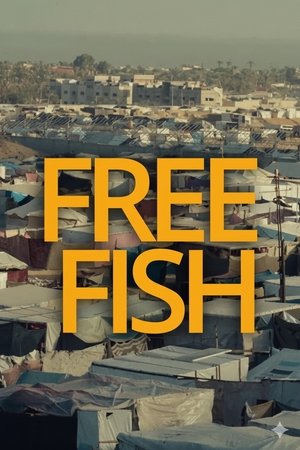
A film made by four Palestinians living through extraordinary times. Filming from the first days of the war, Khalid, Aya, Adam and Aseel document their own lives as they endure bombing raids, multiple evacuations, family separations and reunions, deaths, and even the birth of a new life amidst the chaos.
What drives a young, well-educated Westerner to volunteer as a “peace activist” in the Middle East? Caiomhe Butterly is one of a growing number of volunteers who risk their own safety to intervene in the long-running and bloody conflict between Israel and Palestine. Several internationals, including her, have now been injured. Some have died. In this film, she describes witnessing the aftermath of the attack on Jenin in April 2002. The film follows her work, the main emphasis being “the accompaniment of communities at risk”. Despite being threatened, shot in the leg and deported later that year, she is determined to go back.