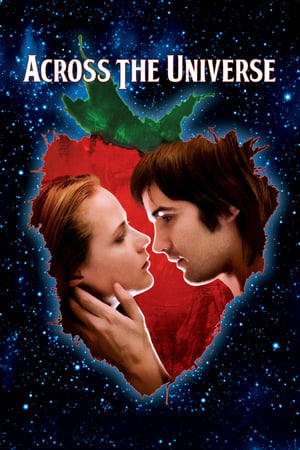
When young dockworker Jude leaves Liverpool to find his estranged father in the United States, he is swept up by the waves of change that are re-shaping the nation. Jude falls in love with Lucy, who joins the growing anti-war movement. As the body count in Vietnam rises, political tensions at home spiral out of control and the star-crossed lovers find themselves in a psychedelic world gone mad.
Peccadillo tells the story of Lorenzo. An 18- year-old boy struggling to come out to his religious family of female tailors, who work day and night sewing the dresses he only dreams to wear. Unfortunately, the dream of fitting into one of these sparkly beauties and explore his sexuality lingers in the air, as through his Family’s eyes, being gay and wearing clothes opposite to someone’s sex, is a sin.
The true stories that spawned the serie tale of Damien, a small boy with an angelic face, whose very name still conjures up thoughts of Satan. This documentary shares spine-tingling information about the the all-too-memorable flick that has terrorized film audiences since 1976.
Searching for life in daily rituals, Losing Touch undertakes a shift in perception and presents the city as an ugly yet ecologically rich landscape. The film depicts the internal dialogue on coping with the grief and fear of ecological degradation, using the local streets of Berlin as a means to materialise and confront these emotions. As both the body and mind begin to wander, encounters with the landscape over a 24 hour period are transformed into an overstimulating and emotionally charged journey. Camcorder footage, film developed in beer and cyanotype create sensational and playful depictions of the surroundings, joining the rats scurrying on the ground and fleeing the night lights with the moths. Creatures of metal and flesh interact within and between the frames, coming together as an ugly yet vibrant community. Subverting the nature-culture dichotomy, a new image of nature is formed, not only as a romantic, distant place, but rather a dirty, omnipresent force.
A comedic docu-essay looking at the legacy of "Fred Ott's Sneeze," one of the first films ever made. Official selection of The Indie Gathering International Film Festival.
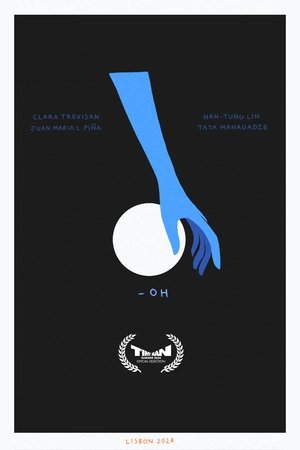
In this animation that blends 35mm film illustration, digital art, cartoon, collage, computer graphics, and generated imagery, a dwarf comet crosses galaxies in search of its lost companion until it reaches the limits of its reality.
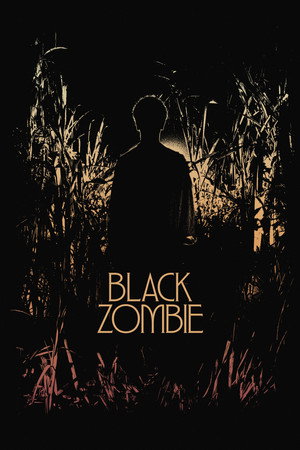
From the flickering screens of Hollywood horror, to the haunted cane fields of colonial Haiti, Black Zombie unearths the buried origins of the zombie, reclaiming it as a symbol of survival and spiritual resistance.
A collection of restored prints from the Lumière Brothers.
Waking up from a dream he can't seem to forget, Faizan struggles to maintain the newly structured life he's built for himself. As more dreamy memories from his past continue to resurface, he soon learns that the nightmarish ones still refuse to let him go.
In this visual essay, Charles Chaplin biographer Jeffrey Vance, author of "Chaplin: Genius of the Cinema", draws upon a wealth of photography as well as a wide range of interviews (Paulette Goddard, Sydney Chaplin, Chuck Jones, Leni Riefenstahl, Mel Brooks, Joan Collins et al.) to examine the production history of "The Great Dictator", the film's importance as a satire, and legacy.
The Apostle John receives disturbing visions of the approaching AntiChrist, the impending apocalypse, a series of demonic creatures, and a psychedelic descent into hell.
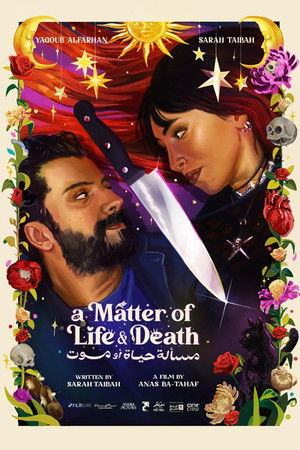
Convinced she’s cursed to die before turning thirty, Haya lives life at maximum volume: reckless, funny, chaotic, and completely unfiltered. After one of her many over-the-top stunts lands her in the emergency room, she collides with Youssef, a brilliant but emotionally shut-down heart surgeon who lives by rules, routines, and zero surprises. Certain the universe has thrown them together for a reason, Haya barrels into his perfectly controlled world like a glitter bomb, dragging him through neon nights, strange rituals, awkward encounters, unexpected tenderness, and a growing emotional glitch neither of them planned for. As her personal countdown looms and his frozen life starts to thaw, their unlikely connection turns into a wild, funny, and oddly uplifting ride through fear, fate, and the messy joy of being alive played at full speed.
The AFI's list of the 100 most thrilling American films of all time, presented by Harrison Ford in a three-hour CBS broadcast on June 12, 2001. The fourth installment in AFI's centennial celebration of American film, following the three critically acclaimed network specials AFI's 100 Years…100 Movies, AFI's 100 Years…100 Stars, and AFI's 100 Years…100 Laughs.
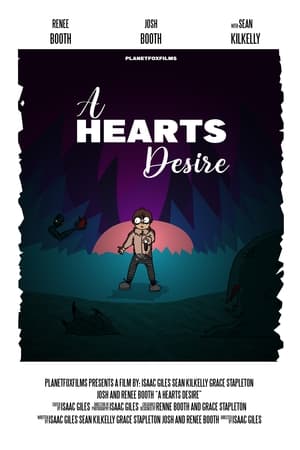
Summer of 1999. Aspiring filmmaker Nik's search for love intertwines with a fantasy western he's writing, and Sapna, a visitor from India. As they navigate love, identity, and their pasts, they find the courage to embrace their future.
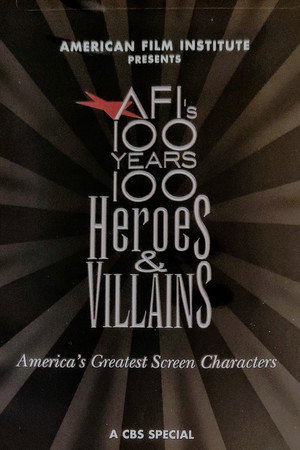
The American Film Institute celebrates 100 years of film by recognizing the top 50 film heroes and top 50 film villains of all time.
The Professor, helped by his flying robot M.A.X., tries to show us the history of 3-D film, and his newest innovation, Real-O-Vision (ride films). But his hardware keeps breaking down, particularly when he's trying to introduce a music video of Elvira. Written by Jon Reeves
An immortal woman and her reincarnating firefighter girlfriend fight over her future in the career after a coworker in injured on the job.
A collection of interwoven images are threaded together by a string of unspecified women who roam their dreamscape which they are unable to escape. They are displaced, belonging to no particular point in time or place, and a disoriented sense of self pervades. Together, the film becomes a quietly throbbing organism of reality and unreality, and the gaps between an impending present and a perpetual past are frail.
A 2012 documentary about the making and the legacy of the 1982 drama masterpiece directed by Ishmael Bernal that ended up being one of the greatest Asian films of all time. The revelations about the theory of "Who killed Elsa?" will be answered and also, the impact of the film to the Filipino culture and society.
There was an undeclared war for nearly half a century in Bulgaria between the then government and the majority of democratic-minded filmmakers during the Communist regime. Paradoxically, most of the banned or censored out movies were made by members of the Communist Party, believers in their party's ideas and justice. The Communist Party aesthetics against the freedom to tell truth.