Created over 75 years and three generations, Les Quatre Vents stands as an enchanted place of beauty and surprise, a horticultural masterpiece of the 21st century. See how Frank Cabot gave birth to one of the greatest gardens in the world.
the Gardens at Hidcote Manor, Mottisfont Abbey, Sissinghurst Castle With a cameo appearance by Nigel Nicolson Why did American-born Major Lawrence Johnston spend much of his lifetime creating a storied garden in a remote part of the Cotswolds? What is Graham Stuart Thomas's glorious collection of antique roses doing in a medieval English Abbey? What persuaded author, poet and plantswoman Vita Sackville-West and her husband Harold Nicolson to buy a derelict ruin on the edge of the Kentish Weald to create their fabled garden? Their son, Nigel Nicolson, reminisces about this most beloved of gardens and his now legendary parents. An extensive tour of each garden examines design, plantings, close-up details, and observations by gardeners. An hour of sheer enjoyment, beauty, and an excellent source of inspiration for those with a love for gardens.
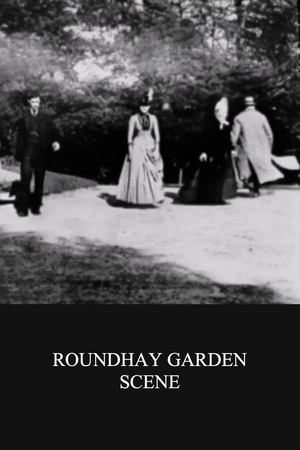
The earliest surviving motion-picture film, and believed to be one of the very first moving images ever created, was shot by Louis Aimé Augustin Le Prince using the LPCCP Type-1 MkII single-lens camera. It was taken on paper-based photographic film in the garden of Oakwood Grange, the Whitley family house in Roundhay, Leeds, West Riding of Yorkshire (UK), on 14 October 1888. The film shows Adolphe Le Prince (Le Prince’s son), Mrs. Sarah Whitley (Le Prince’s mother-in-law), Joseph Whitley, and Miss Harriet Hartley walking around in circles, laughing to themselves, and staying within the area framed by the camera. Roundhay Garden Scene is often associated with a recording speed of around 12 frames per second and runs for about 2 to 3 seconds.
Katrina does some nude yoga in a garden, sometimes with Lonna.
Amelia does some nude yoga in a garden.
The early retired Gert spends the last summer in his garden, a place that has become a real home for him. The garden will be demolished to create a shopping center on its grounds. The only thing Gert can do is remember memories of happy times he spent with his family in the garden.
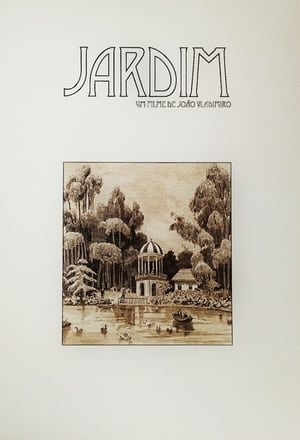
4 hectares of ground are the gardens that surround the Calouste Gulbenkian Foundation in Lisbon. Throughout one year João Vladimiro’s camera follows the work of landscape architect Gonçalo Ribeiro Telles, commissioned by the Calouste Gulbenkian Foundation. “I know that the trees don’t have eyes, that the water doesn’t have a mouth, and that stones don’t have ears. Still, we communicate. In this particular garden, long mute talks take place, like the two elders that, through their sheer presence, talk to each other about calmness, comfort and sadness.”, says director Vladimiro, whose patient camera eye pays attention to the smallest events.
Scenic route through the Vale of Evesham, Worcester and Great Malvern, with a detour to a lost masterpiece of outsider art.
Taking its lead from French artists like Renoir and Monet, the American impressionist movement followed its own path which over a forty-year period reveals as much about America as a nation as it does about its art as a creative power-house. It’s a story closely tied to a love of gardens and a desire to preserve nature in a rapidly urbanizing nation. Travelling to studios, gardens and iconic locations throughout the United States, UK and France, this mesmerising film is a feast for the eyes. The Artist’s Garden: American Impressionism features the sell-out exhibition The Artist’s Garden: American Impressionism and the Garden Movement, 1887–1920 that began at the Pennsylvania Academy of the Fine Arts and ended at the Florence Griswold Museum, Old Lyme, Connecticut.
Sprout. In the vacant lots against the hammering of buildings always under construction, between walls of granite, cement and sheet metal with rust, moss and cats; on the hillside between the train and the river, next to the traffic on the highway, facing the subway, vegetable gardens sprout. In this city, the choreography of ancient gestures of cultivating the land is repeated day after day, without fail. Sowing, digging, harvesting, watering, eating, talking, resting and returning the next day. The longest day of the year brings S. João and nobody goes to bed, but when the sun rises, the discreet gestures of resistance will restart.
Wenona does nude yoga in a garden.
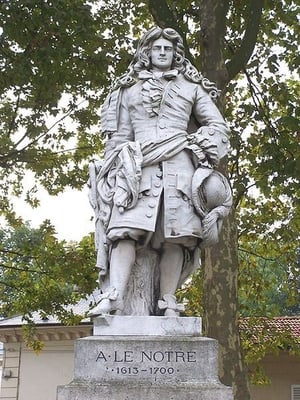
André Le Notre is certainly the most famous French gardener. He was also a designer, architect, engineer, landscaper and urban planner. He worked for Louis XIV from 1645 to 1700 and designed the gardens of Versailles, Vaux le Vicomte, Chantilly and Fontainebleau, as well as the Tuileries in Paris.
Anishinaabe elders of the Curve Lake First Nation reflect on the history, decline, and return of the traditional food gardens that connect their culture, land, and contemporary life.
Les Trésors des plus beaux Jardins français
Isamu Noguchi was a sculptor, designer, architect, and craftsman. Throughout his life he struggled to see, alter, and recreate his natural surroundings. His gardens and fountains were transformations meant to bring out the beauty their locations had always possessed.
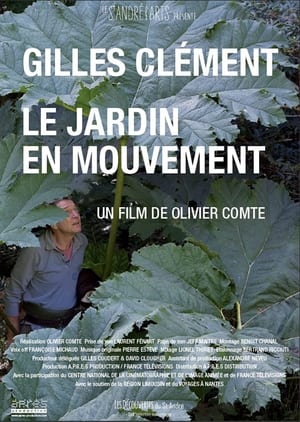
The film retraces the atypical journey of Gilles Clément, gardener and landscape architect, but also a writer. Marked by ecology, he questioned the art of gardens at the end of the XXth century, with the garden in movement, the planetary garden or the third landscape.
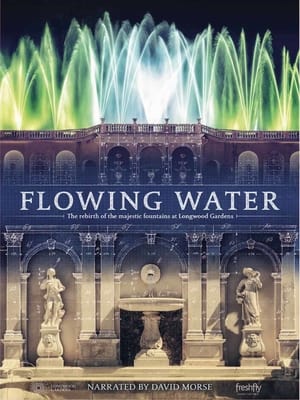
This documentary tells the story of the revitalization of the Longwood Garden's (Kennett Square, Pennsylvania) Main Fountain Garden, a lavish jewel in the crown of one of the greatest collections of fountains in the United States.
In the community gardens of New York
We discover a modest, almost derisory garden, located in the heart of the women's prison in Rennes, Brittany, France.
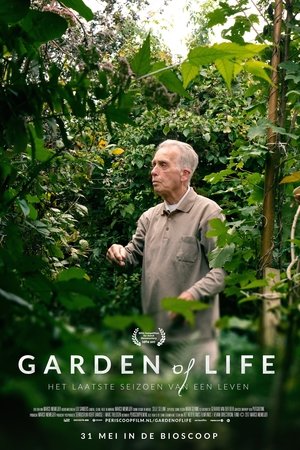
In the past, the now 82-year-old Leo happily traveled with his wife Riet to faraway lands. But since the first signs of Alzheimer’s, the father-in-law of filmmaker Marco Niemeijer prefers his own backyard above anywhere else. There, surrounded by his beloved trees and plants, Leo tries to keep hold of his increasingly confusing existence. Over the course of a year, Niemeijer films Leo every month, from season to season. Whether rain or shine, Leo can always be found in his trouble-free refuge. At first his words and actions are coherent, but as time passes, these become increasingly illogical. Leo begins to wander more aimlessly, playing with a thought and then losing it. Various mantras help him deal with his situation, such as "What I’m not looking for, I will not miss." The intimate yard scenes alternate with old home videos made by Leo during his wanderlust years.