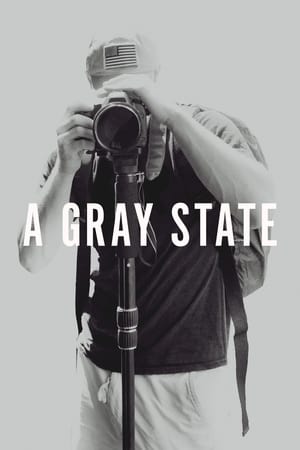
A short documentary on how people view art and its value in today's society.
In the early nineties, before the massive gentrification of many of New York's then slums, several young people from very disparate backgrounds left their broken homes and ventured onto the brutal streets of the city. United by their love of skateboarding, they formed a family and built a unique lifestyle that eventually inspired Kids, a groundbreaking and outrageous film directed by photographer Larry Clark and released in 1995.
Cousins Menahem Golan and Yoram Globus relive the creation, rise and fall of their independent film company, Cannon Films. This documentary recounts their many successes and discusses their eventual downfall.
Offbeat documentarian Chris Smith provides a behind-the-scenes look at how Jim Carrey adopted the persona of idiosyncratic comedian Andy Kaufman on the set of Man on the Moon.
Retrospective documentary on the making of the 70's women-in-prison exploitation cult favorites "The Big Doll House" and "The Big Bird Cage".
Delves into the history of the most extreme and shocking films that have ever been made. chronicles the timeline of Red Films: those films that are too extreme for the mainstream and historically have been circulated via the bootleg circuit.
A feature-length documentary focusing on the acclaimed work and eclectic career of maverick filmmaker Larry Cohen, writer-director of "Black Caesar," "It's Alive," "God Told Me To," "Q," "The Stuff," and many more.
A history of movie magic from 1895 to 1995, showing primitive effects used in such films as "A Trip to the Moon" up to the state of the art effects used in "Apollo 13" and "The Abyss."
A feature-length documentary on the life and work of Wisconsin grindhouse cinema auteur Bill Rebane, featuring historians, critics, and filmmakers, plus cast and crew members who worked with Rebane himself.
Chuck Amuck: The Movie is a 1991 documentary film about Chuck Jones' career with Warner Bros., centered on his work with Looney Tunes; narrated by Dick Vosburgh.
The plot of the movie brings two people together - an immigrant filmmaker from Belarus and a 10 years old girl from the village in the south of Kyrgyzstan.
Homo Cinematographicus is a human species whose unit of measurement and point of reference is the cinema and its derivative, television. Filmed at the 1998 Cannes Film Festival, the film offers an unspecified number of statements, talking about memories and a thousand fragments of stories, titles and film scenes, the warp of a gigantic collective Chanson de geste.
Documentary showing one day of work of over 90 actors and filmmakers from French cinema on the same day. On 27 March 2002, 27 teams filmed actors, directors, producers and technicians at work, from Hawaii to Paris and from New York to Lisbon.
As artificial intelligence becomes ever more sophisticated, the film industry is split between enthusiasm at what the technology can achieve and concern over the future for human workers in the industry. Will actors and actresses be replaced by machines? An overview on the coming wave of AI in cinema.
Eccentric, outspoken, and unfiltered TV and low budget film director Josh Becker struggles to emerge from the shadow of his work on "The Evil Dead", "Xena", the careers of his more successful colleagues, depression and alcoholism to fulfill his lifelong ambition of creating high quality, successful films.
John Cazale was in only five films – The Godfather, The Conversation, The Godfather: Part II, Dog Day Afternoon and The Deer Hunter – each was nominated for Best Picture. Yet today most people don't even know his name. I KNEW IT WAS YOU is a fresh tour through movies that defined a generation.
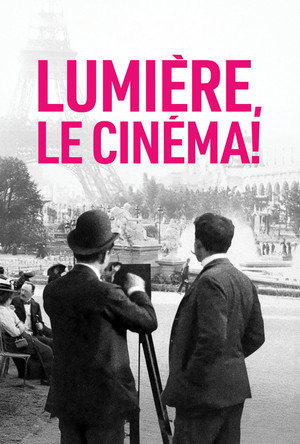
In one of those wonderful coincidences of history, lumière, the French word for “light,” was also the last name of brothers Auguste and Louis, whose brilliant invention, the cinematograph, helped to inaugurate the most beloved art form of the last 130 years. Institute Lumière director Thierry Frémaux uses Lumière, Le Cinema! to guide the viewer through over a hundred shorts—some famous, some forgotten, some never before seen—directed by Lumière and company. In the process, Frémaux illuminates how the brothers employed the camera as a creative instrument as they (and their operators) mastered framing, staging, and subject selection for quotidian and exotic microdocumentaries as well as the first ever fictional motion pictures. The result is not only a glorious re(telling) of the genesis of cinema but a profound meditation on the beautiful world captured—and the mysterious world imagined—by the Lumières.
A documentary look at the 'making of' and cult success of the troubled Lou Adler directed film "Ladies And Gentlemen The Fabulous Stains" starring Diane Lane.
What do the Japanese see in Canada? What's the magnetic pull from the Far East? And what's our take on this land of ours? Bolstering our feeling of national pride comes naturally after watching the Japanese embrace the country. The film follows Masaaki Kagami, a Japanese transplanted in Alberta. He specializes in making souvenir videos for Japanese tourists. HO! KANADA is an investigation of national stereotypes. The film records the way the Japanese see us, and how we see them and ourselves.
For more than 40 years Kathryn Bigelow has been making films that explore male violence. With movies like Blue Steel, Point Break, The Hurt Locker and Zero Dark Thirty, the Oscar winning American filmmaker has impressed with hard-hitting moviemaking that holds a mirror up to contemporary America and the world.