In a leafy forest, a Galician sovereign who longs to attain wisdom meets a sorcerer, who tells him: “Go back to your country and study the Earth and the Stars in the sky; anywhere in the world reflects an image of it. You will ride on this arrow, which you must keep for a hundred years and a day. After this time, stick it in the widest valley of all those you possess, with the tip facing the sky. Then the Moon will come and, just as it exerts its action on the waters of the sea, it will act on the arrow, turning it into a holy mountain." - Legend about the Pico Sacro Inspired by Hokusai's views of Mount Fuji and Cézanne's paintings of Mont Sainte-Victoire, "Pico Sacro [The Holy Mountain]" aims to reveal the mystery and the magic that underlie reality.
After concluding the now-legendary public access TV series, The Pain Factory, Michael Nine embarked on a new and more subversive public access endeavor: a collaboration with Scott Arford called Fuck TV. Whereas The Pain Factory predominantly revolved around experimental music performances, Fuck TV was a comprehensive and experiential audio-visual presentation. Aired to a passive and unsuspecting audience on San Francisco’s public access channel from 1997 to 1998, each episode of Fuck TV was dedicated to a specific topic, combining video collage and cut-up techniques set to a harsh electronic soundtrack. The resultant overload of processed imagery and visceral sound was unlike anything presented on television before or since. EPISODES: Yule Bible, Cults, Riots, Animals, Executions, Static, Media, Haterella (edited version), Self Annihilation Live, Electricity.
An atmospheric journey, following the unstoppable forces that shape this world. A story beyond humanity.
Cold pearly winters and the brutality of war running simultaneously.
Experimental mash-up of circus and sideshow footage.
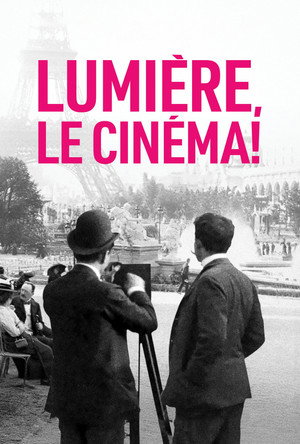
In one of those wonderful coincidences of history, lumière, the French word for “light,” was also the last name of brothers Auguste and Louis, whose brilliant invention, the cinematograph, helped to inaugurate the most beloved art form of the last 130 years. Institute Lumière director Thierry Frémaux uses Lumière, Le Cinema! to guide the viewer through over a hundred shorts—some famous, some forgotten, some never before seen—directed by Lumière and company. In the process, Frémaux illuminates how the brothers employed the camera as a creative instrument as they (and their operators) mastered framing, staging, and subject selection for quotidian and exotic microdocumentaries as well as the first ever fictional motion pictures. The result is not only a glorious re(telling) of the genesis of cinema but a profound meditation on the beautiful world captured—and the mysterious world imagined—by the Lumières.
notice sur la métamorphose
A poetic exploration of heaven and hell, the apocalypse and the afterlife, through the lens of a VHS camera.
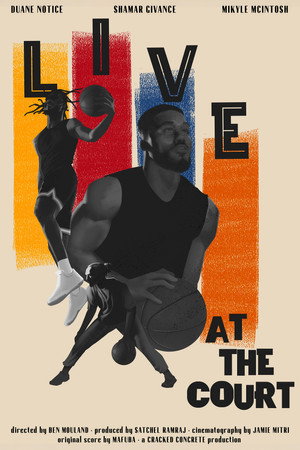
Three basketball players step onto the court, each with a rhythm of their own. As their movements are studied and reimagined, their game is then recontextualized into jazz, revealing the artistry within sport and the music hidden in motion.
The film explores a young man's intimate relationship with the Internet. While the absence of a father figure has left him searching for answers, he finds an unexpected mentor in Google. From learning everyday tasks like shaving to discovering deeper knowledge, the algorithm becomes much more than a simple search engine, blurring the boundaries between real and virtual.
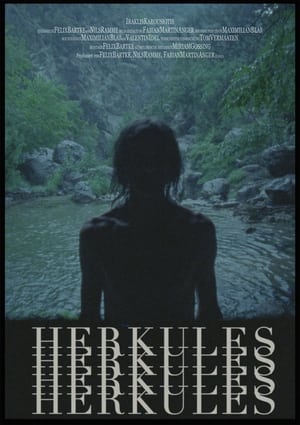
Hercules travels by bicycle from Krefeld on the Lower Rhine to Olympus, the throne of ancient deities. The Hercules myth, as a primal myth of male power, is questioned through biographical reflections and the staging of mythological echoes. The dramaturgical structure of the hero's journey disintegrates in a multi-material perspective into questions about male identity, ideals and remorse.
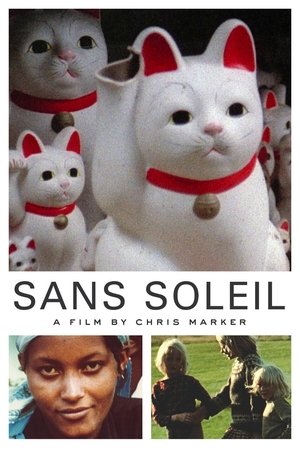
A woman narrates the thoughts of a world traveler, meditations on time and memory expressed in words and images from places as far-flung as Japan, Guinea-Bissau, Iceland, and San Francisco.
O Que Nos Separa
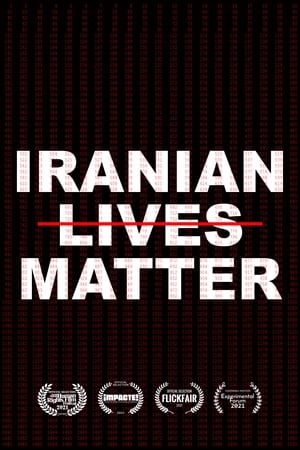
Made with virtually no budget during COVID-19 quarantine in 2020, IRANIAN LIVES MATTER abstractly recounts the true story of what occurred in Iran during the November 2019 protests, sparked by a surprise hike in gasoline prices, which quickly spread across the entire nation and was subsequently crushed by the dictator's iron fist, resulting in the death of approximately 1500 protesters, as reported by Reuters. IRANIAN LIVES MATTER is an experimental documentary, an audio-visual endurance test that audibly takes its audience through the chaos in the streets of Iran as the brutal regime cracks down on Iranian protesters, while visually showing the hands of the dictatorship as it crosses out 1500 lives one by one to further emphasize the scale of the massacre and show to a world desensitized to news of mass killings in the Middle East what the term "1500 dead" truly means.
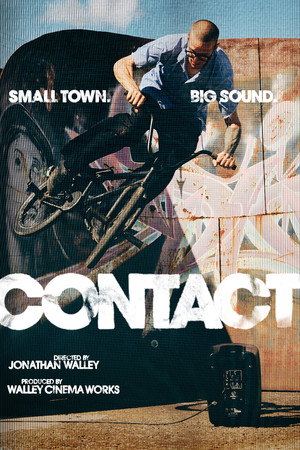
CONTACT is a short documentary film directed by Jonathan Walley that chronicles the transformation of an entire skatepark into a playable musical instrument—where the skate, BMX, art, and music scenes collide. HCS has been many things: a skatepark, gallery, library, museum, and stage; but, for one weekend, Derek Nelson fabricator, activist, BMX pro, and artist, transformed his skatepark into an immersive sonic installation—part instrument, part playground—for the community of Binghamton, NY to become co‑creators in a conflagration of sound. SMALL TOWN, BIG SOUND. CONTACT reminds us of the joy in creativity, community, and the DIY spirit. Contact is about pushing boundaries, experimenting with art, and reclaiming space in an increasingly cruel, unkind, and oppressive world. It’s a poetic exploration of the creative process told by a filmmaker who calls HCS home.
Two gay men in Japan discuss the end of their respective relationships.
Marie-Hélène, my mother, is retiring and takes with her her memories, her anxieties and the mental burden of having raised three children while working full time. As she works her last shift as a home nurse, her thoughts jostle and harmonize in a whirlwind similar to a panic attack.
A poetic story of a proletarian couple’s relationship during the years of economic crisis and unemployment – of all the films directed by E. F. Burian, the film Chceme žít (We Want to Live, 1949) is probably his worst. The intention to create a powerful work of cinema that would combine modern means of expression with the ideological canons of socialist realism failed completely. Ježek and Tarnovski discovered these „shambles“ and tried to rebuild a structure out of the hopelessness and futility of life. Ježek has photochemically “transcribed” selected passages with the greatest possible degree of humility towards the work of the great avant-gardist, Tarnovski similarly makes the soundtrack visible. The improvised encounter of sound and image in dialogic mode can lead to various misunderstandings resulting in ambiguous compromise.
A pleasant tasting summer film made in New York and Searsmont, Maine. With poems by Daniel Shapiro (age five), performances by Dana Reitz, Yoshiko Chuma and Wang Pint; music by Duke Ellington and Gamelon of Bali.