After a deadly plane crash strands four young siblings deep within the Colombian rainforest, a dramatic rescue mission unfolds, uniting Indigenous trackers and the military in a race against time. For the first time ever, this documentay offers the exclusive account of this incredible true story directly from the children themselves and the rescuers who scoured the Amazon rainforest for a grueling 40 days and nights to find them.
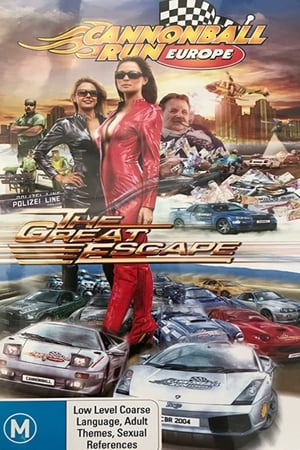
The 2003 Cannonball Run lives with this real super-charged race across Europe featuring high speed machines and the constant pursuit of the police that would make Burt Reynolds proud. Leading a pack of 100 exotic cars, legendary Cannonball racer Tim "Maverick" Porter races across the countryside as wild teams trail him, including a pair of racers decked out in Telletubbie outfits.
For the past ten years, Jürgen Henn has filmed over-height trucks crashing into the 11foot8 train bridge affectionately nicknamed the "Can Opener." In that time, millions have viewed the crashes online. Regional, national, and international news organizations have dined out on the story and the goofy crash reels. But why do motorists continue to crash despite the many warnings, sensors, and signs? And what is it about these crashes that holds our attention? In this piece, we look for the humanity in human error.
This short film looks at the importance of maintaining safe driving practices and heeding traffic rules. A traffic cop investigates a serious car crash and attempts to understand the cause.
77777
"1985: Heroes among Ruins" is a reflection of disaster. It is about the human solidarity, the search and rescue and the importance of civil protection, but above all, the triumph of the people over devastation during the earthquake of September 19, 1985 in Mexico City and the one ocurred in September 19, 2017.
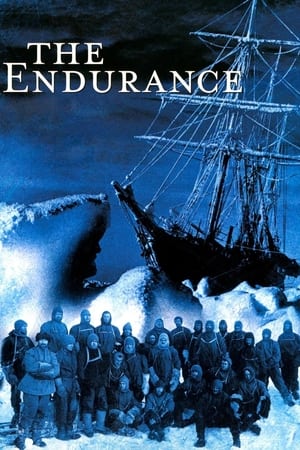
Documentary on the Shackleton Antartic expedition. A retelling of Sir Ernest Shackleton's ill-fated expedition to Antarctica in and the crew of his vessel 'The Endurance', which was trapped in the ice floes and frigid open ocean of the Antarctic in 1914. Shackleton decided, with many of his crew injured and weak from exposure and starvation, to take a team of his fittest men and attempt to find help. Setting out in appalling conditions with hopelessly inadequate equipment, they endured all weather and terrain and finally reached safety. Persuading a local team of his confidence that the abandoned team would still be alive, he set out again to find them. After almost 2 years trapped on the ice, all members of the crew were finally rescued.
This somewhat bizarre film about Emergency Medical Technicians or EMTs was produced and distributed by Film Commutators in Hollywood, California. The film dates to a time when ambulance crews were being replaced by paramedics / EMTs, who had sufficient training to make medical decisions and give on-scene care. The film makes a strong argument to decision makers in favor of upgrading from mere ambulance drivers to EMTs.
This 1974 film is dedicated by the Chlorine Institute to the public interest. It is specifically intended to assist firefighters and other emergency services. The techniques demonstrated are appropriate for emergency use; different circumstances might require modified or additional procedure. The information is drawn from sources believed to be reliable. The Institute, its members any organizations cooperating in the development of this film, jointly or severally, cannot be responsible for how the information is used and must make this legal disclaimer. This is a 1960s era, color movie about Chlorine and emergency workers… specifically, firefighters. The film is intended to show firefighters what chlorine is, what a chlorine emergency might involve, how a company can plan ahead and how an emergency can be handled safely.
This highway scare film produced by the Highway Safety Foundation in 1971, "Decade of Death", is a retrospective of the organization's 10 years of gory, shocking social guidance films which aimed to promote traffic safety and driver responsibility through the display of bloody and horrific footage of traffic crashes.The Highway Safety Foundation made driver scare films such as "Signal 30," "Mechanized Death," and "Highways of Agony" that intended to encourage drivers to drive responsibly and with consideration of the risks and consequences. It was the organization's belief that crash footage, while horrific, was the best way to convey the importance of driving safely.
This color educational film is a driver's safety film about city driving. There is no copyright at the beginning or end of the film so the date of the production appears to be the mid to late 1970s.
Information film about freeways, their interchanges, and driving safely on them.
The film provides a comprehensive guide on snorkeling skills and rescue techniques, emphasizing the importance of proper equipment such as masks, snorkels, and fins. It discusses how to choose the right mask for comfort and fit, the proper use of snorkels, and techniques for clearing water from both masks and snorkels. The film also covers essential skills for entering the water safely, practicing buddy systems during snorkeling, and techniques for locating and rescuing submerged victims. It highlights the need for training and emphasizes that while these skills are crucial for rescue, they do not replace the need for a full certified course in skin diving.
The transcript discusses the prevalent drug culture, particularly marijuana use, among youth in national parks. It highlights the perception that marijuana is less harmful than harder drugs and reflects on the challenges park rangers face in enforcing drug laws. While acknowledging the existence of drug trafficking, the narrative emphasizes that marijuana use is often seen as a minor issue compared to alcohol consumption or harder narcotics. The conversation also touches on the need for a more nuanced understanding of drug use, suggesting that current laws may be overly stringent and not reflective of societal attitudes.
Using original footage and interviews, this documentary tells the nail-biting story of Apollo 13 and the struggle to bring its astronauts safely home.
“The Mystery Crash” discusses the dangers of drinking and driving especially as it pertains to the seemingly harmless “social drinker.” This film was produced by Jack Lieb Productions Inc, Chicago and sponsored by the National Safety Council. It is part of a series of films, with each episode describing a different element of driving and road safety.
This driver’s education film from the early 1970s, "Alcohol and Red Flares", warns viewers of the dangers of drunk driving. It recounts the story of a man named “Mike” who drinks heavily at a party, and insists on driving home. The consequences are steep and along the way, viewers learn about Blood Alcohol Level (also known as BAC or Blood Alcohol Content), techniques police use to verify a driver’s inebriation such as the breathalyzer, and the reasons why driving drunk is so dangerous. This film was produced by legendary social guidance filmmaker Sid Davis in cooperation with the Monterey Park Police Department.
Hospital staff are reporting more violence and anti-social behaviour than ever before. In 2015, 8 staff were assaulted every hour – a new record high. At The Queen Elizabeth Hospital in Birmingham – one of the UK’s biggest hospitals – they think they have the answer. Here a private security force of 46 uniformed guards, and a sophisticated CCTV system, keep staff and patients safe. A colourful mixture of characters ranging from ex-soldiers, to bouncers, to former elite sportsmen, it’s the security team’s job to keep the hospital running smoothly. With more than 2 million visitors they have to deal with all aspects of crime and anti-social behaviour. All against a back drop of life changing and life saving procedures.
Paramedico is an observational documentary following emergency ambulance workers in four diverse locations Mexico, Pakistan, Venice and Hawaii. The camp, military style of Pakistans rescue teams, with their marching and theatrical disaster exercises are a world away from the relaxed beachside work of the Hawaiians who stop for ice-cream at every turn. On the other side of the globe, above the romantic canals of Venice, ambulance doctors and nurses watch a generation of old Venetians quietly die as tourists pass below. Meanwhile, Mexican paramedics put their mind off the terror of the countrys drug war with their on-station games and madcap antics.
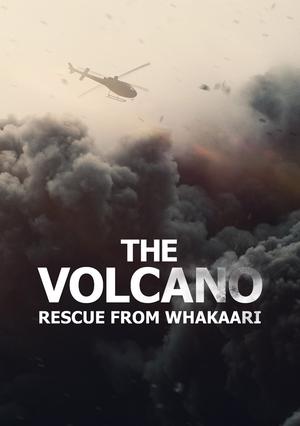
A close examination of the Whakaari / White Island volcanic eruption of 2019 in which 22 lives were lost, the film viscerally recounts a day when ordinary people were called upon to do extraordinary things, placing this tragic event within the larger context of nature, resilience, and the power of our shared humanity.