Snarky, monster-porn-dealing teen, Baxter Zevcenko, might be a serial killer. His girlfriend, Esme, is missing, and he’s the prime suspect. To clear his name, he’ll turn to Cape Town’s grizzliest, drunkest bounty hunter, Jackson ‘Jackie’ Ronin. Little does he know that Ronin is a supernatural bounty-hunter, and that he’s about to be dragged headlong into a deep, dark Cape Town underbelly full of monsters and myth, shadowy government forces, bloodthirsty crow-men and a conspiracy across time and space.
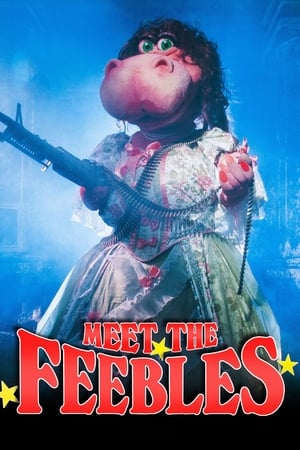
After receiving an exotic small animal as a Christmas gift, a young man inadvertently breaks three important rules concerning his new pet, which unleashes a horde of malevolently mischievous creatures on a small town.
Will Turner and Elizabeth Swann join forces with the revived Captain Barbossa to free Jack Sparrow from Davy Jones' locker. The group must navigate dangerous waters, confront many foes and, ultimately, choose sides in a battle wherein piracy itself hangs in the balance.
The American comedian/actor delivers a story about the alternative Hip Hop scene. A small town Ohio mans moves to Brooklyn, New York, to throw an unprecedented block party.
Gonzalo Suárez: Sam Peckinpah, director salvaje (TV)
The actor, columnist, author, moderator, the failed pastoral assistant, the self-confessed gay sadomasochist, the total work of art Hermes Phettberg, who has always been relentlessly open about his life, his suffering in himself and the world, gives insight into his current existence. Despite his decline, Phettberg has remained a charismatic, unique "pyre" (as he calls himself) who documents his slowly fading life daily on the Internet and in his weekly column in the Viennese city magazine "Falter" and struggles to survive as Austria's best-known welfare recipient. Sobo Swobodnik shows this daily struggle of a one-time star who became a patronized outsider - with three strokes, a heart attack, extreme bladder weakness and an irrepressible will to go on living.
Filmed to praise the work of the Spanish Ministry of Housing in solving the problem of shanty towns in Bilbao, it was made to be viewed by General Franco and not for public screening or distribution through the NO-DO newsreel. Although the short film was commissioned by the Ministry of Housing, director Jorge Grau produced a subtly critical work.
Professor Barbenfouillis and five of his colleagues from the Academy of Astronomy travel to the Moon aboard a rocket propelled by a giant cannon. Once on the lunar surface, the bold explorers face the many perils hidden in the caves of the mysterious planet.
Filmmaker Alain Resnais documents the atrocities behind the walls of Hitler's concentration camps.
Presents life in 18th century Spain as the painter Francisco de Goya showed it to us.
Pereda returns with a small, mysterious and moving tribute to Chantal Akerman, conceived as a series of joyful impossible letters addressed to the great disappeared from the cinema, to answer her fictional question about renting her bright apartment in Coyoacán.
This last testimony of Robert Kramer (1939-1999) is a moving documentary with the independent American film director, in which he speaks of his political activism, his way of filmmaking, his relationship with Portugal and the revolutionary movements.
In the face of AAPI violence, an intergenerational coalition of Black, Indigenous, Latinx, Asian, People of Color organizers come together to organize a march across historic Washington Heights and Harlem, as a continuation of the historic and radical Black and Asian solidarity tradition.
The music producer Molécule stayed in a village in Greeland, where he recorded the sounds of the Artic to compose music. The viewer follows Molécule in his adventure in the extreme North, in a sensorial and musical immersion.
An exploration —manipulated and staged— of life in Las Hurdes, in the province of Cáceres, in Extremadura, Spain, as it was in 1932. Insalubrity, misery and lack of opportunities provoke the emigration of young people and the solitude of those who remain in the desolation of one of the poorest and least developed Spanish regions at that time.
Two angels, Damiel and Cassiel, glide through the streets of Berlin, observing the bustling population, providing invisible rays of hope to the distressed but never interacting with them. When Damiel falls in love with lonely trapeze artist Marion, the angel longs to experience life in the physical world, and finds -- with some words of wisdom from actor Peter Falk -- that it might be possible for him to take human form.
Year three at Hogwarts means new fun and challenges as Harry learns the delicate art of approaching a Hippogriff, transforming shape-shifting Boggarts into hilarity and even turning back time. But the term also brings danger: soul-sucking Dementors hover over the school, an ally of the accursed He-Who-Cannot-Be-Named lurks within the castle walls, and fearsome wizard Sirius Black escapes Azkaban. And Harry will confront them all.
Starting with a long and lyrical overture, evoking the origins of the Olympic Games in ancient Greece, Riefenstahl covers twenty-one athletic events in the first half of this two-part love letter to the human body and spirit, culminating with the marathon, where Jesse Owens became the first track and field athlete to win four gold medals in a single Olympics.
Part two of Leni Riefenstahl's monumental examination of the 1938 Olympic Games, the cameras leave the main stadium and venture into the many halls and fields deployed for such sports as fencing, polo, cycling, and the modern pentathlon, which was won by American Glenn Morris.
Working men and women leave through the main gate of the Lumière factory in Lyon, France. Filmed on 22 March 1895, it is often referred to as the first real motion picture ever made, although Louis Le Prince's 1888 Roundhay Garden Scene pre-dated it by seven years. Three separate versions of this film exist, which differ from one another in numerous ways. The first version features a carriage drawn by one horse, while in the second version the carriage is drawn by two horses, and there is no carriage at all in the third version. The clothing style is also different between the three versions, demonstrating the different seasons in which each was filmed. This film was made in the 35 mm format with an aspect ratio of 1.33:1, and at a speed of 16 frames per second. At that rate, the 17 meters of film length provided a duration of 46 seconds, holding a total of 800 frames.