In decades past, Native American artists who wanted to sell to mainstream collectors had little choice but to create predictable, Hollywood-style western scenes. Then came a generation of painters and sculptors led by Allan Houser (or Haozous), a Chiricahua Apache artist with no interest in stereotyped imagery and a belief that his own rich heritage was compatible with modernist ideas and techniques. Narrated by actor Val Kilmer and originally commissioned as part of an exhibit of Houser’s work at the Oklahoma History Center, this program depicts the artist’s tribal ancestry, his rise to regional and national acclaim, and the continuing success of his sons as they expand upon and depart from their father’s achievements. Key works are documented, as is Houser’s tenure at the Santa Fe–based Institute of American Indian Arts.
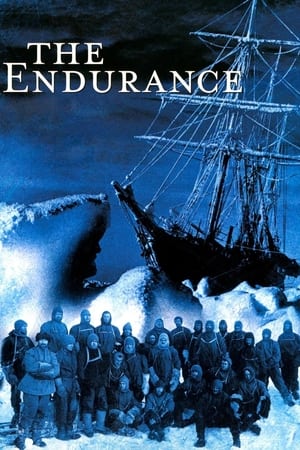
Documentary on the Shackleton Antartic expedition. A retelling of Sir Ernest Shackleton's ill-fated expedition to Antarctica in and the crew of his vessel 'The Endurance', which was trapped in the ice floes and frigid open ocean of the Antarctic in 1914. Shackleton decided, with many of his crew injured and weak from exposure and starvation, to take a team of his fittest men and attempt to find help. Setting out in appalling conditions with hopelessly inadequate equipment, they endured all weather and terrain and finally reached safety. Persuading a local team of his confidence that the abandoned team would still be alive, he set out again to find them. After almost 2 years trapped on the ice, all members of the crew were finally rescued.
This investigative documentary follows a team of archaeologists searching for the hard evidence behind chilling vampire myths, from the discovery of bodies staked into their coffins on the island of Lesbos to the New England vampires who died from tuberculosis.
The interview, held on January 4, 2001, was the last given by Professor Milton Santos, who died from cancer on June 24 of the same year. The geographer is gone, but his thoughts remains. Its political and cultural ideals inspire the debate on Brazilian society and the construction of a new world. His statement is a true testimony, a lesson that the world can be better. Based on geography, Milton Santos performs a reading of the contemporary world that reveals the different faces of the phenomenon of globalization. It is in the evidence of contradictions and paradoxes that constitute everyday life that Milton Santos sees the possibilities of building another reality. He innovates when, instead of standing against globalization, proposes and points out ways for another globalization.
While Hans Jurgen Höss enjoyed a happy childhood in the family villa at Auschwitz, Jewish prisoner Anita Lasker-Wallfisch was trying to survive the notorious concentration camp. At the heart of this film is the historic and inspiring moment – eight decades later – when the two come face-to-face. This is the first time the descendant of a major war criminal meets a survivor in such a private and intimate setting, Anita’s London living room. Together with their children, Kai Höss and Maya Lasker-Wallfisch, the four protagonists explore their very different hereditary burdens.
In year 1250 B.C. during the late Bronze age, two emerging nations begin to clash. Paris, the Trojan prince, convinces Helen, Queen of Sparta, to leave her husband Menelaus, and sail with him back to Troy. After Menelaus finds out that his wife was taken by the Trojans, he asks his brother Agamemnon to help him get her back. Agamemnon sees this as an opportunity for power. They set off with 1,000 ships holding 50,000 Greeks to Troy.
The story of Fantômas, the first villain of modernity, from his birth in 1911 as a novel character to his contemporary vicissitudes, passing through Louis Feuillade, André Hunebelle, surrealism and Moscow.
As a director and his crew shoot a controversial film about Christopher Columbus in Cochabamba, Bolivia, local people rise up against plans to privatize the water supply.
Since its release in 1968, Planet of the Apes, the masterful film directed by Franklin J. Schaffner and starring Charlton Heston, and its subsequent sequels have asked its viewers challenging questions about contemporary society under the guise of a bold science fiction saga: a fascinating look at a hugely successful pop culture phenomenon.
A documentary by Justin Arment that explores the 1991 rename of Michigan city 'East Detroit' to 'Eastpointe', and the racially motivated reasonings behind it.
Russian Federation, December 31, 1999. After President Boris Yeltsin's unexpected resignation, Prime Minister Vladimir Putin becomes acting president of the country. From that day and for a year, Vitaly Mansky's camera documented Putin's rise to power. The story of a privileged witness. The harsh explanation of the reason why politics is the art of possibility of achieving the best with the support of many, but also of giving the worst in return.
A documentary reflecting on women in film and the entertainment industry through the ages led and hosted by some of its most beloved female icons.
"The Jersey Sound" is a love letter to New Jersey's diverse music scene. It captures its rich history through untold stories and intimate interviews while paying homage to legendary icons who have called Jersey home. It's an attitude.
Famous French director Tavernier tells us about his fantastic voyage through the cinema of his country.
The untold story of a Jewish baby who was born in the death camp before the liberation and survived. An extraordinary journey of the second and third generation, breaking the cycle of trauma to free themselves from Auschwitz - forever.
A collection of restored prints from the Lumière Brothers.
In 1945, two young American soldiers, brothers Budd and Stuart Schulberg, are commissioned to collect filmed and recorded evidence of the horrors committed by the infamous Third Reich in order to prove Nazi war crimes during the Nuremberg trials (1945-46). The story of the making of Nuremberg: Its Lesson for Today, a paramount historic documentary, released in 1948.
The dramatic stories of Fritz Wiessner’s 1939 K2 expedition and Charlie Houston’s return in 1953. K2 is one of the hardest mountains in the world to climb. This film focuses on the expeditions of Fritz Wiessner and Charlie Houston in 1953. An award winner at the Banff, Telluride, Trento and Prague film festivals.
Subjects of Desire is a thought provoking film that examines the cultural shift in beauty standards towards embracing (or appropriating) Black aesthetics and features, deconstructing what we understand about race and the power behind beauty.
This documentary interweaves films and voice recordings by Maya Deren with interviews featuring colleagues and contemporaries who worked with or knew her firsthand. Drawing on archival material and commentary from figures such as Jean Rouch and Jonas Mekas, the film traces Deren’s work and influence across experimental cinema and ethnographic thought.