A documentary about a vision care school that enables visually impaired children to learn the skills necessary for a full life.
Steve Saylor may be blind, but that doesn't stop him as he pushes to help make the video game industry more accessible, so everyone has the chance to experience the stories only games can offer.
This touching documentary follows a cast of blind and visually impaired actors as they prepare Dancing to Beethoven, a play about blindness. The film takes us deep into the lives of the actors. We hear stories of their shock and disbelief at first losing sight and of their struggles coping with a life without it. We hear them talk about grieving and pining for the visual world. They tell the moving story of how this play is itself a victory, a type of salvation, for each of them. By opening night, at the renowned Place des Arts in Montreal, they are a close-knit cast, well-honed and ready to step out of the wings and into the light.
Tour de France ve tmě
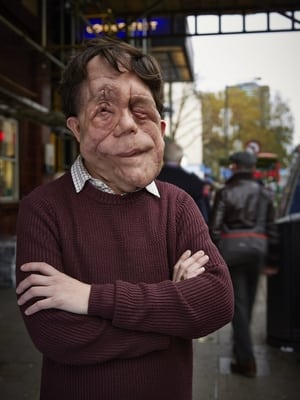
Adam Pearson - who has neurofibromatosis type 1 - is on a mission to explore disability hate crime: to find out why it goes under-reported, under-recorded and under people's radar.
Filmmaker Rodney Evans embarks on a scientific and artistic journey, questioning how his loss of vision might impact his creative future. Through illuminating portraits of three artists: a photographer (John Dugdale), a dancer (Kayla Hamilton), and a writer (Ryan Knighton), the film looks at the ways each artist was affected by the loss of their vision and the ways in which their creative process has changed or adapted.
The visually impaired assistant at the Medical Faculty in Košice, Ján Grega, talks about his life.
Sessizlik Lütfen
After a series of traumatic childhood events, a psychosomatically deaf, dumb and blind boy becomes a master pinball player and the object of a religious cult.
Farba tvojich očí
When her partially blind friend Siti goes missing, Laura, who's hard of hearing, rushes to the police with a bizarre tale. Played by actors with disabilities.
Rumble of train rails; Crashing of ocean waves; Soft caress of distant wind. Two people. Two ways of perceiving the world.
Touch a Dream
A woman and her blind partner must risk their lives to deliver an important package as they are pursued along a coastline by a mysterious evil force.
This pioneering documentary film depicts the lives of the indigenous Inuit people of Canada's northern Quebec region. Although the production contains some fictional elements, it vividly shows how its resourceful subjects survive in such a harsh climate, revealing how they construct their igloo homes and find food by hunting and fishing. The film also captures the beautiful, if unforgiving, frozen landscape of the Great White North, far removed from conventional civilization.
Starting with a long and lyrical overture, evoking the origins of the Olympic Games in ancient Greece, Riefenstahl covers twenty-one athletic events in the first half of this two-part love letter to the human body and spirit, culminating with the marathon, where Jesse Owens became the first track and field athlete to win four gold medals in a single Olympics.
Part two of Leni Riefenstahl's monumental examination of the 1938 Olympic Games, the cameras leave the main stadium and venture into the many halls and fields deployed for such sports as fencing, polo, cycling, and the modern pentathlon, which was won by American Glenn Morris.
Working men and women leave through the main gate of the Lumière factory in Lyon, France. Filmed on 22 March 1895, it is often referred to as the first real motion picture ever made, although Louis Le Prince's 1888 Roundhay Garden Scene pre-dated it by seven years. Three separate versions of this film exist, which differ from one another in numerous ways. The first version features a carriage drawn by one horse, while in the second version the carriage is drawn by two horses, and there is no carriage at all in the third version. The clothing style is also different between the three versions, demonstrating the different seasons in which each was filmed. This film was made in the 35 mm format with an aspect ratio of 1.33:1, and at a speed of 16 frames per second. At that rate, the 17 meters of film length provided a duration of 46 seconds, holding a total of 800 frames.
Antônio Conselheiro: O Taumaturgo dos Sertões
Louis Ortiz, a down on his luck 40-something Puerto Rican resident of the Bronx, looks in the mirror one day and believes he’s found gold—he’s a dead ringer for Barack Obama. With visions of finally living the American Dream, the charismatic Ortiz launches a complete makeover. He dons Obama’s trademark suit, adopts his mannerisms, mimics his voice and steps out onto the street as a presidential impersonator. Taken on by a casting agent, Ortiz and a gang of other political impersonators, including a Bill Clinton and a Mitt Romney, hit the road during the run-up to the 2012 presidential election to perform satirical debates for mostly Republican conventions, throwing Ortiz into conflict with his personal political beliefs. As Ortiz struggles to make ends meet, the distance between the White House and the Bronx becomes increasingly acute. The life of a president isn’t always as easy as it looks.