On a sleepy summer night in 2004, eyes peer into the world-wide-web: traveling between conspiracy sites, malware, porn, and mp3 databases in an attempt to lose (find) themselves. Passing through blog graveyards, broken hyperlinks, and digital spirits, they begin to realize the Internet is so much more. Lost websites, anon forums, and inexplicable pixels singing to a prepubescent soul. An ode to the 2000s webpage and flash game culture.
A series of assorted shots of strangers around Manhattan about the comfort found in being anonymous.
An experimental documentary that illuminates Black non-binary folks in the American Souf & their connection to the nearly erased history of gender expansiveness within the African diaspora.
The Great Basin! Or: How I Learned to Stop Worrying and Love the Desert is a film, book and print project that addresses climate change, the severe drought in the Western United States, gun culture, the military’s use of the basin and range of Nevada for atomic testing, cultural stereotypes, my own personal history, and my experiences in this mostly remote area. In the 15 minute short film I am creating complex collages of my still and motion captures made in Nevada with appropriated short clips from Mutual of Omaha’s Wild Kingdom, recent weather footage, The Lone Ranger, as well as John Wayne’s and other historic films, cartoons, and many other cultural artifacts, in order to speak to the place and its significance.
This film is a contemplation of life through the prism of war. It is a premonition of global world changes... and a hope for the prudence of humanity. Human beings live in a world of memories, fears and passions, dreams and hopes. In our memories, we increasingly want to return to the world of childhood - summer, where joy and light reign, as opposed to cruel reality, loneliness and existentialism. But it is becoming more and more difficult to get into this world, to dissolve at least mentally in the sun's glare. This film is about man in nature and nature in man, about cyclicality, the beginning and the end - the path to eternity. Autumn is heading towards winter, and we are so eager for light.
Dead Parents Club is a hybrid documentary blending observational footage, experimental performance, and cultural analysis to challenge the pervasive "orphan trope" in popular culture. While children's media like The Lion King, Frozen, and Finding Nemo frequently use parental loss as a narrative tool to spark a character's independence, the lived reality of grief is vastly more complex. The film follows real individuals who have lost parents as they collaborate on a unique theatre production. By stepping into the roles of iconic fictional orphans like Simba and Frodo, the cast members weave their personal stories of trauma into the scripted scenes. The resulting performance offers a poignant, absurd, and unexpectedly funny exploration of identity and healing. Moving between fantasy and lived experience, this documentary examines how we navigate profound loss, build deep connections, and ultimately learn to parent ourselves.
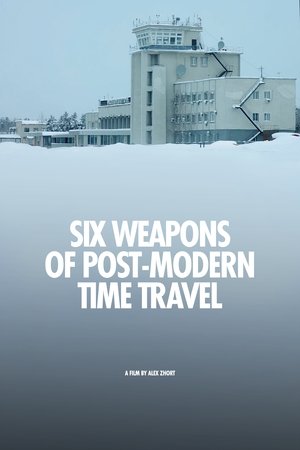
Somewhere in stoic, rural Russia, at the edge of mapped time and memory, a snowbound airport idles in stillness. Six Weapons of Post-Modern Time Travel indifferently observes as time stretches beyond the runways. Absence hums under old fluorescent lights as the ordinary turns spectral. This film documents the weight of a place coming to terms with silence, holding it's breath as departures have outlived arrivals.
A collection of personal footage from the end of 2024. A mix of private holiday scenes and cold city cinematography, in differing video quality. You can see it as a creative video diary.
An ambient short film of seaside cinematography accompanied by Stars of the Lid's 'Broken Harbors pt.2' and 'Broken Harbors pt.3' It is shot in black and white, but switches to color near the end.
A disorienting realm where reality itself flickers and fragments. Through a visceral exploration of digital distortion and failing verification processes, this challenges your perception and dares you to question what lies beneath the surface. Are we truly awake to the genocides and wars raging beyond our privileged bubbles, or are we content to remain ensnared by manipulated realities? This is a personal call to shatter the illusions, to seek deeper truths, and to recognize the profound fortune of our existence amidst global turmoil.
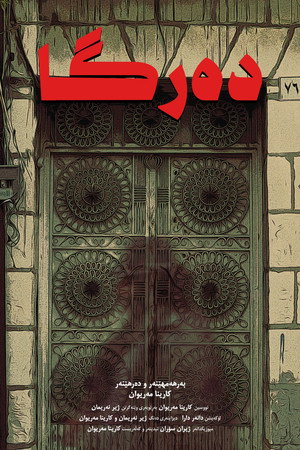
A journey into the complexity of life and the facade of old city doors, an attempt to convey the voice of those people behind the gates telling their stories.
The film conducts an elusive search for the traces of Lee Kyung Soo, a Korean War orphan adopted by a U.S. Navy officer. Lee’s image circulated widely across newspapers, magazines, and photographs—serving specific purposes and cultural narratives. Over time, these representations fractured, faded, and reemerged, leaving silences in the archive and gaps in visibility. The cut-out fragments from the scattered information are pieced together to imagine the child’s unspoken point of view throughout his wandering life.
A collective portrait in which friends and acquaintances explore the complexities of Rodrigo Lira, a pivotal poet on the national scene of the 1980s. The short film exposes diverse literary and personal facets of Lira, while simultaneously fragmenting, reiterating, and juxtaposing the speeches of the group of interviewees, making it in itself a work of audiovisual experimentation. Originally filmed months after Lira's suicide, this film was recuperated and preserved by Universidad de Chile's Film Archive, who were able to release it in 2026.
A fragmented reflection on memory, love, and emotional limbo, unfolding through fleeting images and a drifting voice that questions their reliability.
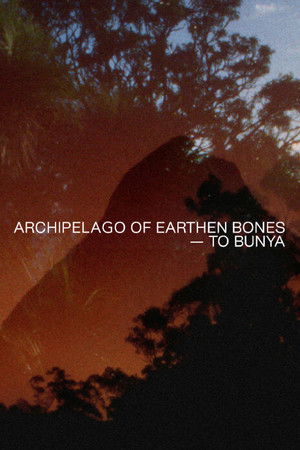
Forming part of a film constellation that stretches from Chile across the Pacific, in which Malena Szlam trains her camera on far-flung volcanic landscapes — by turns barren and verdant — the dazzling in-camera multiple exposures of Archipelago of Earthen Bones — To Bunya evoke the layered histories of the titular Bunya Mountains in eastern Australia’s Beerwah region, further deepened by sonified atmospheres from artist Lawrence English.
Film produced and directed by Ricky Leacock, Edward Pincus, and MIT Center for Advanced Visual Studies documenting the Centerbeam kinetic sculpture project and its first installation at documenta 6 in Kassel, Germany in 1977
Surreal film melding documentary footage of Chicago and its residents, featuring fast paced montage sequences set against a rollicking 1960s musical backdrop. The film aptly deconstructs the absurdities of contemporary American life, particularly the thick fog of patriotism engulfing the country at the time.
A directionless student filmmaker - without a first name - decides to document the summer she'll come out to her parents.
Escombro is a collage and found footage film that brings together a series of natural disasters around the world over the last thirty years. The film features disasters caused by climate change and also the exploitation of the earth's natural resources.
Strange images hide in my mother's photo album, snapshots of her youth in Russia inside a colorful yoga club. Today, she devotes herself to other cults, all of which bring their share of propaganda, rites, gurus, and of course sacrifices. I play her role, to understand or to exorcize.