Set in the sparsely populated lobster fishing villages of southern Nova Scotia, Plains is a cinema vérité approach to documenting the curious lives of Jon and Cat, a young couple who are developing politically left-leaning virtual reality video games. Against the busy backdrop of their art practice, we sit in on their quiet rural life, which, in its proximity to nature and the vast green and oceanic spaces that surround, echoes the romanticism of a simpler time. As the decaying world of physical labour and the mechanical industry faces up to an expanding digital empire, Jon gradually retreats into the alternative realities of his own design.
Exploring the reports of a spectral mansion on the outskirts of Rougham, a village in the Eastern county of Suffolk. The film delves into local folklore surrounding these sightings as villagers recount their haunting experiences against the desolate backdrop of rural Britain. It reflects on themes of memory, place, and the fading tradition of oral storytelling, evoking the eerie atmosphere of a fractured England and our growing disconnect from the natural environment.
When Werner Herzog was still a child, his father was beaten to death before his eyes. His mother was overwhelmed with his upbringing and thereupon shipped him off to one of the toughest youth welfare institutions in Freistatt. This was followed by a career as a bouncer in the city's most notorious music club and an attempt to start a family. Today, the 77-year-old from Bielefeld lives with his dog Lucky in a lonely house in the country. Despite adverse living conditions, he has survived in his own unique and inimitable way.
Omama, a rural grandmother in Hungary, has one main wish: to not wake up tomorrow. Martin, her cinema-expatriate grandson, comes for a visit, hoping to connect with her before Omama's wish comes true.
Whiskey-making, one of the oldest traditions in the mountains, has been illegal since the end of the 18th century. Tradition is a portrait of Appalachian moonshiner Logan Adams, who began practicing his trade as a boy because “back then there wasn’t any jobs…about like now.” Adams discusses his vocation and why he continues to make whiskey despite having served a string of jail sentences for the practice. Adams’ story and family interviews are intercut with a federal revenue agent who describes the methods used by law enforcement agents to apprehend moonshiners. The film concludes with a tour by Adams of his still as he describes the whiskey-making process. This film will be of interest to anyone interested in moonshining, the economic and traditional forces that motivate illegal whiskey making, the law and its penalties, as well as anyone interested in what a practice long stereotyped by outsiders really entails.
Meet Brian Boland—the beloved, eccentric hot air balloonist and artist from the rural Upper Valley of Vermont.
A real-time portrait of 2020 unfolds as an Asian-American family in Trump’s rural America fights to keep their restaurant and American dream alive in the face of a pandemic, Neo-Nazis, and generational scars from the Cambodian Killing Fields.
The village commune is struggling with huge debt incurred by it's overambitious mayor, who once suffered a personal tragedy. Did this affect his overly ambitious actions? A warm and humorous observation of the life of a village near Krakow.
Former flight attendant Émilienne, 76, lives on a small farm in Centre-du-Québec. As the seasons go by, she helps us discover a way of life in symbiosis with the living and the passing of time.
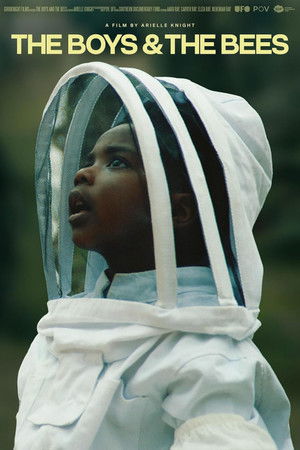
Traces a family’s journey toward freedom, nurturing their bees and their young sons amid Georgia’s shifting seasons while they learn to care for the land that sustains them.
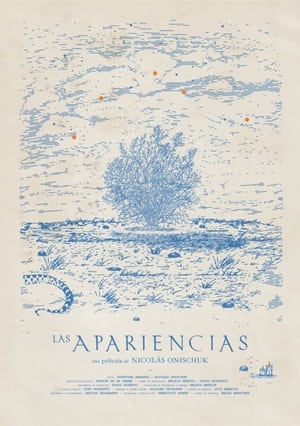
An atmospheric and dreamy picture poem from Argentina's vast La Pampa region, where ancient stories of spirits are evoked in dark and evocative images between reality and the beyond.
As coronavirus begins to sweep the globe, Zhang returns to her father’s village with her camera, seeking to understand where the extraordinary phenomenon might sit in the grand palimpsest of China’s history. As with all of Zhang’s work, this is a committed, reflective, formally assured non-fiction film, grounded in collaboration and blessed with an uncanny sense of unhurried time.
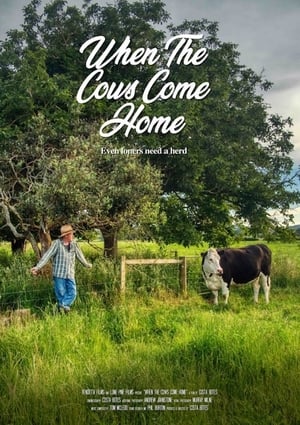
When the Cows Come Home introduces audiences to Tilly and Maggie, a pair of cows that musician, journalist, artist and cow whisperer, Andrew Johnstone has befriended and subsequently saved from slaughter. The garrulous herdsman is enthusiastic to expound his views on animal husbandry, bovine communication and the vagaries of life in general, before the film walks us back through the events that have shaped the singular farmer-philosopher. From personal family tragedy to warring with Catholic school authorities, innovating in Hamilton’s nascent music scene to creating guerrilla art installations; Johnstone’s life has had a truly idiosyncratic trajectory. Mental health issues may have seen him retreat to life on the farm, but the film makes clear its subject’s restless inquisitiveness is far from being put out to pasture.
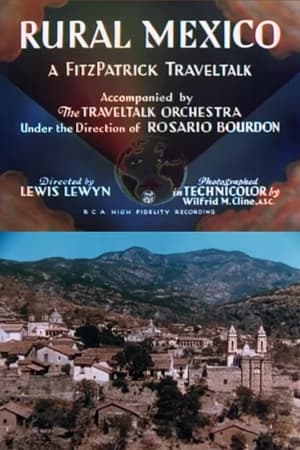
A Traveltalks visit to some small towns in Mexico. In Mazatlán, away from the tourist spots, we see a small village where fishing, growing coconuts, and gathering large sea turtles are the main pursuits. We then visit Toluca on market day, where people sell produce and pottery. The last stop is Taxco, where the Castilian influence of the Spanish conquerors is still prevalent.
An intimate portrait of the lives of Delvys and Carlos, siblings who live alone with their elderly mother in a rural part of a small Cuban town. The film portrays a family engulfed in their inner worlds. Between the sacrifices they make out of love for those who are present, and their longing for things that are absent, they struggle to find meaning as they reflect, contemplate, and carry the weight of existence, trying together, to move forward.
The efforts of a community to build a bridge which would allow their children to go school during the rainy season.
During the 2012 season, two Montana High School teams compete in 6-man football, a smaller version of American football with increasing popularity in rural communities. It's pure football, for the sake of football, played by boys of all sizes and abilities, for themselves and for the communities who know them oh so well. No television timeouts. No place to sit. Six Man Football.
Comitiva Esperança
Tu nourriras le monde
In the 1980s, a swine flu crossed the Haitian-Dominican border and started to affect the Creole pig, an important commodity in Haiti. The flu also threatened livestock in the United States. As a preemptive measure, the USAID in conjunction with the Haitian government proceeded to exterminate all Creole pigs from the island, leading to a crushing economic blow for an already impoverished country.