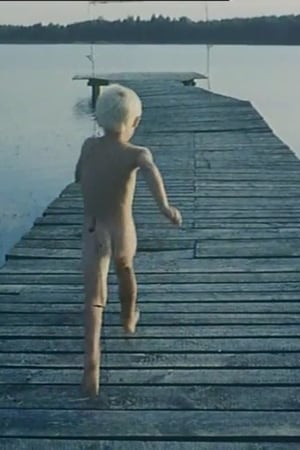
Omama, a rural grandmother in Hungary, has one main wish: to not wake up tomorrow. Martin, her cinema-expatriate grandson, comes for a visit, hoping to connect with her before Omama's wish comes true.
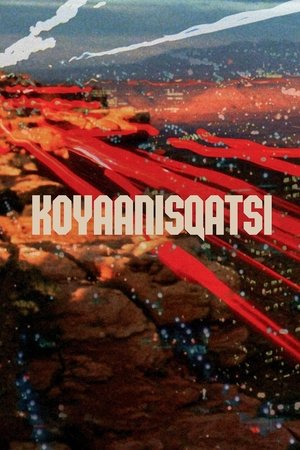
Takes us to locations all around the US and shows us the heavy toll that modern technology is having on humans and the earth. The visual tone poem contains neither dialogue nor a vocalized narration: its tone is set by the juxtaposition of images and the exceptional music by Philip Glass.
As coronavirus begins to sweep the globe, Zhang returns to her father’s village with her camera, seeking to understand where the extraordinary phenomenon might sit in the grand palimpsest of China’s history. As with all of Zhang’s work, this is a committed, reflective, formally assured non-fiction film, grounded in collaboration and blessed with an uncanny sense of unhurried time.
A life story of bees and people. In order to get to the bottom of the mysteries of the life of bees and show them to the audience, the camera enters a contemporary hive and a traditional wild beehive drilled in the trunk of an old tree. It wanders the forests in Poland and Ural, mountains in Nepal and... roofs of Paris and Warsaw. For millions years bees have been laboriously building the natural environment of our planet. These days, they started to die by millions. A programme of wild tree beekeeping reintroduction was launched in Polish forests. It has been an ancient local tradition. Maybe reaching for the past, the original model of coexistence of bees and people, for wild tree beekeeping, can help us to save the bees? After watching “Honey Hunters” everyone wants to have their own beehive and harvest their own honey!
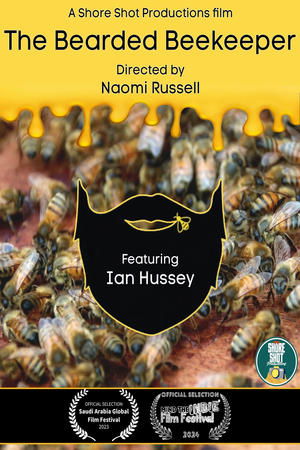
As the "Murder Hornet" makes national headlines, a small town crew of beekeepers and scientists band together to protect their quiet Washington community from the dangerous invasive species.
84-year-old Maura is the guardian of a very particular tradition in danger of extinction. She is a singer of amorfinos, verses full of humor that will disappear forever with her departure.
Filmmakers stay at a haunted lodge and find themselves in over their heads when they encounter something otherworldly.
A portrait of a family living in a village in Masuria.
A group of educators led by Fernand Deligny are working to create contact with autistic children in a hamlet of the Cevennes.
"El campo para el hombre" was a politically militant documentary about the small holdings of land in the north of Spain and the large estates in the south of the country. This film portrays the exploitation and misery of the Spanish peasants, but also their class-consciousness and their will to fight for their rights and freedom. The film was shot in the late years of Franco's dictatorship, so it was made in secrecy (the directors were connected to the Spanish Communist Party).
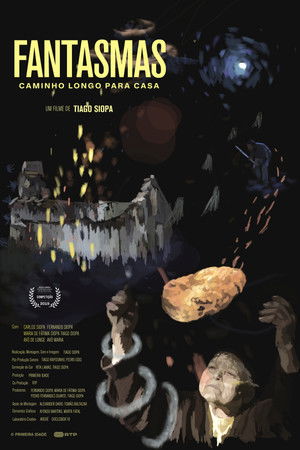
After a spell cast by Grandma Faraway, the oldest son of a small family encounters the ghost of his late Grandma Maria still living in her old house, and they chat as they used to.
Argentine filmmaker Gerardo Vallejo, exiled in Spain, visits the Salamanca village of Cespedosa de Tormes, where his grandfather was born, and reconstructs the memories of his time with the locals.
A sample of the most relevant and characteristic aspects of traditional Navarran culture: carnivals, pilgrimages, crafts involving farm implements and tools, agricultural work, patron saint festivals, and other manifestations of rural society and folklore unfold over 150 minutes at the pace set by the seasons. The film is a reference document of prime importance on traditional Navarrese society, which was beginning to disappear in the years when the film was shot due to the rapid transformation of the region into an industrialized society. More than thirty years later, this process has been almost completely accomplished, giving the film a unique added historical value.
Mothers and fathers of gay, lesbian, and trans children from Georgia, Moldova, Russia, and Ukraine travel to Berlin to walk together in the Pride parade. Living under one roof, they prepare for the march — painting signs, cooking borscht, and reflecting on how their relationships with their queer children have evolved over the years.
When the Cows Come Home introduces audiences to Tilly and Maggie, a pair of cows that musician, journalist, artist and cow whisperer, Andrew Johnstone has befriended and subsequently saved from slaughter. The garrulous herdsman is enthusiastic to expound his views on animal husbandry, bovine communication and the vagaries of life in general, before the film walks us back through the events that have shaped the singular farmer-philosopher. From personal family tragedy to warring with Catholic school authorities, innovating in Hamilton’s nascent music scene to creating guerrilla art installations; Johnstone’s life has had a truly idiosyncratic trajectory. Mental health issues may have seen him retreat to life on the farm, but the film makes clear its subject’s restless inquisitiveness is far from being put out to pasture.
Dr. James Graham, a physician in a struggling Oklahoma town, fights to save its bankrupt hospital.
Edeltraut Hertel - a midwife caught between two worlds. She has been working as a midwife in a small village near Chemnitz for almost 20 years, supporting expectant mothers before, during and after the birth of their offspring. However, working as a midwife brings with it social problems such as a decline in birth rates and migration from the provinces. Competition for babies between birthing centers has become fierce, particularly in financial terms. Obstetrics in Tanzania, Africa, Edeltraud's second place of work, is completely different. Here, the midwife not only delivers babies, she also trains successors, carries out educational and development work and struggles with the country's cultural and social problems.
Li Shouwang is the leader of a blind storytellers team, learned storytelling at the age of 19. His childernare living hard in other cities. Li's money amost goes to his children's pocket every year. But with urbanisation, the storytellers have lost almost all their audience. As the conflict between the storytelling team and the village team intensified, his son, who was far away from home, became the only spiritual sustains... When he was excited that his son would be taking his family home for Chinese New Year, what's await is a sigh.
Taking its lead from French artists like Renoir and Monet, the American impressionist movement followed its own path which over a forty-year period reveals as much about America as a nation as it does about its art as a creative power-house. It’s a story closely tied to a love of gardens and a desire to preserve nature in a rapidly urbanizing nation. Travelling to studios, gardens and iconic locations throughout the United States, UK and France, this mesmerising film is a feast for the eyes. The Artist’s Garden: American Impressionism features the sell-out exhibition The Artist’s Garden: American Impressionism and the Garden Movement, 1887–1920 that began at the Pennsylvania Academy of the Fine Arts and ended at the Florence Griswold Museum, Old Lyme, Connecticut.
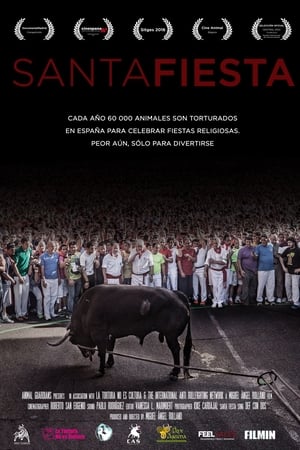
SINOPSIS / SYNOPSIS Every year in Spain, some 16,000 Fiestas are organized, during which animals are used. Honoring the Holy Virgin and the Patron Saints, and with the blessing of religious and political authorities, entire towns -including children- are involved in celebrations of unbelievable cruelty. 60,000 animals are hence abused each year during these “Fiestas of Blood”.