Experimental film fragment made with the Edison-Dickson-Heise experimental horizontal-feed kinetograph camera and viewer, using 3/4-inch wide film.
William K.L. Dickson brings his hat from his one hand to the other and moves his head slightly, as a small nod toward the audience. This was the first film produced by the Edison Manufacturing Company to be shown to public audiences and the press.
"Bagong Buhay" is a short experimental film that dispels the common belief that packing up and moving to a new place will magically improve one's quality of life. The film challenges this presumption by portraying two contrasting ways of life through objects and locations, encouraging viewers to think critically about the complexities of what makes a better life. In the Philippines, it's believed that relocating to a new area will bring about positive changes in one's existence. True satisfaction is a complex and multifaceted notion, and "Bagong Buhay" encourages us to ponder that relocating to a new place is not a surefire way to attain it.
A Deafblind fencer and author competes in all arenas just for the right to be seen.
An exploration of Rodez Cathedral and its stained glass windows: praying figures and scientific imagery. A study on color, repetition and flickering consisting of 292 photographs.
A day in the city of Berlin, which experienced an industrial boom in the 1920s, and still provides an insight into the living and working conditions at that time. Germany had just recovered a little from the worst consequences of the First World War, the great economic crisis was still a few years away and Hitler was not yet an issue at the time.
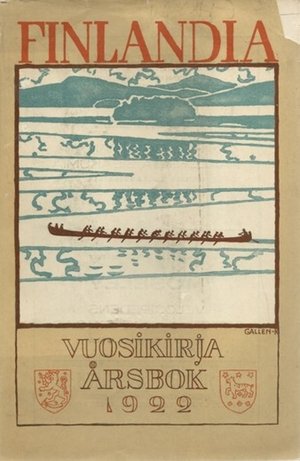
Finland’s first nature documentary. The filmmakers’ expedition leads them all the way to the Åland Islands and the Karelian Isthmus.
A method soldier boys have for amusing themselves in their leisure moments. New comrades are frequently initiated by the old-fashioned sport of tossing in a blanket. The newly arrived recruit, who is the victim of their sport, enjoys himself, perhaps, less than the other participants.
Down the road from Woodstock in the early 1970s, a revolution blossomed in a ramshackle summer camp for disabled teenagers, transforming their young lives and igniting a landmark movement.
This film is a letter to my friend Vincent who died ten years ago. Vincent was Deaf. He introduced me to his language, his culture, his world. Through Vincent ‘s life, the film will examine the roots of the distress that plagues the Deaf, and also explore a rich and fascinating world, a people that struggles to preserve its Sign Language and Culture.
Madrid, Spain, 1949. The Circo Americano arrives in the city. While the big top is pitched in a vacant lot, the troupe parades through the grand avenues: the band, a witty impersonator, the Balodys, acrobats, jugglers, acrobatic skaters, clowns and… Buffallo Bill.
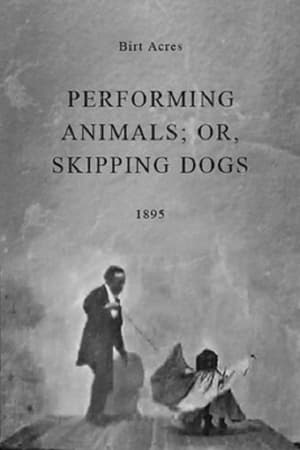
A short black-and-white silent documentary film featuring one dog jumping through hoops and another dancing in a costume, which was considered lost until footage from an 1896 Fairground Programme was identified as being from this film.
Surfing at Waikiki Beach, Hawaii, on the island of Oahu. Most surfers are human, one is a dog. The educational documentary is part of the Bruce Scenic Novelties series.
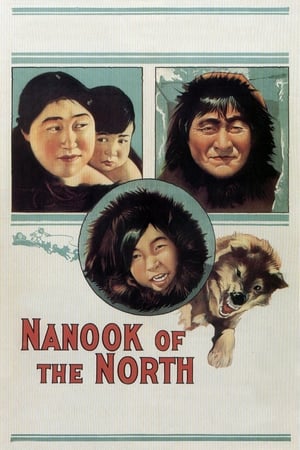
This pioneering documentary film depicts the lives of the indigenous Inuit people of Canada's northern Quebec region. Although the production contains some fictional elements, it vividly shows how its resourceful subjects survive in such a harsh climate, revealing how they construct their igloo homes and find food by hunting and fishing. The film also captures the beautiful, if unforgiving, frozen landscape of the Great White North, far removed from conventional civilization.
A comic, biting and revelatory documentary following a small group of prankster activists as they gain worldwide notoriety for impersonating the World Trade Organization (WTO) on television and at business conferences around the world.
Egypt's only modernist architect Hassan Fathy (1900-1989) was committed to ecology and sustainability in his architecture. This film takes us with slow steps, in still images, to two villages he created. Fathy's historically grounded, forward-looking designs prompt us to reflect on the past as well as contemplate new solutions for the future.
Finnish filmmaker and artist Sami van Ingen is a great-grandson of documentary pioneer Robert Flaherty, and seemingly the sole member of the family with a hands-on interest in continuing the directing legacy. Among the materials he found in the estate of Robert and Frances Flaherty’s daughter Monica were the film reels and video tapes detailing several years of work on realising her lifelong dream project: a sound version of her parents’ 1926 docu-fiction axiom, Moana: A Romance of the Golden Age.
Short documentary released in 1907.
This film records the vast public response to the early death of Vera Kholodnaya, the first star of Russian cinema.
Gilles Groulx's first film shot in 1955 with a camera borrowed from his brother and edited during his spare time when he worked as an editor at the Radio-Canada news service a few years before he joined the NFB. Silent film, presented as its author left it, where the soil and the dialectic of Groulx's work are already there: documentary realism, the social space to be explored, daily life, the relationship between individual and society, social disparities, the consumer society, seduction and happiness.