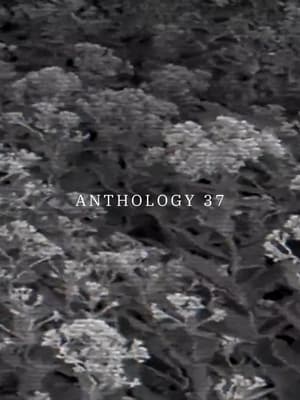
The innovative and influential British filmmaker Derek Jarman was invited to direct the Pet Shop Boys' 1989 tour. This film is a series of iconoclastic images he created for the background projections. Stunning, specially shot sequences (featuring actors, the Pet Shop Boys, and friends of Jarman) contrast with documentary montages of nature, all skillfully edited to music tracks.
A portrait film about a Kentucky drag queen who ran his own club on Main Street in downtown Lexington, Kentucky.
Eligibility is a film made by Ryan Cunningham. In this film, they discuss the question, "Why do I have to prove myself?" Through 80 minutes of documentary, archival, and narrative formats, Ryan explores this topic. Made within a week of 2025 and with a couple of all-nighters, this is proof of Eligibility. Anything can be a movie, so why not make one?
yaya/ayat explores identities, being lost in translation and distance. But at its core it's about the filmmaker longing for a relationship with her geographically distant grandma and her journey to Greece to find her. This is an experimental documentary about how being a part of any diaspora shapes a person's identity.
Landscapes revealed themselves through text, paper through movement, while the sun gave them relief. This is a journey across found words, enunciating a discovery, their textures constructing the sea and the waves, in a travelogue from the first exploration, the first step over the sand towards the shore. “Amor” writes this joy to underline it in its time, captured on paper. This film has been composed through a scanner, and it’s the first chapter of the “Reír al Sol” series.
Actors work with a director to find the rhythm of a scene.
Filmed during summer 2019, Jesus Is King brings Kanye West’s famed Sunday Service to life in the Roden Crater, visionary artist James Turrell’s never-before-seen installation in Arizona’s Painted Desert. This one-of-a-kind experience features songs arranged by West in the gospel tradition along with new music from his forthcoming album.
Fifteen images of a camera running in a park and in obscurity searching the space of light through distorsion and the sensory of rapid motion.
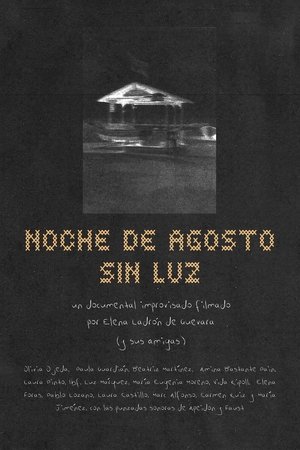
What are they? What do they seek? When all the lights go out, they will wander. And you will never see them.
Amid Guanajuato's vibrant streets, an aging filmmaker becomes a modern Don Quixote, joined by a spirited young animator as his loyal Sanchia. Together, they navigate themes of mortality, unfulfilled dreams, and the fragile line between madness and clarity, uncovering the transformative power of light, art, and the landscapes that shape our souls.
An experiment with three dimensions in a moment of clarity: the focus of the camera's lens towards the present, the speed of the train and the material world distorted by the movements of the train.
A portrait of Austria captured with a broken camera, accompanied by an enhanced and AI-generated version of the national anthem.
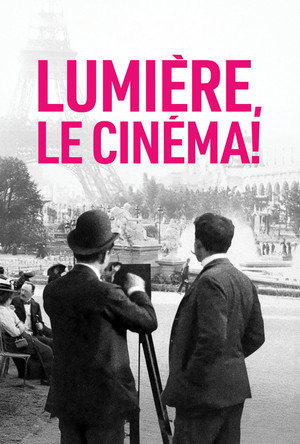
In one of those wonderful coincidences of history, lumière, the French word for “light,” was also the last name of brothers Auguste and Louis, whose brilliant invention, the cinematograph, helped to inaugurate the most beloved art form of the last 130 years. Institute Lumière director Thierry Frémaux uses Lumière, Le Cinema! to guide the viewer through over a hundred shorts—some famous, some forgotten, some never before seen—directed by Lumière and company. In the process, Frémaux illuminates how the brothers employed the camera as a creative instrument as they (and their operators) mastered framing, staging, and subject selection for quotidian and exotic microdocumentaries as well as the first ever fictional motion pictures. The result is not only a glorious re(telling) of the genesis of cinema but a profound meditation on the beautiful world captured—and the mysterious world imagined—by the Lumières.
A shot-on-video look at three impoverished Black communities in rural Georgia in 1976 - America's bicentennial, interspersing photos with footage and voices of those in their communities.
Twenty images of a camera running next to a chemical platform and capturing abstract light throught improvised gestures and asymmetrical motion
During the last forty years, the photographer Sebastião Salgado has been travelling through the continents, in the footsteps of an ever-changing humanity. He has witnessed the major events of our recent history: international conflicts, starvations and exodus… He is now embarking on the discovery of pristine territories, of the wild fauna and flora, of grandiose landscapes: a huge photographic project which is a tribute to the planet's beauty. Salgado's life and work are revealed to us by his son, Juliano, who went with him during his last journeys, and by Wim Wenders, a photographer himself.
Cartas de Arapuca
In 1967, Beulah struck Reynosa. Family survives through images from memory circling the wreck. Rituals of celebration and violence like hurricane, shift between dancing, cyanotypes, blue fire and lost family archive. We have come to see the damage that was done and the treasures that prevail. Thus invent colors that burn the eyelid like 火藥.
The horses in Denys Colomb Daunant’s dream poem are the white beasts of the marshlands of the Camargue in South West France. Daunant was haunted by these creatures. His obsession was first visualized when he wrote the autobiographical script for Albert Lamorisse’s award-winning 1953 film White Mane. In this short the beauty of the horses is captured with a variety of film techniques and by Jacques Lasry’s beautiful electronic score.
Three images of a person running in the void through the movement of speed and abstract images