Desdemona in Verdi's Otello was a career role for soprano Renata Tebaldi, from her first operatic performance outside of Italy to her final appearance on the opera stage. Between those landmarks she performed the role nearly 100 times all over the world and made studio audio recordings that became reference recordings for the role. This 1962 production with the Deutsche Oper Berlin and Giuseppe Patane was planned as a media event from the outset and blessedly captures a consummate artist in a signature role at the peak of her gifts.
From the Teatro dell'Opera di Roma Terme di Caracalla "Carmen" by Georges Bizet. Director Jesus Lopez-Cobos. Orchestra, Chorus and Corps de Ballet of the Teatro dell'Opera di Roma.
Riccardo Chailly inaugurates the 2024-2025 Opera Season with a new production of La forza del destino, conducting his ninth Verdi title at La Scala. Leo Muscato will direct yet another cast of extraordinary prestige. A complex opera in terms of dramaturgy, first performed in St. Petersburg in 1862 and debuting in its final form at La Scala in 1869 with the creation of the famous overture, La forza del destino offers some of the most memorable Verdi melodies. It has been absent from the programme since the Verdi centennial in 2001, when it was brought to La Scala by the artists of the Mariinsky Theatre of St. Petersburg; the La Scala Orchestra and Choir have not performed it since 1999.
A production of an opera by George Frideric Handel, about the Skyrian princess Deidamia helping Achilles while he is disguised as a girl to avoid dying in the Trojan War, based on Greek mythology.
Mozart’s Don Giovanni was first performed in 1787, and was based on the story of the Spanish lothario, Don Juan. The title character seduces, deceives and murders his way through the opera, doing his utmost to experience life, and all that it has to offer, to the full.
Piero Cappuccilli and Shirley Verrett lead Verdi’s sombre masterpiece, drawn from one of Shakespeare’s most celebrated tragedies. Filmed for television at Teatro alla Scala in 1979, Claudio Abbado conductes a night to remember.
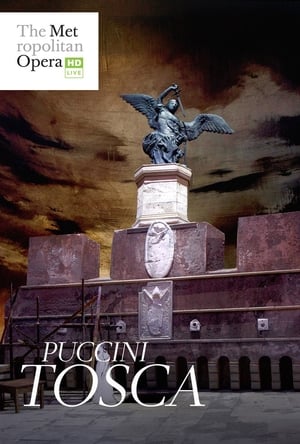
This live version of Puccini s superbly dramatic opera was recorded in Rome in the exact locations and at the precise times of day as Puccini had written into his score. The action opens in Rome's beautiful 16th-century church of Sant Andrea della Valle, where Cavaradossi (Plácido Domingo) is innocently painting, moves to the Farnese Palace where Tosca (Catherine Malfitano) dramatically stabs the lustful Scarpia (Ruggero Raimondi), and finally to the battlements of the Castle Sant Angelo at dawn the following day where Cavaradossi is cruelly killed, and Tosca takes her own life.
The director, Roland Schwab, has created his version of Hell. The set is like a high iron walled hanger and the stage is continually occupied with people who look like fugitives from Mad Max and who interact with Mefistofele. The orchestra and choir are wonderful. Rene Pape gives a nuanced interpretation with a certain amount of sardonic humour under the evil. His singing and acting are first rate, as is that of Kristine Opolais and Joseph Calleja.
St. Margarethen is a magnificent structure and a grand setting for Nabucco. This venue, along with the gorgeous costumes, spectacular lighting, lasers and pyrotechnics made for one grand, five star production! This is reason enough to see it and it must be an advantage to view it on DVD.--It would probably be harder to digest the whole spectacle if you were actually sitting in the audience, as there is so much to take in. The whole cast was in great form, both in singing and acting. Simon Yang as Zaccaria and Igor Morosow as Nabucco were excellent. Gabriella Morigi was a convincing Abigail who got better and better. Bruno Ribeiro as Ismaele and Elisabeth Kulman as Fenena were great, too.
Live 2001 production from the Zurich Opera House of the classic Mozart/Da Ponte opera, with Nikolaus Harnoncourt conducting and directed for television and video by Brian Large.
Franco Zeffirelli's magnificient staging of Puccini's final opera - a fairy tale set in a mythical China - is one of the most popular in the Met repertory. In this Live in HD production, Maria Guleghina takes on the title role and Marcello Giordani is Calaf, the unknown prince. Marina Poplavskaya and Samuel Ramey co-star, and Andris Nelsons conducts in his Met debut.
Ernst Krenek's theatrical piece Karl V. consisting completely of twelve-tone series should have premiered at the Vienna State Opera. The political situation in the Vienna of 1933 and the fact that Krenek was despised by the Nazis because of this Jazz opera Jonny spielt auf, prevented the première. It only took place five years later in Prague, however Krenek had already emigrated to the USA. Karl V was the last emperor to hold to the idea of a Christian empire in which the sun never set, although its downfall was always inevitable, for numerous reasons. For the second production of Karl V. in the Nationaltheater, Carlus Padrissa in particular seeks out political power systems that are highly topical, and so very precisely analyses the treatment in the theatrical piece. At the core of the intellectually and linguistically highly qualified libretto, written by the composer himself, Karl V. reflects on his life and makes his confession to a young monk below Titian's La Gloria.
Semyon Bychkov conducts a cast of young, up-and-coming talent including American soprano Corinne Winters in a new production of Mozart’s opera on the nature of love.
Čertova stěna
Diana Damrau and Vittorio Grigolo are opera’s classic lovers in Gounod’s lush Shakespeare adaptation. Director Bartlett Sher’s “brilliant and inspired new production … is a revelation” (Huffington Post), and has already won acclaim for its vivid 18th-century milieu and stunning costumes during runs at Salzburg and La Scala. Emmanuel Villaume conducts the sumptuous score.
The legendary Plácido Domingo brings another new baritone role to the Met under the baton of his longtime collaborator James Levine. Liudmyla Monastyrska is Abigaille, the warrior woman determined to rule empires, and Jamie Barton is the heroic Fenena. Dmitri Belosselskiy is the stentorian voice of the oppressed Hebrew people.
Axel Kohler, the internationally renowned countertenor has brought Admeto into the modern era in timeless style by the skillful application of imaginative theatrical digressions. Köhler's production at the Halle Opernhaus revisits a work that encompasses comedy, tragedy and almost absurd grotesqueness, couching it in the convincing metaphor of a modern hospital.
The many passionate, fiery or lyrical vocal pieces of Spanish zarzuela have continued to thrive in concert and recitals all over the world. One of the most renowned and ardent supporters of zarzuela melodies is Plácido Domingo. Belying his 66 years, the world-famous tenor sings these rousing, seductive melodies with the beguiling sweetness of a much younger man and tranports the enraptured listener to the calles and plazas of Madrid and Seville, Domingo is accompanied by Mozarteum Orchestra underJesús López Cobos and, above all, by his partner for the evening, sprano Ana Maria Martínez, "a beautiful woman with a fascinating voice, full of velvety mezzoish half-tints in the middle and bottom ranges, with a gleaming top." (London Times) Martínez and Domingo serve up an evening of infectious good spirits and exquisite vocal treats."The dazzle of genuine stars shone brightly over Salzburg!" (Die Welt)
The life and career of Italian opera singer Farinelli, considered one of the greatest castrato singers of all time.
In the mid-20th century, in Fucecchio, near Florence, Buoso Donati, an elderly collector and wealthy antique dealer, has just passed away. He lies in his bed, surrounded by relatives feigning grief. They are all worried, as the deceased has bequeathed his entire fortune to a monastery. They search frantically for the will. The young Riniccio, Donati’s nephew, finds it but agrees to show it to the family only if they promise to let him marry Lauretta, the daughter of Gianni Schicchi, a local figure of dubious reputation. Everyone accepts the condition and discovers to their horror that the rumour was true: the monks are set to inherit the fortune. Riniccio suggests calling on Schicchi for help, much to the family’s disgust. Summoned, Riniccio arrives at the house accompanied by his daughter. He proposes keeping the death a secret, taking his place, and instructing a doctor and a notary to alter ‘his’ testamentary dispositions. But has the hunter become the hunted? Not so sure...