The Olympean Collection is a visually poetic trilogy set against the vast landscapes of East Africa, following Daisy and a Boy Scout as their search for eternal youth spirals into a surreal odyssey of memory, loss, and transformation.
A film about peace, love and war. Dedicated to the 100th anniversary of the end of the Civil War in Russia. The film takes place at the end of the summer of 1917, when Russia and the whole world were at a crossroads between two eras. None of the people could even imagine how much his life would change in the very near future. In a strange way, the atmosphere of the film echoes our current reality and what is happening in Russia today. According to the form of visualization, the film belongs to experimental mockumentary cinema. To give greater authenticity to what is happening on the screen, the shooting was carried out on black-and-white negatives of 16 and 35 mm, hand-operated cameras were used and the material was developed in manual spiral tanks. The documentary chronicle of the Kolchak army of 1919 and the White army in the Far East of 1922 is embedded in the finale of the film.
Beneath the blinding lights of an amphitheater that exist just slightly out of time and space. Moira, a girl clad in white danced like a puppet on a string to the tunes of looming horrors but also to the romanticism and tragedy that comes with humanity’s strong attachments to their kind and in some cases, to their own fate.
In a mix of puppetry and animation, Harry demonstrates the Art of Visual Thinking to Kermit—and what it does to you once it gets out of control.
A triple exposure on EXR 50D 16mm film: two layers shot in summer, and the third captured on the cusp of winter. A collection of statues fading in and out of consciousness, around the Weissensee lake in northeast Berlin, where the filmmaker lives.
A young artist learns one winter's evening that the paintings she has submitted have been rejected from an open exhibition. Disappointed, the artist decided on the way home to put an end to her suffering by creating one last work.
Before the freeze, there was beautiful garden. "Before the Freeze" is a short psychological thriller with experimental elements, about an overstressed, newly-single mother, her daughter, their dog, and what happens one afternoon when a friend comes over. "Before the Freeze" is Tenley E. Raj's debut film. Written, directed, shot, and edited and by Tenley E. Raj.
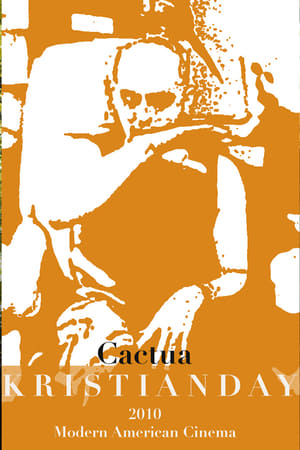
A short film collaboration between director Kristian Day and make up artist Patrick Boltinghouse. Patrick had created the make up for Pride Weekend 2010 in Des Moines, Iowa. After the parade, he called Kristian up explaining that he was in make up and had a bird on his shoulder. Kristian's only reply was "I'll get the camera ready". Filmed entire in his home, Kristian made two versions: a single play version and a "locked groove" version which played on a loop at the Resident Artists: Guns Blazin' show on July 9th, 2010 in Des Moines.
The wind carries an aspiring healer into a chaotic, virulent parallel world. Paralyzed by a familiar universe that is gradually becoming distorted, she discovers she has the power to stop time.
Julia experiences a confused world seemingly against her after receiving a pessimistic tarot reading, as her feelings inevitably differ from her thoughts. Which way to go?
A woman reflects under the parapet.
“Belladonna Museum” is a short film that portrays a personal experience of a transgender woman in a tragic love relationship: it is a visual poetry that reinterprets iconic paintings from surrealism and post-impressionism to address themes such as emotional dependence, loneliness, objectification, the attachment and the abuse both emotional and physical.
A short experimental film, exploring the concept that one small change can have a profound impact on a person's life.
A feminine machine, stuffed with modern nano-technology and useless operations is depicted in this mixed-media 2D animation short, highlighting the consequences of consumerism and the downfall of civilized society. The machine reminiscent of a two-dimensional video game, leads to a destructive chain reaction after a strange malfunction, with people turning into clones and robots.
In Hong Kong, a young woman haunted by visions of her future self meets a stranger who changes the course of her night -- and possibly her life.
A mad clock takes the viewer on a trip to a random planet. Which happens to work in a different conception of time than we know. Made in relay process, the results are unexpected and mind tripping.
After discovering a stranger’s livestream, a month unfolds under his balcony, through watching and being watched.
Ananias, a San Francisco Bay Area artist and immigrant, performs the folkloric Danza de los Viejitos (the Dance of the Old Men). Originally from Michoacán, Mexico, where the dance originates, Ananias interprets its movements through the lens of his spirituality, his long-term HIV-related disabilities, and his search for a place in the world.
A documentary about the sea and memory. Its movement is its form. Its strength.
American cartoons are the starting point for Martin Arnold's new work. Sequences of short films form the basis of a process of fragmentation, deconstruction, dismantling and repetition. Arnold uses fun, family entertainment to create films with open-ended possibilities for association. His pieces, such as Hydra (2013), Charon (2013), Nix (2013) and Self Control (2011), feature characters whose anatomy is no longer recognizable as such, but rather resemble puppets, remotely controlled from the outside. Trembling hands, dancing tongues, blinking eyes and snoring mouths move like ghosts against an abyss-like deep black background, in which bodily elements constantly disappear, only to reappear once more.