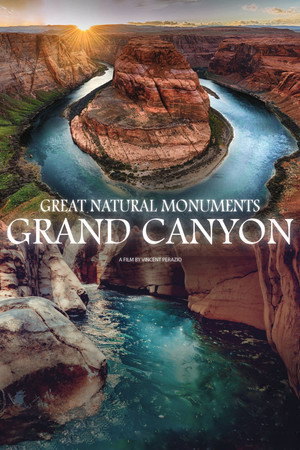
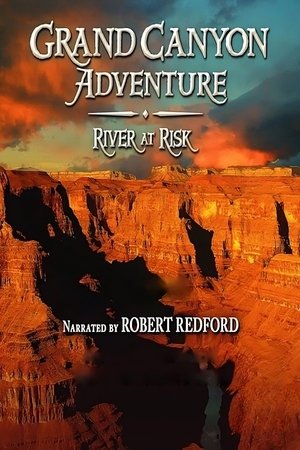
The Grand Canyon is a breathtaking natural monument. It's one of the planet’s best-known landscapes, yet we often forget that it tells two billion years of the Earth's history. Geologists Karl Karlström and Laurie Crossey are the leading experts on this. Over the course of 8 days, they descend the Colorado river and tackle hundreds of rapids to unveil the mysteries held in the Grand Canyon, and the place that humans occupy within it.
A climatologist, a physicist, and a volcanologist set out to conquer the highest peak in the Alps. Through exceptional images, the film recounts their odyssey and reveals the immense wealth of this natural laboratory. Straddling France, Italy, and Switzerland, the Mont Blanc massif was formed 240 million years ago. Four times the size of Paris, it covers 400 km2. Its summit, the highest in Western Europe, rises to 4,810 meters. Three scientists begin its ascent: Martine Rebetez, a Swiss climatologist; Étienne Klein, a philosopher and physicist at the French Atomic Energy Commission; and Jacques-Marie Bardintzeff, a geologist and volcanologist. Advancing in two roped teams, they are accompanied by Jean-Franck Charlet and François-Régis Thévenet, mountain guides, as well as physiologist Hugo Nespoulet.
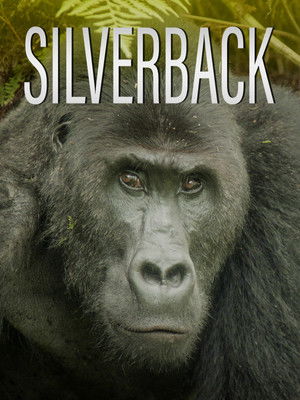
Feature-length documentary following award-winning wildlife cameraman Vianet Djenguet as he documents a gruelling but vital mission to ‘habituate’ a notoriously protective 450lb silverback, in a last-ditch effort to save the critically endangered eastern lowland gorillas from extinction.
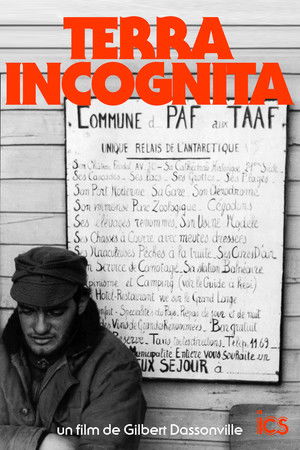
The Kerguelen Islands, nicknamed the "Islands of Desolation," are a French archipelago of subantarctic islands in the southernmost part of the Indian Ocean. They constitute one of the five districts of the French Southern and Antarctic Lands (TAAF). Uninhabited, the archipelago was discovered in the southern Indian Ocean on February 12, 1772, by the French navigator Yves Joseph de Kerguelen de Trémarec. This scientific film by Gilbert Dassonville, intended for the general public and for educational purposes, presents the scientific missions underway in 1963 on the Kerguelen Islands. The permanent station at Port-aux-Français, founded in 1950, the archipelago, and the surrounding wildlife are documented by following the multidisciplinary teams (biology, geophysics, geology, meteorology).
Mission Gombessa - Die Jagd nach dem Methusalem der Meere
Plastic Odyssey, mission pacifique
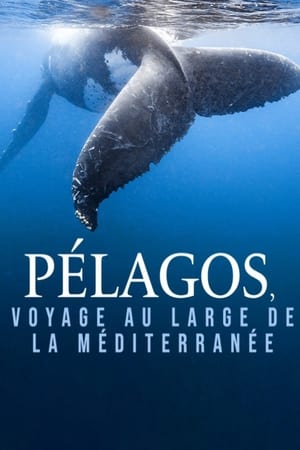
Pélagos, voyage au large de la Méditerranée
Documentary film about the Czechoslovak natural science group's expedition to Iceland in June 1948.
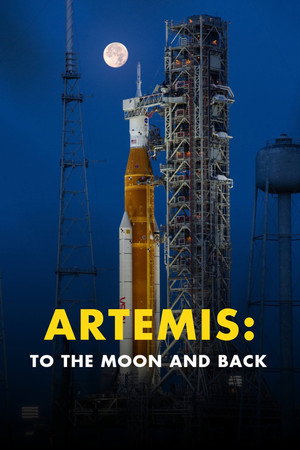
The inside story of the Artemis II mission - filmed over three and a half years at NASA. How did four astronauts travel to the moon, going deeper into space than ever before?
One of the highest achievements of the new wave of Kirghiz cinema, which emerged in the mid-1960s. This story of a boy building sandcastles on the shores of the Issyk-Kul Lake becomes a documentary parable on the tensions between an artist and society.
On the trail of nomadic peoples and the ancient Silk Roads, Thomas Delfino, accompanied by Léa Klaue and Aurélien Lardy, embark on an expedition to reach one of the most remote places on the continent. The Kokshaal-Too range is located in the Tian Shan mountain range, on the border of Kyrgyzstan and China, and harbors unexplored mountains and faces. This skilled team, accompanied by renowned guides Hélias Millerioux and Jean-Yves Fredriksen, finds themselves propelled into a space where time seems to have suddenly come to a halt.
A documentary about a 15-day river-rafting trip on the Colorado River aimed at highlighting water conservation issues.
People have always been fascinated by the tropics. Explorers from Europe were among the first to travel to the equatorial region centuries ago. Modern scientists are continuing what began with these pioneers. The documentary traces the historical exploration of the paradise belt at latitude 0 and looks at modern research at the equator.
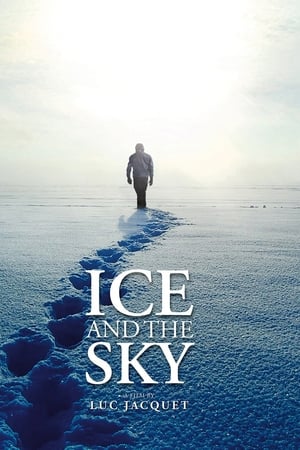
Documentary about the work of Claude Lorius, who began studying Antarctic ice in 1957, and, in 1965, was the first scientist to be concerned about global warming.
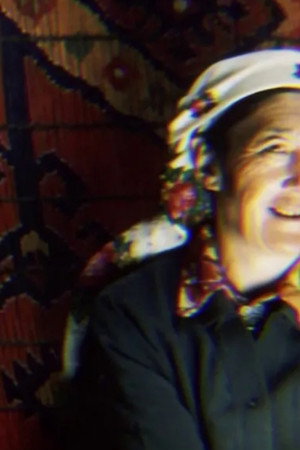
A documentary film about the representation of the Kyrgyz culture in the USSR, as well as the reality of Kyrgyz dancers in Russia.
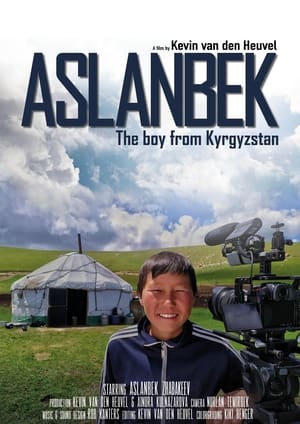
We get to meet Aslanbek—a teenage shepherd in the mountains of Kyrgyzstan. “Aslanbek” is a story exploring the dynamics of relationship between humans and animals, what we can learn from the mountains, and about dreams. In short, it's a story about our forgotten values.
Thomas de Dorlodot and Horacio Llorens journeyed for a personal adventure across the Himalayan mountains. They covered roughly 350km and became the very first paragliders to fly over Rohtang Pass.
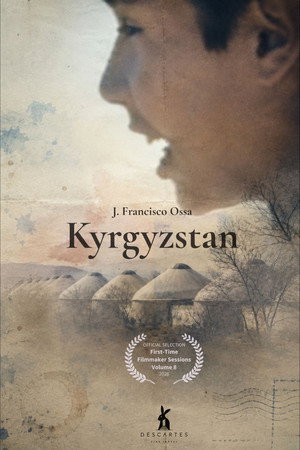
An audiovisual letter that connects an imagined Kyrgyzstan with the filmmaker’s inner world, blending personal illness, memory, and political echoes into a poetic reflection on distance and belonging.
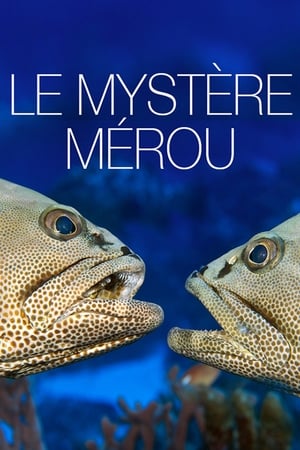
In French Polynesia, there is a place where every year, thousands of groupers gather in secret followed by hundreds of sharks… The photographer, diver and biologist Laurent Ballesta, with his team, wanted to better understand what motivates these fish to wait until the exact day of the full moon to spawn all at once! With the help of researchers from the CNRS of Moorea, they dived and conducted numerous experiments to study and witness this unique phenomenon. Taking advantage of this period of incredible richness, Laurent Ballesta did a record dive of 24 hours at over 20 meters.
Le palais des hiéroglyphes - Sur les traces de Champollion