How have one poet and his single book of poetry from the last century continued to inspire people today? A Life That Sings follows the legendary poet Ya Hsien from Vancouver to Nanyan, to the mobile library from his childhood and to the basement of his current home. Through his collection of books and love letters, the film unearths the treasure trove abound with stories of Ya Hsien's life.
Poetry, literature, painting and old film clips converge in this lyrical, unusually designed film essay about Le Moulin, the Taiwanese poets’ collective which protested in the 1930s against the cultural superiority of the Japanese occupier and the domination of realism in poetry.
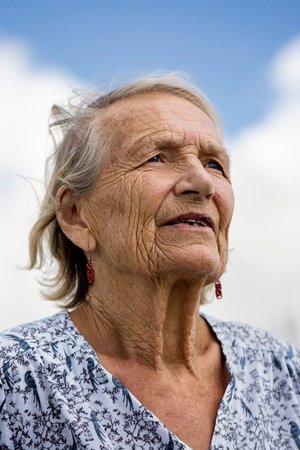
Born in 1948, Peter Street struggled at school with epilepsy and illiteracy in Bolton, Lancashire, and, later in life, as a slaughterman, a gravedigger and a war poet. At 66 years old he was then diagnosed with autism, and his world changed forever.
Musicians inspired by the Moon. Since the Apollo landings, the Moon has entered popular consciousness like never before. A journey through pop music's lunar obsession.
Accompanying from a place to another the poet who spent years in exile far from his native land of al-Birwa, in Haifa, Cyprus, Tunis, Amman, Paris, Cairo and Ramallah.
This is the tale of a young woman, growing up in the age of the internet and turning the search for oneself into a public spectacle, allowing kids from all over the world to live their life through hers. Through her fragmented personalities you see the emergence of a new generation, in which the concept of a fixed identity has grown old.
The film is an unusual portrait of Slovak poet Jozef Urban who tragically died. Nevertheless, his short life was enough for his work to influence social and cultural spheres in Slovakia. First of all, however, he was a bohemian and a rebel able to see beyond his generation’s field of vision. He lived a life of an impalpable hothead floundering in loves, desires and passions. At the same time, as an author, his reasoning and views were precious and clear.
"In Chile, when the sun rises, it had to climb hills, walls and tops before reaching the last stone of the Cordillera. In my country, the Cordillera is everywhere. But for the Chilean citizens, it is an unknown territory. After going North for Nostalgia for the Light and South for The Pearl Button, I now feel ready to shoot this immense spine to explore its mysteries, powerful revelations of Chile’s past and present history." Patricio Guzmán
A poetic journey about the life and work of Puerto Rican poet Julia de Burgos.
A peculiar portrait of the Argentinean writer Jorge Luis Borges (1899-1986) drawn by the extravagant and original look of the Spanish writer Fernando Arrabal, who establishes a bold parallelism between Borges' work and opinions and his own creations, both literary and cinematographic.
A documentary about Finnish twin sisters, one of whom disappeared in Argentina in 1977.
This series comprised six lectures on music, which cumulatively took the title of a work by Charles Ives, The Unanswered Question. Bernstein drew analogies to other disciplines, such as poetry, aesthetics, and especially linguistics, hoping to make these lectures accessible to an audience with limited or no musical experience, while maintaining an intelligent level of discourse:Semantics is the study of meaning in language, and Bernstein's third lecture, "musical semantics", accordingly, is Bernstein's first attempt to explain meaning in music. Although Bernstein defines musical semantics as "meaning, both musical and extramusical" this lecture focuses exclusively on the "musical" version of meaning.
Lebanon today. The traces of the civil war are all too tangible as government corruption becomes unbearable. In a country where conflict and peace are caught in an endless cycle, musicians from different backgrounds pool their talents to create an underground music scene. Each evokes his or her representation of Lebanon: its shifting geographical, political, historical and social borders, its painful passage through conflict and instability. A touching portrait of a young generation trying to build an oasis in a hostile environment where the forces of destruction continue to wreak havoc.
The film features the wonderful poet of the early 20th century, Count Vasily Komarovsky. The poets Nikolai Gumilyov, Anna Akhmatova and Osip Mandelstam, among other celebrities, were not only his acquaintances but he had a considerable influence on their work. The poet’s extraordinary life gave birth to legends, whose plausibility will also be dwelt upon. Komarovsky’s niece will share her recollections with the viewer. The film is based on unique documents previously unknown to Russian and foreign scholars.
Based on the idea that drugs have influenced some of our greatest minds (Poe, Baudelaire etc.), this film documents just how influential drug experiences have been on the minds of great writers, poets and thinkers.
The horrifying story of what went on inside General Pinochet's secret prisons.
This uneven and uninspired documentary of Africa is a collection from various stock footage. Female dancers in mod clothes dance on the Eiffel Tower in comparison to the primitive dances of native Africans. A lone runner trains for a marathon, and a few animals are shown in their natural habitat. Commentary and modern jazz and pop music help to make this seem much longer than 66 minutes.
Dedicated to the poet Paul Celan, the film traces the itinerary of the deportation of Jews from Czernowitz and Bucovina to Mikhailovka camp on the banks of the river Bug during WW2. Among them was the poet’s mother.
Dante Alighieri was a poet, philosopher and politician in 1300 Florence. The visionary author of "Inferno", the first book of the "Divine Comedy", he was both a direct witness and a narrator of his times and his poem is a remarkable geopolitical chronicle of a tumultuous period of the Middle Ages from 1300 to 1320, a time when Kings, Popes, rulers and warlords played a deadly chess game for the control of Europe. In this high end docudrama, some of the world's finest scholars will help provide historical context to the unfolding of events, making them accessible to a wide audience, and giving us a privileged viewpoint over one of the most eventful and funding chapters of European history.
The documentary features the British miners and their family experiences told through songs, poems, pictures and words.