A look at the state of the global environment including visionary and practical solutions for restoring the planet's ecosystems. Featuring ongoing dialogues of experts from all over the world, including former Soviet Prime Minister Mikhail Gorbachev, renowned scientist Stephen Hawking, former head of the CIA R. James Woolse
Documentary which follows the construction of a trailblazing 36,000-tonne steel structure to entomb the ruins of the nuclear power plant destroyed in the 1986 Chernobyl disaster.
Recounts the chilling events leading up to the emergence of the deadly Ebola virus. Shot on location in Africa, Europe and North America, and features interviews with Ebola survivors.
Atlantis is filmmaker Luc Besson's celebration of the beauty and wonder of the world beneath the sea, expanding upon themes touched on in his film The Big Blue. Combining stunning underwater cinematography and a hypnotic score by Eric Serra, Besson's singular vision defies dialogue or narrative structure to explore ocean life as you've never seen it before. Following the colossal success of The Big Blue, Luc Besson crisscrossed the world's seas and oceans to film the beauty and diversity of marine life: from the giant octopuses of Vancouver to the manta rays of the Pacific (New Caledonia), and the grey sharks of Tahiti. A film with no actors or sets other than the underwater world. A breathtaking view of marine species: sharks, dolphins, manatees, octopuses. An exploration of the seabed in the Bahamas, the Galapagos, Vancouver, and Tahiti.
Corpo d'Água
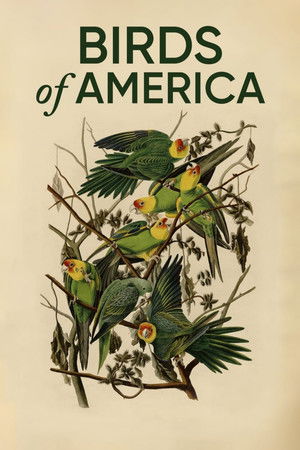
In the first half of the 19th century, the French ornithologist Jean-Jacques Audubon travelled to America to depict birdlife along the Mississippi River. Audubon was also a gifted painter. His life’s work in the form of the classic book ‘Birds of America’ is an invaluable documentation of both extinct species and an entire world of imagination. During the same period, early industrialisation and the expulsion of indigenous peoples was in full swing. The gorgeous film traces Audubon’s path around the South today. The displaced people’s descendants welcome us and retell history, while the deserted vistas of heavy industry stretch across the horizon. The magnificent, broad images in Jacques Loeuille’s atmospheric, modern adventure reminds us at the same time how little - and yet how much - is left of the nature that Audubon travelled around in. His paintings of the colourful birdlife of the South still belong to the most beautiful things you can imagine.
Joe Lycett investigates the mind-boggling quantities of untreated sewage discharged into our waterways every day, and takes the fight to the water companies in the most Joe Lycett way possible.
Cosme and Monica live with their children and grandchildren in Bahia de Kino, a fishing town in the northern State of Sonora, Mexico. They used to call themselves predators of the sea until one day they became unable to kill a sea turtle. Submerged in a crisis, they embark on a journey to try to save their way of life and of their fishing town through the creation of an environmental community group in charge of protecting sea turtles.
Faced with the risk of collision with the Earth, space agencies are refining their observations on the course of asteroids in our galaxy. A documented state of the art of the current programs.
Recent studies show that insects are in decline across the globe and there may be a direct connection between the current climate crisis and these declining populations. DESYNCHRONIZED focuses on Pope Canyon Queens, a beekeeping and queen breeding company in Northern California. Pope Canyon Queens is currently trying to rebuild after the 2020 LNU Lightning Complex fires destroyed their farm, shop, and half of their hives. Their crucial work to breed honey bee queens with stronger genes fortifies beekeepers' hives across the country while they face the effects of climate change and unregulated industries. Dr. Nicholas Teets, PhD Entomology, explains how shifts in phenology are predicted to cause bigger issues. Howard Goldstein, Senior Forest Ecologist at the Prospect Park Alliance explores how community gardens and green spaces in large metropolitan areas may help insect populations recover from loss of habitat and food scarcity.
A visual montage portrait of our contemporary world dominated by globalized technology and violence.
"The Boy Of The Fish" follows Noon, a young boy living in a Syrian refugee camp, who finds solace and a sense of freedom in a whale-shaped doll he names "Bahr." Set against the challenging realities of camp life, Noon’s journey is both a story of resilience and a testament to the boundless imagination of childhood. Through vivid symbolism and a unique soundscape, the film explores themes of loss, hope, and the longing for freedom amidst confinement. Shot entirely on an iPhone due to restrictions in the conflict zone, the film combines raw authenticity with poetic depth to capture the emotional landscape of a young soul navigating adversity.
Carefully picked scenes of nature and civilization are viewed at high speed using time-lapse cinematography in an effort to demonstrate the history of various regions.
An exploration of technologically developing nations and the effect the transition to Western-style modernization has had on them.
Cine Dunas
The bleakness of Antarctica is a fallacy. The ice continent is full of life and offers a biodiversity of which only about two percent are known. Much of it is under water and could determine the future of human beings. When the northern lights cover the ice landscape in summer, the animals in the Antarctic are in a paradisiacal state. Whales blow their fountains in the sky, penguins fly like small rockets into the water, seals dive for crabs under the glittering ice floes. From the bay of the Ross Sea to the ice shelf, from the huge penguin colonies to steaming volcanoes, a life in rhythm with the ice. But the consequences of climate change are slowly becoming apparent here too. While some species are dying, others are spreading. They could bring new viruses and bacteria with them, and new dangers for humans too. The structure of nature has gotten off course. How many generations will still be able to experience the magic of Antarctica?
A young filmmaker maintains an epistolary conversation with his deceased grandmother while he rediscovers the space they both inhabited for more than a decade.
A day in the city of Berlin, which experienced an industrial boom in the 1920s, and still provides an insight into the living and working conditions at that time. Germany had just recovered a little from the worst consequences of the First World War, the great economic crisis was still a few years away and Hitler was not yet an issue at the time.
A documentary on Al Gore's campaign to make the issue of global warming a recognized problem worldwide.
In times of global ecological crisis, Costa Rica seems to be an oasis for its rich biodiversity. Nacho traces a route to learn about agroecological projects, discovering what the indigenous communities call "good living" Could this be the solution?