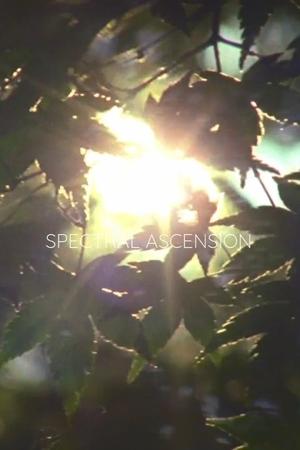
Overripe with psychosexual poetry and stark, oneiric rituals, Adachi's filmmaking debut, made while he was still an undergraduate, counts among the more resonant accomplishments of the now famous Nihon University Film Club. Adachi's obvious fascination with the wide-eyed watchfulness of childhood and the uncanny is an expression of the important surrealist strand running throughout the post-WWII Japanese avant-garde. - Harvard Film Archive
Drawing animation, Reshooting 8mm Film.
A female hotel employee wanders around different guestrooms and searches for an unreachable dream. Wandering in other people’s dreams, she encounters a mysterious guest and hears a story about a woman who dances deep inside her dream and a dancing procession...
In Manhattan's Central Park, a film crew directed by William Greaves is shooting a screen test with various pairs of actors. It's a confrontation between a couple: he demands to know what's wrong, she challenges his sexual orientation. Cameras shoot the exchange, and another camera records Greaves and his crew. Sometimes we watch the crew discussing this scene, its language, and the process of making a movie. Is there such a thing as natural language? Are all things related to sex? The camera records distractions - a woman rides horseback past them; a garrulous homeless vet who sleeps in the park chats them up. What's the nature of making a movie?
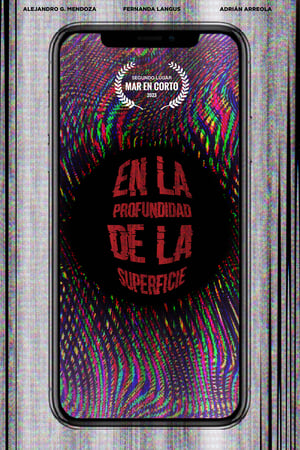
A teenager's obsession with recovering his stolen phone forces him to confront the ghosts of a recent toxic relationship.
BASEMENT GHOSTS provides a chilling assessment of the major contributors to the recent growth of neo-fascist movements, and how young extremists can be turned away from a life of hatred in this 8mm homage to wartime propaganda videos.
A short experimental film shot on Super 8, inspired by the music of Richard Wagner.
For an anxious person, being trapped on a boat with someone you don't like can be the tense. Stuck for hours afloat, nothing on the line, bad conversation, and cold winds as resentment rises. Both people chained to a rod and tackle because one won't speak up and admit that they want to go home.
A short by Steven Soderbergh described as “intense sci-fi homage to Godard.”
A film essay that intertwines the director's gaze with that of her late mother. Beyond exploring mourning and absence as exclusively painful experiences, the film pays tribute to her mother through memories embodied by places and objects that evidence the traces of her existence. The filmmaker asks herself: What does she owe her mother for who she is and how she films? To what extent does her film belong to her?
After his wife Amelia suffers an aneurysm that leaves her bedridden and slowly dying, police officer Carter Summerland searches for a way to revive her. He's approached by Wesley Enterprises pioneering a new program to extend life through robotics, they get caught in a public debate over human’s relationship with technology and her right to exist.
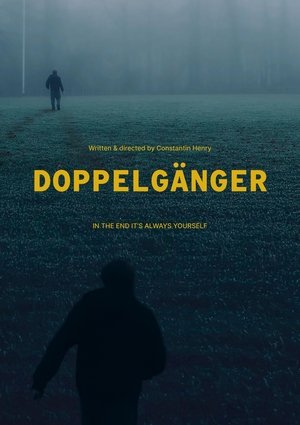
This is a story about a man who believes that he has two “selves” - external and internal. That is, an organism is a certain conglomerate of cells, each of which is a separate individual. This hybrid creature has a certain common personal “I” that uses the entire organism, and is the organism itself, which has its own will. According to the character, one can communicate with him, which is what he is trying to do. He wants to reach him and comes up with different ways of communication: injecting substances under the skin or intravenously, tattooing texts on the body, swallowing objects. The answer would come in the form of a rash or other physical manifestation that had to be interpreted. As a result, communication is carried out and the second “I” agrees to die.
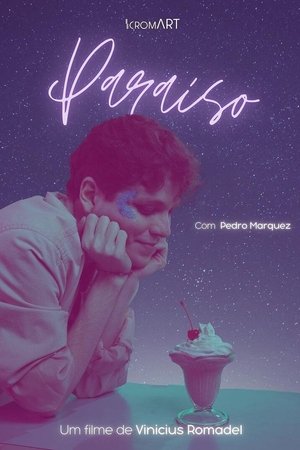
Experimental short film that reflects through the voice of the protagonist, poetically, about a fateful intimate and personal event.
A bodybuilding fever dream fueled by childhood trauma, food porn and acid techno music.
In an indeterminate future, forbidden memories challenge a database containing all human memories. An experimental cinematic search between past and future, fiction and fact, Prishtina and Tirana. The future, a glitch.
'Is it a plaisir' is an experimental short film that explores femininity and the body as a sharp territory, crossed by the tension between desire and imposition. Through symbolic, sound and visual saturation, the film acts from pleasure (plaisir), revealing a liberation that emerges in the midst of excess, where intensity and lightness, dark and light, intertwine, collide and converge.
A solitary man struggles to cultivate beauty in a desolate urban world. Lonely and dislocated, he drifts in and out of a dream state envisioning the promise of regeneration. ROSEWATER tells a story of hope sustained through perseverance, ritual and, ultimately, revelation.
A 16mm experimental film that analogizes the discourse of racialized criminality and the carceral apparatus, which surveils and delimits the movements of Black people’s bodies, with the conventions and mechanics of the cinematic apparatus which regulates and standardizes the movement of the filmstrip through the motion picture camera and projector. Equal parts essay and visual art, Speaking in Tongues embodies the cinematic Black ecstatic that simultaneously re-envisions resistance defiance in the face of anti-Black state violence and subverts the conventions of cinematic realism through a manually and optically altered collage of original documentary and archival film sourced from Hollywood movies, television commercials, educational films, cartoons, European art cinema and miscellaneous ephemera.
X-ray images were invented in 1895, the same year in which the Lumière brothers presented their respective invention in what today is considered to be the first cinema screening. Thus, both cinema and radiography fall within the scopic regime inaugurated by modernity. The use of X-rays on two sculptures from the Bilbao Fine Arts Museum generates images that reveal certain elements of them that would otherwise be invisible to our eyes. These images, despite being generally created for technical or scientific purposes, seem to produce a certain form of 'photogénie': they lend the radiographed objects a new appearance that lies somewhere between the material and the ethereal, endowing them with a vaporous and spectral quality. It is not by chance that physics and phantasmagoria share the term 'spectrum' in their vocabulary.