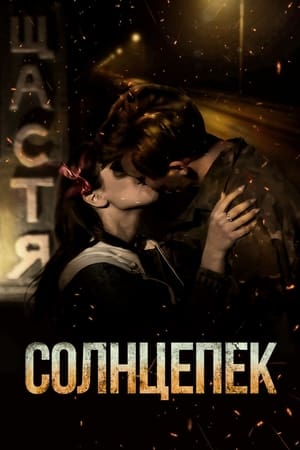
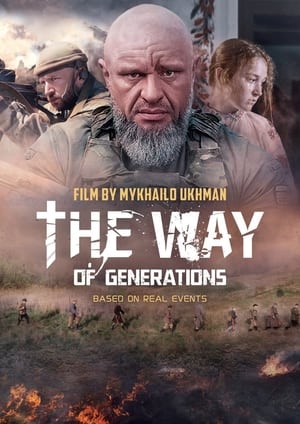
In the spring of 1994, a series of mysterious events occur in the small town of Stryhiltsi, Luhansk Oblast, Ukraine. While several of the town's children go missing, three teenage boys discover a local Soviet-blocked river, which appears to have the ability to send a diver 30 years into the future. When the boys try it out, they find themselves in the Russian-occupied Luhansk Oblast in the 2020s, where they find a connection between the local kidnapper and the "time machine" river.
When war erupts in his homeland of Ukraine while visiting Los Angeles, a young traveler Andrii faces a soul-searching journey. He grapples with the guilt of leaving his country behind and the desire to return and make a difference. Through near-death experiences and cultural clashes, he learns the true meaning of nationalism and the power of love.
The story of trust and its absence against the background of events unfolding in Eastern Ukraine in early 2014. The main topic is revealed through the prism of the Luhansk border base, whose fighters the separatists and Russian special services tried unsuccessfully force to betray their country.
After the downing of the Ukrainian plane, the crew members find themselves in the occupied territory of Donbas and are forced to get out of there alone, for which they will have to turn the "double Immelmann" with their lives. The mother of one of the crew members, who is trying to help her son escape from captivity.
Katia, a volunteer from Kyiv fighting against the invasion of Ukraine, uses a laptop donated to the resistance and comes into contact with the young son of the computer’s original owner, who is desperately in search of his missing parents. Her attempts to help the child will see her risk all she holds dear.
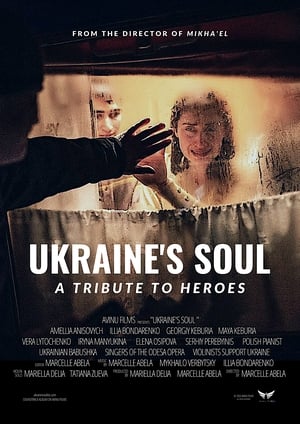
Documentary about Ukrainian heroes and others who keep making music in the harshest conditions, to lift people's spirits during the war with Russia. Shot on location in Ukraine, Russia, and Poland.
Lugansk region, May 2014. The Novozhilov family, by chance, finds itself in the thick of events in Lugansk. Vlad Novozhilov is a former participant in the war in Afghanistan. He knows firsthand what war is. Having seen enough of the horrors of war in his time, in principle he does not even want to touch a weapon. In a situation, he sees only one way out - to leave the country. But you can't run away from the war, the border is already closed. To save his family, he will have to make difficult moral choices.
Between February and April 2025, filmmakers Bernard-Henri Lévy and Marc Roussel filmed the Pokrovsk and Soumy fronts in eastern Ukraine, following the fighters of the Anne de Kyiv Brigade, armed by France. They filmed the daily lives of the inhabitants, bombarded by Russian forces terrorizing civilians on the eve of possible negotiations. They interview President Zelenskyy, who is reluctant to travel to Washington, and then watch the rebroadcast of the meeting with Ukrainian soldiers in a bunker. For the real heroes are the anonymous fighters and civilians who hold their heads high in the face of adversity and suffering, and who are filmed on a daily basis. The final part of Lévy’s “Ukrainian Quartet”, Our War is a diary, peppered with flashbacks in which the author recalls the high points of this war that began in 2014.
In temporarily occupied Luhansk, the occupiers are trying to destroy any mention of Ukraine - they impose a distorted history on Ukrainian students, in universities in the temporarily occupied territories, Russian occupation forces burn Ukrainian books. A history teacher organizes a secret Ukrainian studies society, one of the tasks of which is to preserve Ukrainian literature.
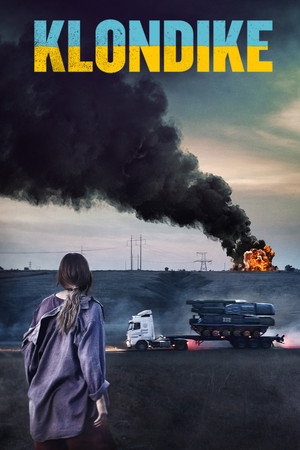
The story of a Ukrainian family living on the border of Russia and Ukraine during the start of the war. Irka refuses to leave her house even as the village gets captured by armed forces. Shortly after they find themselves at the center of an international air crash catastrophe on July 17, 2014.
After a civilian couple ventures out to exhange their POW daughter for money, they're surrounded by Russian forces and the husband is mortally wounded. But, rescue comes when they're quickly noticed by a Ukrainian platoon, who plan on using drones to rescue the couple.
Sofia, a promising young LA-based musician, returns to her home-town of Kyiv for the first time in four years. Her brother is getting married, the tables are heaving with food, everyone is there, including her ex-boyfriend. And then, suddenly, the sirens start wailing, and with the hangover comes the fight for survival.
After spending months as a prisoner in Donbas, Ukrainian aerial reconnaissance expert Lilia returns home to her family. But the trauma of captivity continues to torment her and surface in dreamlike ways. Something growing deep within Lilia will not allow her to forget, yet she refuses to identify as a victim and will fight to liberate herself.
A young Ukrainian street photographer reflects on his feelings of longing and connection to his father as he explores the streets of New York City.
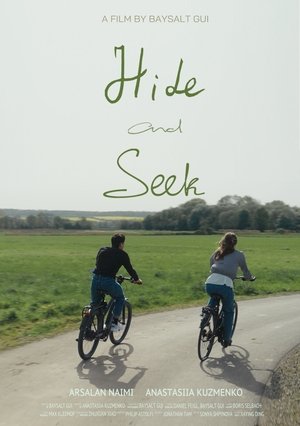
This documentary follows two long-lost Ukrainian friends, Arsalan and Nastya, as they reconnect in Germany after russia's full-scale invasion against Ukraine. Arsalan, an actor now in Frankfurt after time in a refugee camp, and Nastya, journalist and producer who stayed in Kyiv, reflect on the divergent paths their lives have taken due to the war. Through their conversations and therapy sessions, the film explores themes of displacement, identity, and the emotional impact of war on youth.
Thi is the story of a Kyiv boy who lives his life believing that the problems of his country do not interest him. However, everything changes when he meets in a dream a Ukrainian warrior who comes to Nazar from the last century. Or maybe it was not a dream?
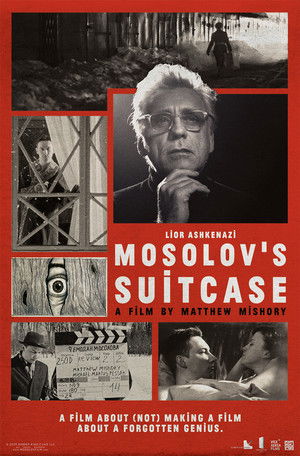
The life of Ukrainian-Soviet avant-garde composer Alexander Mosolov inspires three stories about creation and individualism in the face of state power, set against the Great Purge of the 1930s and the ongoing Russian invasion of Ukraine.
The story of the first months of the Russian invasion of Ukraine through the eyes of a volunteer from Kamianets-Podilskyi and a female volunteer who ended up in occupied Mariupol.
Two mirror situations: telephone conversation of a Russian soldier with his mother, and a soldier of the Armed Forces of Ukraine, who also communicates with his own, during the Russian military aggression. Why is there such a huge gulf between our people and their people? Perhaps the answer to this question lies in the difference in relationship with mothers.
Tatiana is forty-two years old and she is a stylist for one of Kyiv’s women’s magazines. She is ironic, self-confident, Tatiana lives in a large house on the suburbs of the Ukrainian capital and she enjoys the freedom that her recent divorce gave her. Her quite successful life is interrupted by the outbreak of the war. Friends and acquaintances come to her house, including her ex-husband and colleague who has a crush on her. Together, they watch how Russia destroys their city. After a few days, almost everyone tries to get out of Kyiv and persuades Tatiana to follow. But she can’t make up her mind.