Documentary about the Venezuelan poet Armando Rojas Guardia.
Piragua is a short documentary that pays intimate tribute to the life of Malena Coelho, the beloved Argentine editor, proofreader, and lifelong companion of Venezuelan poet Juan Sánchez Peláez. Directed by Santiago Zerpa and produced by Gabriel Payares, the film weaves together candid interviews and personal reflections to explore Coelho’s rich intellectual and emotional world, her deep partnership with Peláez, and the profound impact of poetry and memory on her life.
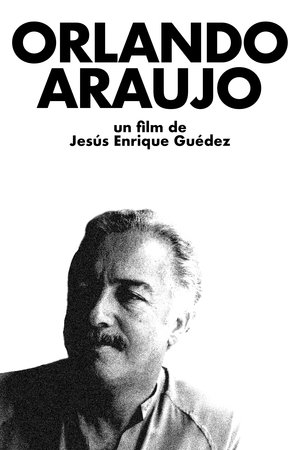
Documentary about Venezuelan writer and intellectual Orlando Araujo.
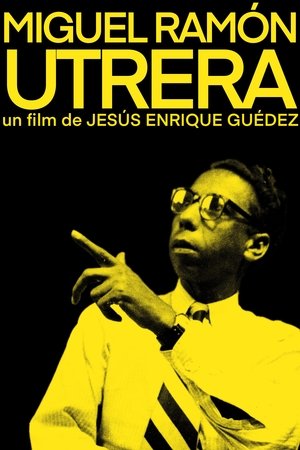
Documentary about the poet Miguel Ramón Utrera.
This documentary takes us on a sensorial and atmospheric journey through the experiences, words and thoughts of the Venezuelan essayist and poet Armando Rojas Guardia. His early connection with the divine, the gradual inner maturation of a mystical experience that he manages to glimpse in his early adulthood, the determining and complex influence of his father (also a writer), his first crush on a young high school classmate, the profound experience of homoeroticism, the abysses of the psychotic crisis. All experiences pushed to the limit and which make up some of the singular elements of a unique artistic and intellectual quest with a broad universal scope.
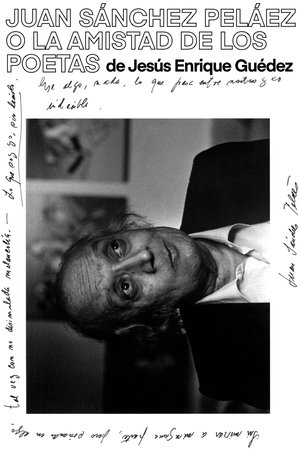
Documentary about Venezuelan poet Juan Sánchez Peláez.
A village on the Venezuelan coast, a place of fishermen and big haciendas, Aquiles Vargas, a white aristocrat in somewhat reduced circumstances, fights with Cruz Guaregua, a humble black fisherwoman, and mother of his only son, a half-caste 'mestizo'.
An experimental music film showcasing the filming locations of "Twin Peaks" using silent footage and eleven tracks from the original score composed by Angelo Badalamenti. It was released only on LaserDisc in Japan, and includes liner notes with lyrics to three songs performed by Julee Cruise.
As YouTube turns ten we chart the history of the last decade through the lens of the world’s most famous video sharing site. This is the human story of those who created it, the stars it gave birth to and the countries whose fates it changed.
Mothers, architects, artists, shoppers and other women who live and work in Birmingham explore the contradictions of the city, its promises, frustrations and disappointments, and suggest that listening to the experiences of women may hold the answer to the impoverished 'concrete jungle' so familiar today.
A portrait of Benny Fredriksson who for 16 years was CEO of Kulturhuset / Stadsteatern. He also had a background as an actor and director. In connection with a media hunt he resigned and later took his own life.
Framed against the backdrop of Arsenal’s historic “Invincible” season of 2003-04, the first and only occasion a team has gone an entire Premier League campaign without defeat, the film sees Wenger reflect candidly on his revolutionary era at Arsenal and the emotional and personal turmoil that surrounded his controversial exit after 22 years.
A documentary film about the entrepreneur Mohamed El Fatatry.
A profile of Toh Hai Leong, the director of the Singaporean mockumentary Zombie Dogs, and his battle with Type 2 diabetes.
Wai-chan is one of the last remaining fishermen in Ushimado, a small village in Seto Inland Sea, Japan. At the age of 86, he still fishes alone on a small boat to make a living, dreaming about his retirement. Kumi-san is an 84 year old villager who wanders around the shore everyday. She believes a social welfare facility “stole” her disabled son to receive subsidy from the government. A “late - stage elderly” Koso-san runs a small seafood store left by her deceased husband. She sells fish to local villagers and provides leftovers to stray cats. Foresaken by the modernization of post-war Japan, the town Ushimado's rich, ancient culture and tight-knit community are on on the verge of disappearing.
As they undergo 12 weeks of intensive training, a group of young civilians is gradually moulded into soldiers. The Basic Training, a prerequisite for joining the Canadian Armed Forces, becomes the gateway to exploring the inner workings of a world governed by its own rules and values.
Claire Simon portrays an important time for any individual, from 16 to 18 years of age. Set in the Paris suburbs in high school (for those lucky enough to go), teenagers chat after and even during class, sitting in the hallway or outside on a bench, looking at the city below them.
In 2013, Dima Ilukhin, the cousin of the film’s director and a soldier in the Russian army, died on duty in the Republic of Dagestan in the North Caucasus. He was 21 years old. This incident marks the starting point for Abaturov’s reflection on the military. He films the training of new recruits in Siberia, as they bid farewell to their mothers and girlfriends, learn the mechanics of a Kalashnikov, or how to throw a hand grenade and administer first aid. While his parents try to cope with their loss, Dima’s former fellow recruits have to return to battle.
Theatre of War is an essay on how to represent war, performed by former enemies. British and Argentinian veterans of the Falklands war come together to discuss, rehearse and re-enact their memories 35 years after the conflict.
Ruth Beckermann documents the process of uncovering former UN Secretary General Kurt Waldheim’s wartime past. It shows the swift succession of new allegations by the World Jewish Congress during his Austrian presidential campaign, the denial by the Austrian political class, the outbreak of anti-Semitism and patriotism, which finally led to his election.