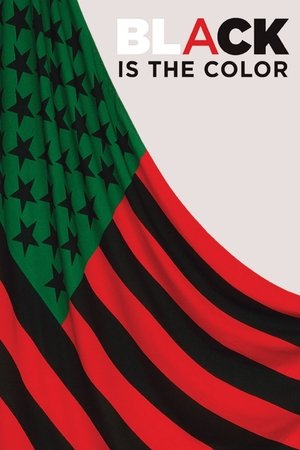
Black Is the Color highlights key moments in the history of Black visual art, from Edmonds Lewis’s 1867 sculpture Forever Free, to the work of contemporary artists such as Whitfield Lovell, Kerry James Marshall, Ellen Gallagher, and Jean-Michel Basquiat. Art historians and gallery owners place the works in context, setting them against the larger social contexts of Jim Crow, WWI, the civil rights movement and the racism of the Reagan era, while contemporary artists discuss individual works by their forerunners and their ongoing influence.
In this revealing study of Norval Morrisseau, filmed as he works among the lakes and woodlands of his ancestors, we see a remarkable Indigenous artist who emerged from a life of obscurity in the North American bush to become one of Canada's most renowned painters. Morrisseau the man is much like his paintings: vital and passionate, torn between his Ojibway heritage and the influences of the white man's world.
Maurício Dias & Walter Riedweg often say the streets are their studio. From the observation of them and of those who populate them there arise installations about encounters, identity and territoriality. The Brazilian-born Dias met the Swiss Riedweg in 1993. Together they learned that they could boost one another’s ideas. “This marriage became Mau Wal,” says Dias. In this documentary, they present their works and the many characters behind them: people who make day-to-day living in the big cities. Street vendors at a Northeast Brazilian fair in São Paulo, illegal immigrants in their quest for the European dream, street kids and their memories. In stories or in the role it plays, the human element is always a centerpiece to the duo’s work.
Marepe, an artist from Bahia, produces art with anything he comes across in the town he lives in, Santo Antônio de Jesus. Packs of cigarettes, coconut palms, walls, and memories taken from the streets, go into putting together a personal archeology for this young artist.
This film documents Kutlug Ataman's artistic production in a retrospective approach and elucidates his works with his own words and with commentaries by curators, art institution directors, art historians and critics who are familiar with his production through close collaboration, to witness the construction of an impressive artistic production spanning 15 years. The film also includes the excerpts from the artworks and the installation footages of their realization.
Rafael França: obra como testamento
I am sitting in a room is a sound art piece by American composer and sound artist Alvin Lucier composed in 1969. The first performance of the work was in 1970 at the Guggenheim Museum in New York. In collaboration with his partner Mary Lucier. The piece features Lucier recording himself narrating a text, and then playing the tape recording back into the room while re-recording it. The new recording is then played back and re-recorded, and this process is repeated. Due to the room's particular size and geometry, certain resonant frequencies are emphasized while others are attenuated. Eventually the words become unintelligible, replaced by the characteristic resonance of the room.
On the occasion of the fourty years anniversary of François Mitterand's election, a look back to the relationship between the President and artists, from admiration to manipulation.
Featuring collectors, dealers, auctioneers and a rich range of artists, including market darlings George Condo, Jeff Koons, Gerhard Richter and Njideka Akunyili Crosby, this documentary examines the role of art and artistic passion in today’s money-driven, consumer-based society.
North Star: Mark di Suvero is a 1977 documentary film about Mark di Suvero that was produced by François de Menil and Barbara Rose. Born in 1933, di Suvero has become one of the most recognized sculptors of the late 20th and early 21st centuries. From about 1975 to 1977, fairly early in di Suvero's long career, filmmaker de Menil and art historian Rose produced this film, which was characterized at the time as "a tribute to the extraordinary work and life of the innovative American sculptor of monumental but delicate constructions." The film shows di Suvero making and installing several of his very large sculptures, and incorporates informal interviews of di Suvero, his mother, and others involved in his career and life at that time. From 1971 to 1975 di Suvero, an American, lived in a self-imposed exile in France in protest of US involvement in war in Vietnam and Southeast Asia, and the filming spans the end of his exile and his return to New York.
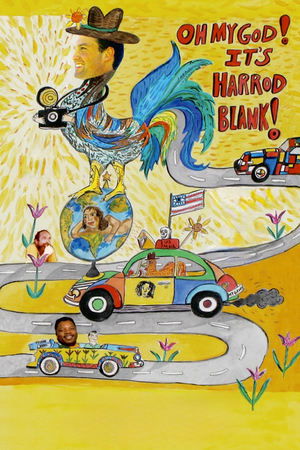
An obsessively-made documentary, filmed over 16 years, exploring the creative life and adventures of the eccentric artist and entrepreneur Harrod Blank. From his youth growing up in the woods with chickens and working as a camera assistant for his father- the venerable film-maker Les Blank- to the creation of his first attention-getting artcar, to his current multi-faceted career as creator and head of a nationwide art car movement, all the while pursuing his visions of non-conformity. Featuring interviews with his girl-friends, his mom, his brother, his raconteur lifelong pal, Kevin, as well as Blank’s own painful yet hilarious self-examinations. With special appearances by Les Blank and many fine art car artists. “The pressure to conform is incredible, ” says Blank, “but I don’t care what other people think. The reason I’m alive is to create.”
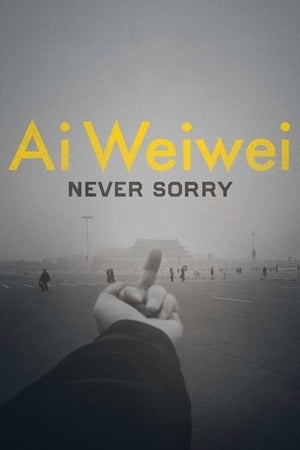
An account of the many tribulations that Chinese artist Ai Weiwei, known for his subversive art and political activism, endured between 2008 and 2011, from his rise to world fame via the Internet to his highly publicized arrest due to his frequent and daring confrontations with the Chinese authorities.
Paintings, performances, experiments, electronic music sounding in the spaces of two old houses in a small Italian town, heated conversations about contemporary art, touching meetings with the closest people and places in Bulgaria after 50 years of separation. "Flying with Fins" is a film about the constant search for meaning in art and life. Alzek Misheff, artist - rebel and experimenter, leads us in this philosophical and aesthetic journey through time, space and ideas.
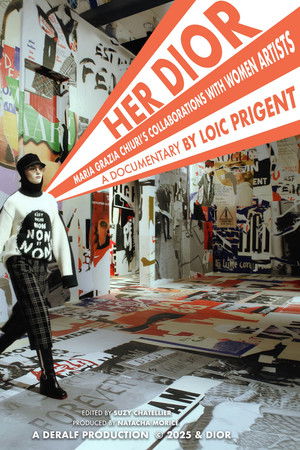
In celebration of International Women's Day, the House reveals "Her Dior", a documentary by Loïc Prigent chronicling Maria Grazia Chiuri's radical collaborations with renowned female figures since becoming Dior's Creative Director for womenswear in 2016. The film charts her journey from Rome to the global stage, distilling the essence of these poignant artistic exchanges in a single word: sisterhood.
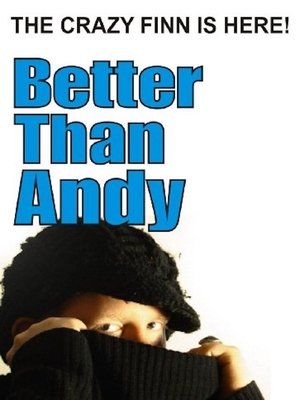
Mock -documentary about a Finnish contemporary artist who took the world by a storm.
Documentary about the not-likely-legendary Portuguese art group from the 1980's.
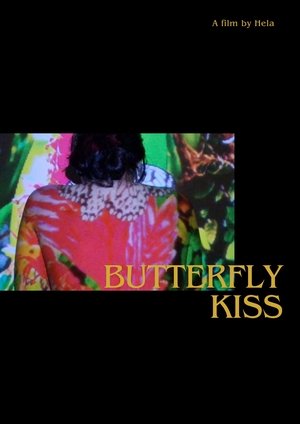
Beijo de Borboleta
An enormous shroud of white cement covers a hillside in the remote of western Sicily. It is both land art and a memorial to the town of Gibellina that was devastated by an earthquake in January 1968. It’s a work by the Italian artist Alberto Burri. He covered the ruins of the town with white cement and fissures function as pathways that wind through an area of roughly 20 acres. Petra Noordkamp captures Il Grande Cretto di Gibellina by Alberto Burri as an experentiental work of art filled with a sense of place and history.
Benutzt und gesteuert – Künstler im Netz der CIA
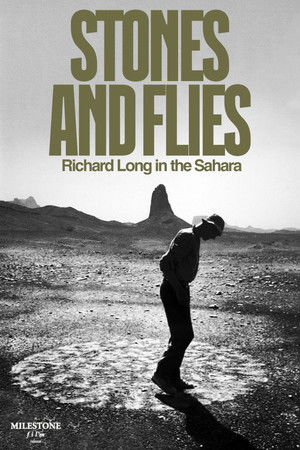
In the fall of 1987, Philippe Haas accompanied the sculptor Richard Long to the Algerian Sahara and filmed him tracing with his feet, or constructing with desert stones, simple geometric figures (straight lines, circles, spirals). In counterpoint to the images, Richard Long explains his approach. Since 1967, Richard Long (1945, Bristol), who belongs to the land art movement, has traveled the world on foot and installed, in places often inaccessible to the public, stones, sticks and driftwood found in situ. His ephemeral works are reproduced through photography. He thus made walking an art, and land art an aspiration of modern man for solitude in nature.