This revealing portrait of Cuba follows the lives of Fidel Castro and three Cuban families affected by his policies over the last four decades.
A look at the rampant HIV epidemic rate in Swaziland.
J and Jacky are good friends who attend the same school. J is from a single-parent family, and will be taken care by Jacky’s family whenever his mother has to return to Mainland to renew her visa; such kind of story is not an isolated case. These families have been uprooted for a “better future” in Hong Kong, but is this “future” that the children really long to have? A Chinese saying: “How does one understand the joy of fish, if one is not a fish?” Will the adults really understand what the children want?
An experimental look at the origin of the death myth of the Chinookan people in the Pacific Northwest, following two people as they navigate their own relationships to the spirit world and a place in between life and death.
'90s indie-rock band Pavement reunites for their sold-out 2022 tour. But as preparations get underway, surreal tributes emerge: an off-Broadway musical adaptation of their songs, a museum devoted entirely to the band’s legacy, and a shamelessly awards-baiting Hollywood biopic.
Chennu committed his first crime when he was 15 years old: being a street kid. And he entered hell: Pademba Road. The adult prison in Freetown. In hell, Mr. Sillah is in charge, and there is no hope. Chennu got out after four years. Now he wants to go back.
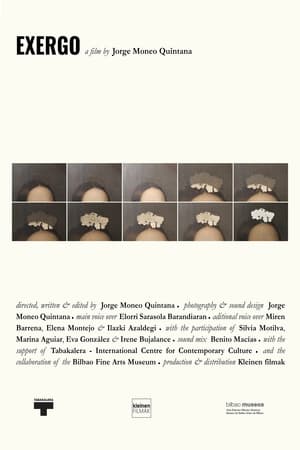
Departing from peripheral details of some paintings of the Bilbao Fine Arts Museum, a female narrator unravels several stories related to the economic, social and psychological conditions of past and current artists.
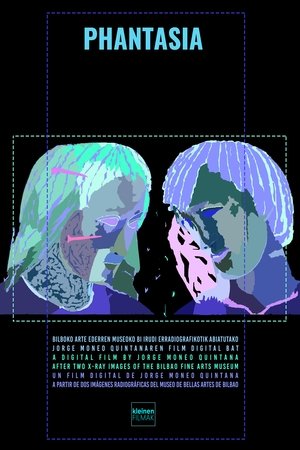
X-ray images were invented in 1895, the same year in which the Lumière brothers presented their respective invention in what today is considered to be the first cinema screening. Thus, both cinema and radiography fall within the scopic regime inaugurated by modernity. The use of X-rays on two sculptures from the Bilbao Fine Arts Museum generates images that reveal certain elements of them that would otherwise be invisible to our eyes. These images, despite being generally created for technical or scientific purposes, seem to produce a certain form of 'photogénie': they lend the radiographed objects a new appearance that lies somewhere between the material and the ethereal, endowing them with a vaporous and spectral quality. It is not by chance that physics and phantasmagoria share the term 'spectrum' in their vocabulary.
This film portrait of a new kind is a deep dive into the heart of the art scene of Los Angeles. From a ride on Sunset Boulevard in a convertible car at the sunrise, going through a lunch with the art dealer Patrick Painter and a visit to Peter Shire's studio... Having a beer and a deep talk with Paul McCarthy, calling Raymond Pettibon stuck in New-York or searching for Ed Ruscha in bars.... From Ariana Papademetropoulos opening exhibition to the visit of a car wreck with Umar Raschid... From the old house of Cary Grant to the dodgy underground of Downtown passing through Eugenio Lopez's private art collection on the Hollywood hills... Through intimate conversation, 24 Hour Sunset gives us access to the thoughts, inspirations and practice of legendary artists, world famous art dealers, appraised curators and collectors, as well as the young up coming scene of artists living in Los Angeles.
Djibi and Ange, two teenagers living on the streets, arrive at the Archipel, an emergency shelter in the heart of Paris. This documentary is a look at the Archipel, a shelter offering an innovative way to welcome families living on the streets.
A drama-documentary film about the fatal effect of poor living conditions on health – the so-called "social inheritance." The principal characters in the film are two fourteen or fifteen-year-old children, Carl and Hanne. Covering a hundred-year period and drawing on case stories recorded by actual hospital staff, the film illustrates a number of variations of "the same old story."
Right outside of Moscow – home to the highest number of billionaires pr. capita – you’ll find the largest junkyard in the world: The Svalka. It’s a hard place run by the Russian mafia. And it's where Yula lives with her mother, her friends and many other people. Life is tough in the Svalka, but it’s also a place where beauty and humanity can arise from the most unlikely conditions. It is from this place that Yula dreams of escaping and changing her life, even if it seems impossible. Oscar-nominated director Hanna Polak followed Yula for 14 years, bringing us along on Yula's journey to achieve this dream.
An experimental documentary that explores Saudi Arabia's relationship with the U.S. and the role this has played in the war in Afghanistan.
Three working-class teenage girls in a port city in Bangladesh escape daily hardships and stifling family lives by riding waves on their surfboards and grabbing hold of the fleeting and thrilling sense of freedom that brings.
Plano B
The capture of Naples, the first great European city to be liberated, revealed the magnitude of the tasks involved in re-creating the means of livelihood and the machinery of government in a devastated, starving and disease-ridden city.
In Rod El Farag, one of the poorest residential areas in Cairo, obtaining meat, fruit and daily bread is a constant struggle. But the sense of community shared by the inhabitants there helps them to some extent overcome their hardships through a social practice known as ‘al Gami’ya’, or ‘the assembly’.
Zambia's copper resources have not made the country rich. Virtually all Zambia's copper mines are owned by corporations. In the last ten years, they've extracted copper worth $29 billion but Zambia is still ranked one of the twenty poorest countries in the world. So why hasn't copper wealth reduced poverty in Zambia? Once again it comes down to the issue of tax, or in Zambia's case, tax avoidance and the use of tax havens. Tax avoidance by corporations costs poor countries and estimated $160 billion a year, almost double what they receive in international aid. That's enough to save the lives of 350,000 children aged five or under every year. For every $1 given in aid to a poor country, $10 drains out. Vital money that could help a poor country pay for healthcare, schools, pensions and infrastructure. Money that would make them less reliant on aid.
A rampant, street level story of mentorship and everyday heroism in tough circumstances. An inner city coach's son, estranged in his youth from his father, spends five years on ball fields in inner city Oakland and Havana, following the lives of two extraordinary youth baseball coaches, Roscoe in Oakland and Nicolas in Havana. The coaches meet on videotape and two years of red tape later, Coach Roscoe and nine Oakland players travel to Havana to play Coach Nicolas' team. For one week, the players and coaches eat, dance, swim, argue and play baseball together. But when the parent of an Oakland player is murdered back home, it brings back the inescapable reality and challenges of life in an American inner city.
A democracy should protect its most vulnerable citizens, but increasingly the United States is failing to do so. This investigation blends the insights of experts with the experiences of citizens of the Rust Belt in the Midwest where the steel industry once flourished, but where closures and outsourcing have left urban areas desolate. It is here where Donald Trump finds some of his most fervent supporters.