An exposed Cumbrian village by the sea surrounded by windmills, fields and factories provides a striking setting for this fairy tale of young love and the loss of childhood innocence. Over one year, the film follows the 9 year-old Laura Anne and her 11 year-old cousin, Steven as they move towards the end of their childhoods. The narrative is told in rhyme by the young female protagonist. As time passes and the seasons change, feelings and memories from all our childhoods are evoked and we wonder what time will make of Laura Anne and Steven.
Intimately following 1st and 6th graders at a public elementary school in Tokyo, we observe kids learning the traits necessary to become part of Japanese society.
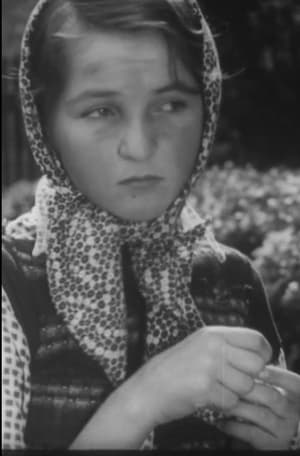
An exploration —manipulated and staged— of life in Las Hurdes, in the province of Cáceres, in Extremadura, Spain, as it was in 1932. Insalubrity, misery and lack of opportunities provoke the emigration of young people and the solitude of those who remain in the desolation of one of the poorest and least developed Spanish regions at that time.
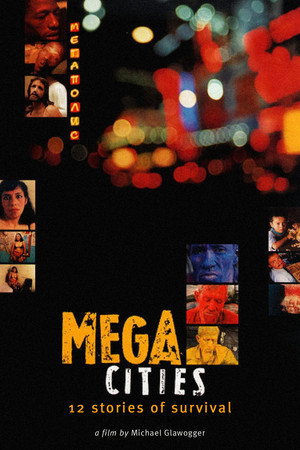
Megacities is a documentary about the slums of five different metropolitan cities.
In American Sign Language (ASL) with subtitles available in English, Spanish and Canadian French. This powerful documentary uses real life experiences from Deaf people of varied social, racial, and educational boundaries showing how this form of oppression does lasting and harmful damage. Bonus materials include directors' comments from Ben Bahan and H-Dirksen Bauman and additional scences. Teachers: This film is a wonderful tool for beginning ASL students, as an introduction to a side of Deaf culture that cannot be found in any textbook.
Bubisher, as well as being 'the bird of luck', is a word loaded with literary meaning in Spanish in the Sahrawi refugee camps of Tindouf. Seeing the way in which two cultures interact through small stories and tales can is striking and so is the contrast between the resilience of the young female generations and the realities of life in the desert. This documentary paints a picture of a generation of young female Sahrawis.
This is not a film about gun control. It is a film about the fearful heart and soul of the United States, and the 280 million Americans lucky enough to have the right to a constitutionally protected Uzi. From a look at the Columbine High School security camera tapes to the home of Oscar-winning NRA President Charlton Heston, from a young man who makes homemade napalm with The Anarchist's Cookbook to the murder of a six-year-old girl by another six-year-old. Bowling for Columbine is a journey through the US, through our past, hoping to discover why our pursuit of happiness is so riddled with violence.
A group of uniformed Japanese schoolchildren make their way to class. But what they will be taught when they get there is a subject increasingly under government scrutiny. EDUCATION AND NATIONALISM traces growing government intervention in Japanese history and social science education over the last decade — a process embraced by the late Japanese Prime Minister Shinzo Abe.
The different life paths of former girlfriends from Catholic and Protestant homes respectively - one a draftswoman, the other a chemical laboratory technician - in two interrelated films, in which love, like the demands and attitudes to life in the change of its foundations in the process of the decline of the GDR and its accession to the Federal Republic of Germany, play a special role.
In the late 1960s, with the triumph of bilingualism and biculturalism, New Brunswick's Université de Moncton became the setting for the awakening of Acadian nationalism after centuries of defeatism and resignation. Although 40% of the province's population spoke French, they had been unable to make their voices heard. The movement started with students-sit-ins, demonstrations against Parliament, run-ins with the police - and soon spread to a majority of Acadians. The film captures the behind-the-scenes action and the students' determination to bring about change. An invaluable document of the rebirth of a people.
The world knows the image of the good Canadian. But what if there was a dark secret behind a national identity? THE GOOD CANADIAN exposes the truth behind the idea of a True North strong and free. In this unflinching and eye-opening documentary, directors Leena Minifie and David Paperny move us through the corridors of systemic inequity, from the Indian Act to residential schools, to modern-day family separation. Fusing shocking footage with detailed interviews with experts, advocates, whistleblowers and politicians, THE GOOD CANADIAN challenges national myth-making, while offering Canadians the chance to forge a new identity from the truth.
Gangstresses, a documentary by Harry Davis, tells the story of violence, poverty, and survival in the streets from a female perspective. Over a two-year period, Davis interviews female hustlers, drug dealers, rappers, porn stars, prostitutes, mothers, and daughters. Among them are Champagne, a well-known African American porn star who has a small child; Mama Mayhem, a street hustler; Uneek, a rapper from the Bronx; and Vanessa Del Rio, a famous porn actress. Musicians Lil' Kim, Mary J. Blige, Ice T, and Tupac Shakur also share personal stories of survival. The documentary conducts follow-up research on the women's complicated lives, offering glimpses of both tragic reality and hopeful recovery.
A Calling to Care is the inspiring story of 55 year-old Grace Stanley, a Canadian nurse who left her home and prestigious career behind to answer a calling halfway around the world in Karachi, Pakistan. Teaching nursing to local women in a strict Muslim culture that forbids them to even to touch men is a formidable task. However, Grace challenges her own values and belief systems to find common ground with her students, helping them to excel and feel respect for themselves in a culture that doesn't respect them. Whether it is getting her hands painted with henna, swimming fully-clothed in the ocean, or marching bravely with them on International Women's Day, Grace bonds with her students in a very special way, and ultimately discovers how the West can learn a lot more from the Third World than she ever thought.
Peter Watkins' global look at the impact of military use of nuclear technology and people's perception of it, as well as a meditation on the inherent bias of the media, and documentaries themselves.
Following four Lakota families over three years, Homeland explores what it takes for the Lakota community to build a better future in the face of tribal and government corruption, scarce housing, unemployment, and alcoholism. Intimate interviews with a spiritual leader, a grandmother, an artist, and a community activist from South Dakota’s Pine Ridge Indian Reservation reveal how each survives through family ties, cultural tradition, humor, and a palpable yearning for self-reliance and personal freedom.
The documentary's title translates as "to be and to have", the two auxiliary verbs in the French language. It is about a primary school in the commune of Saint-Étienne-sur-Usson, Puy-de-Dôme, France, the population of which is just over 200. The school has one small class of mixed ages (from four to twelve years), with a dedicated teacher, Georges Lopez, who shows patience and respect for the children as we follow their story through a single school year.
This is a story about youth with music. It all happens at the Dandelion School, Beijing’s first middle school specifically established for the children of migrant workers. Every year when new pupils arrive, Ms. Yuan Xiaoyan, who has worked in the school choir for eight years, would choose a group of music-loving first-years with solid musical foundations to join the choir. A new group of children join the choir while those who have advanced to the second year have to discuss with their families their future choices. For choir members, their music career in middle school will eventually stop due to the pressure of high school entrance examinations and the inevitable parting. But along this journey accompanied by music, they have been savoring the joys and sorrows of their youth, burying them deep in their hearts, and transforming them into growth-promoting nutrients.
A short animated documentary exploring the immigration experience through the eyes of children learning how to swim with clothes on in the Netherlands.
Preschool to Prison is a compelling examination of how the United States public school system is built and operated like prisons. Zero-tolerance policies are used to justify suspension and arrests that set up a pathway to send children of color and children with special needs from school to prison. Children are being suspended, restrained, dragged, physically manhandled, and subsequently arrested for minor offenses such as throwing candy on a school bus. These personal accounts from people affected by the school-to-prison pipeline give riveting tales about the generational impact on society.
DREAMING NICARAGUA is a film about HOPE. It's about love for the dignity and courage of the human spirit that, even immersed in uttermost tragic conditions, fights for a better life, and in this case, with a friendly SMILE. DREAMING is a sensitive and lyrical portrayal of four children living in extreme poverty in Nicaragua. The film takes us beyond their hardships and gives voice to the youngsters, who are surprisingly funny, hopeful, and optimistic. A traveling art teacher provides a safe arena for our four unlikely protagonists to express their innermost thoughts. When painting, the kids momentarily escape the stresses of their reality into a world of dreams and ideas, a stark contrast to their lives outside: a vicious cycle of hunger, child labor, and violence. Despite the extreme circumstances, the children and their families face their lives with an inspiring unity, strength and humor.