"All sounds travel in waves much the same as ripples in water." Educational film produced by Bray Studios New York, which was the dominant animation studio based in the United States in the years surrounding World War I.
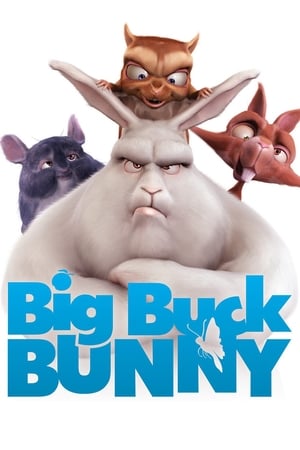
Follow a day of the life of Big Buck Bunny when he meets three bullying rodents: Frank, Rinky, and Gamera. The rodents amuse themselves by harassing helpless creatures by throwing fruits, nuts and rocks at them. After the deaths of two of Bunny's favorite butterflies, and an offensive attack on Bunny himself, Bunny sets aside his gentle nature and orchestrates a complex plan for revenge.
Dog racing is used as a metaphor for the futility of human existence.
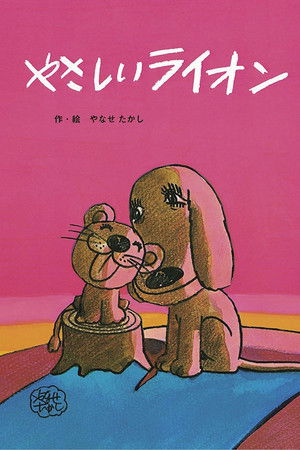
This is an animated version of Yanase Takashi's picture book featuring the friendship between a mother dog, Muku-muku, who lost her puppy, and the baby lion Buru-buru, who lost her mother.
In this animated short, a terrible curse deprives Balthasar's kingdom of its stories. Taking the unicorn's horn back into The Belly of the Earth is the solution. Poppety will lead an expedition, by chance uncovering a hitherto closely guarded family secret.
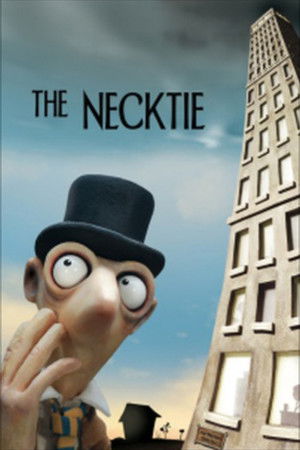
A solitary man works in a tall office building. The only moment in his drab life that's out of the ordinary each year seems to be opening the birthday card and gift from his mother. Usually it's a tie, but one year it's an accordion. It goes into the closet with his many ties. A year or two later, he discovers what happens to the papers he processes every day. His discovery sends him first to the building's top floor, then to his closet.
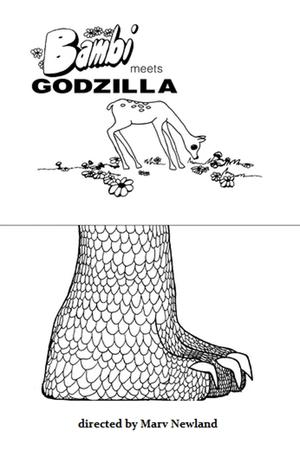
A deer, disillusioned by the consumerism that defines his life. A lizard, ostracized from society, forever wandering. A chance meeting in the middle of a field. Who will survive? And who will transcend existence? Preserved by the Academy Film Archive in 2009.
This is a film about a man without a face. His arms and legs, bound with ropes, the disabled man is still without even a shudder in a white room. A series of unusual scenes in this room expresses what lies between memories, nightmares, and violent images.
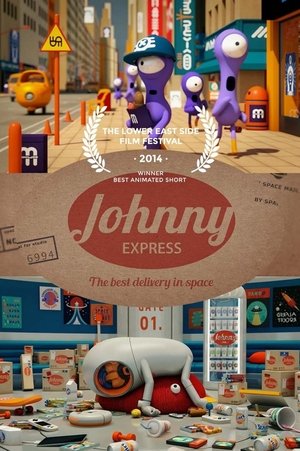
In the year 2150, Johnny, a lazy Space Delivery Man, must deliver a package on a planet he does not fully understand.
Elephants Dream is the story of two strange characters exploring a capricious and seemingly infinite machine. The elder, Proog, acts as a tour-guide and protector, happily showing off the sights and dangers of the machine to his initially curious but increasingly skeptical protege Emo. As their journey unfolds we discover signs that the machine is not all Proog thinks it is, and his guiding takes on a more desperate aspect. Elephants Dream is a story about communication and fiction, made purposefully open-ended as the world’s first 3D animated “Open movie”. The film itself is released under the Creative Commons license, along with the entirety of the production files used to make it (roughly 7 Gigabytes of data). The software used to make the movie is the free/open source animation suite Blender along with other open source software, thus allowing the movie to be remade, remixed and re-purposed with only a computer and the data on the DVD or download.
Short film of 300 individually painted images. A lost film.
One of the first animated short films. A wanderer enters a cabaret in the countryside and asks a waitress for a beer. She comes back with a pint, as the wanderer begins to court her. However, the kitchen boy comes, drinks the beer and vanishes. The wanderer, misunderstanding, asks for another beer. Then a traveler enters and has an argument with the wandered. During the argument, the kitchen boy appears, sips the second beer and runs away. As the traveler quits, the customer finds his glass empty again. He calls the waitress, expresses his disappointment and leaves. The kitchen boy comes in and explains to the waitress what he did with the two beers. They make fun together of the wanderer and leave. A lost film.
A raindrop falls from a leaf and seeps into the earth. Within, it is permeated by beauty, cruelty, happiness and sadness.
A man prepares and goes to work in a bizarre world, where the meaning of human workforce is taken to another level.
“If abstract films are really abstract films… they deal exclusively with those abstract relations that can be expressed in terms of shape and motion” wrote Robert Fairthorne in Film Art in 1936. A mathematician and information scientist, Fairthorne saw aesthetic potential in an animation made as a teaching aid by Salt, and proposed this collaboration. (Tate.org.uk)
This subject presents a remarkably clever series of illusions in which a Japanese lantern, several dolls, chickens, mice and grasshoppers play a very prominent part.
There have been numerous studies of plants and flowers presented to the public, but none which exhibit the perfection of stereoscopic detail. The various plants have been photographed against black backgrounds and are carefully colored. In addition, the various groups were made to revolve during the time of exposure and thus show a succession of lights and shadows which produces the relief which adds so greatly to a picture. (Moving Picture World)
An invading army destroys all color in a harmless town and brings it into a state of depression. Then a jester arrives.
A parlor full of bon vivants pass around an enchanted pair of spectacles that “reveal the personality and pleasures of the one who wears them.”
This subject portrays in a vivid manner the operations of a puppet in his efforts to see the sights.