Cormac McCarthy has spent the last 25 years writing his novels at the mountain top retreat of the Santa Fe Institute (SFI) in New Mexico. An institute dedicated to the formal analysis of complex systems. In this documentary filmed at the library at SFI (and in the desert), Cormac in conversation with his colleague David Krakauer, reflects on isolation, mathematics, character, and the nature of the unconscious
Il me semble que je serai toujours bien là où je ne suis pas…
A man sees mountains and sets out to recreate them. During a traverse across the Western United States, we observe familiar sites in a new light, and the world gets lost in the fold.
Inside a computer a space-time is revealed in which image and sound become numbers and motion manifests as rhythm, flow and chaos. This tracking and integration experiment removes the superficial identity of video to detect kinetic disturbances in everyday environment.
"Emotional memories that had formed the ambiguous boundaries between reality and fantasy began to divide exactly in two, and at the same time there was no emotion left on either side of reality and fantasy." Chang Gyeong is the name of a palace in central Seoul - a palace that was turned into a zoo by the occupying Japanese.
An inspiring 75min DIY documentary film on new art and the young artists behind it. It was all filmed on the heat of live action of the first NOVA Contemporary Culture Festival, July and August 2010 in São Paulo, Brazil.
An experimental documentary looking at the transgender experience around the world over two hemispheres, three continents and with four interviewees. The film employs limited B roll shots or edits during the interviews, instead opting to have the interviews mostly uncut, with the goal of creating both a level of sincerity and a conversational narrative between any one of the interviewees and the audience.
In the Moroccan desert night dilutes forms and silence slides through sand. Dawn starts then to draw silhouettes of dunes while motionless figures punctuate landscape. From night´s abstraction, light returns its dimension to space and their volume to bodies. Stillness concentrates gaze and duration densify it. The adhan -muslim call to pray- sounds and immobility, that was condensing, begins to irradiate. And now the bodies are those which dissolves into the desert.
Angolan director and screenwriter Pocas Pascoal reminds us that it’s time for a change, proposing through this film a look at colonialism, capitalism, and their impact on global biodiversity. We observe that the destruction of the ecosystem goes back a long way and is already underway through land exploitation, big game hunting, and the exploitation of man by man.
An exploration of memory after death.
Set against a vibrant tapestry of music and movement, Tem Fé poetically explores female energy, resilience, and ancestral roots. Through striking visuals and soundscapes, the film celebrates the strength of women and their spiritual bond across generations.
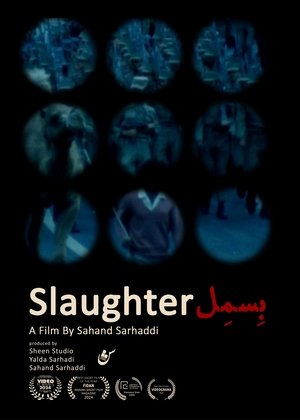
A trans Vietnamese woman's deadname being repeated over and over again.
A trip that the author makes to a distant beach trying to find the place where his grandfather made a painting years ago.
The artist stalks and serenades Joe Dimaggio in her car as he strolls the docks unaware that she is videotaping his every step.
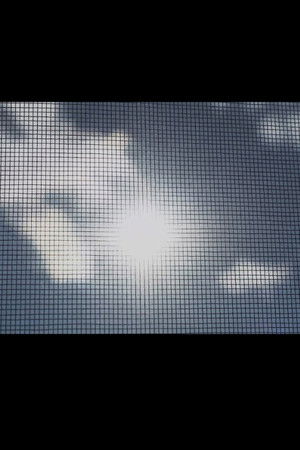
An experimental short film about wind and sunlight sweeping across tree leaves.
Dancing Plague, a GTA V mod, flips the script. Holding H key forces male NPCs to dance uncontrollably, revealing the game's biased animations where female characters (often sex workers) have the flashiest moves. This disrupts the game's gender roles, making masculinity both playful and challenged. Interestingly, female characters ignore the male dance frenzy. This is a humorous critique of the game's gender politics. The mod's soundtrack, by Azu Tiwaline, blends electronic music with trance traditions, deepening the critique and adding an immersive ritualistic feel.
A collection of images taken on 35mm film with a point-and-click Holga135BC during the year after I dropped out of school.
Pedro is Mallorcan, born to a mother from Burgos and a father from Mallorca. Due to his distant relationship with his father, Pedro doesn't fully master Mallorcan as a language. He turns to the works of Damià Huguet to remember his father, as only his poems can fill the void left by his death. The poet's words transport Pedro to his childhood and his roots, even though many of the words are unknown to him, despite them belonging to his language. This becomes the driving force behind the protagonist's search for his own identity, his origins, what it means to be a man, father-son relationships, collective identity, and "mallorquinness". Pedro constantly questions the emotions stirred by Huguet's poetry, and, most importantly, who he is and where he belongs.
In 1995, an astronomer proposed a peculiar project. It was to use the Hubble Telescope to capture a small part of the universe that was then known to be a void. In 1447 in Chosun Dynasty, Prince Anpyeong had a dream of walking through a peach blossom forest shrouded in clouds and mist, and he asked the painter, Ahn Gyeon, to capture it in a painting. Through the juxtaposition of the two historical anecdotes, the film examines the images of ‘the far and near’ through printing, transforming, and distorting the photos from the NASA Image and Video Library.
Unconventional portrayal of mining in the Swedish Lapland ore fields, a powerful image and sound symphony that can be experienced both as a documentary and symbolic work.